
Apple Patents a Rear Screen That Tells Subjects What the Camera Is Doing
When someone points an iPhone at you, you have no idea what the person behind it is seeing. Apple's latest patent proposes a fix: a secondary screen on the back of the device that shows the subject exactly what's happening.
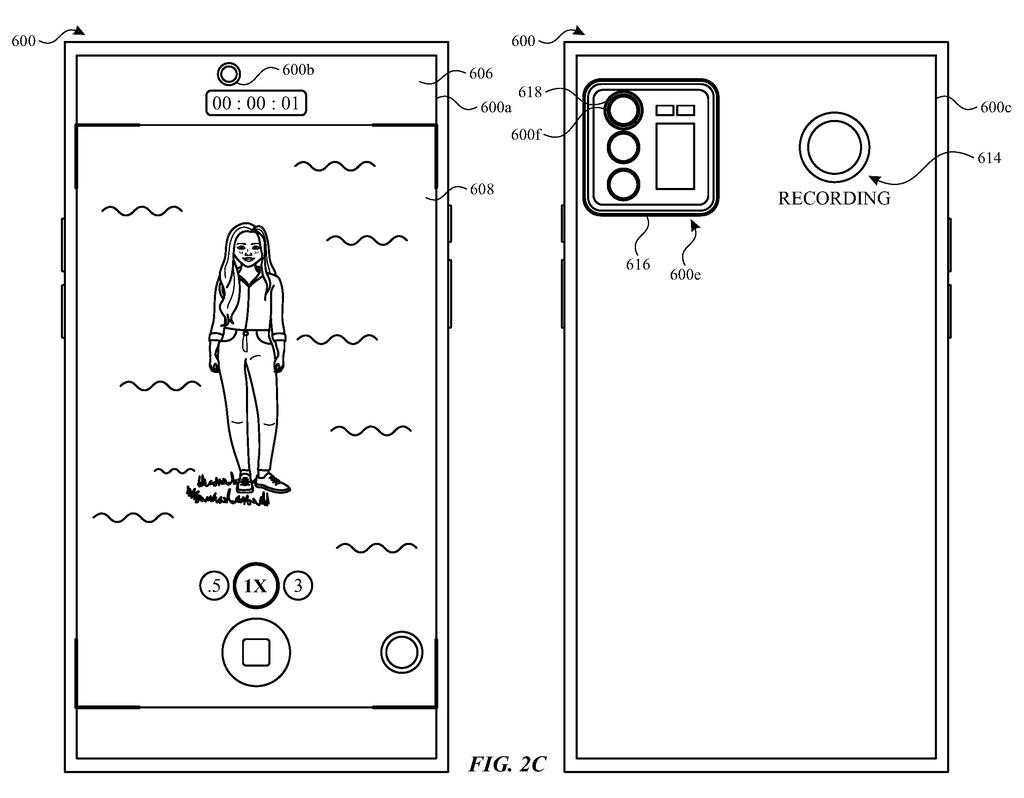
What Apple's rear display camera feedback actually does
Imagine someone takes your photo and you have no idea whether you're in frame, whether the camera is recording, or whether the flash is about to go off. You're just standing there, staring at the back of a phone. Apple wants to change that.
The patent describes a device with two separate displays: the main screen you already use, and a second, lower-resolution screen on the back. While you're shooting a photo or video, that rear screen shows the person being photographed useful information like whether the camera is actively recording and what mode it's in.
The patent also hints at more. It mentions showing real-time translation on the rear screen, so someone reading a foreign-language sign can point their phone at it and the translation appears on the back facing them. It also describes "digital decorations" and general status info that changes depending on what you're doing with the device.
How the two-screen setup splits content by fidelity
The patent covers a device with two displays on opposite sides. The primary display (the one facing the user holding the phone) shows full-resolution content as it always has. The secondary rear display is explicitly described as lower fidelity, meaning it doesn't need to match the main screen's resolution or refresh rate.
The core scenario in the first claim is straightforward: when the cameras are actively capturing, the rear display shows camera status information to whoever is standing in front of the lens. That could include things like a recording indicator, the active camera mode, or a live preview.
Beyond the main claim, the abstract describes three additional use cases Apple is protecting:
- Camera feedback: a live or status-based view for the subject being photographed
- Digital decorations: context-aware graphical overlays shown on the rear screen
- Language translation: displaying translated text on the rear screen, presumably so the subject or a nearby person can read it
The claim is careful to specify that the rear screen shows content at lower fidelity than the front display, which is likely intentional to keep power consumption and cost in check for what is essentially a secondary, situational display.
What this means for selfies, portraits, and FaceTime
For anyone who has ever had their photo taken and felt completely in the dark about what was happening, a rear-facing status screen is a genuinely useful idea. It closes an information gap that has existed since the first front-facing camera disappeared behind a slab of glass.
This patent also signals that Apple is thinking seriously about the social dynamics of photography, not just the optics. The translation feature in particular suggests a broader vision where the rear screen becomes a communication surface between the person holding the device and whoever is facing it, whether that's a portrait subject, a collaborator, or a stranger who doesn't speak your language.
This is one of those patents that's easy to dismiss as obvious until you realize no major phone maker has actually shipped it in a polished, integrated way. The translation angle is the most interesting part, it reframes the rear screen from a selfie-camera mirror (which Samsung has done before) into something more genuinely interactive. Whether Apple builds this into a future iPhone or reserves it for a more specialized device is the real question.
There are more where this came from
We read every patent application Big Tech publishes and send you the ones worth knowing. Plain English, free, every week.
The drawings
38 drawing sheets from US 2026/0222677 A1 · click any drawing to enlarge


Want this weekly breakdown for a company we don't cover? Patentlyze Pro →
Be the first to weigh in