
Adobe Patents an AI System That Matches Fonts Across Languages
Translate a beautifully designed document into another language and the font almost certainly breaks. Adobe has filed a patent for an AI system that picks a visually matching font in the target language automatically, so your layout doesn't fall apart the moment you switch scripts.
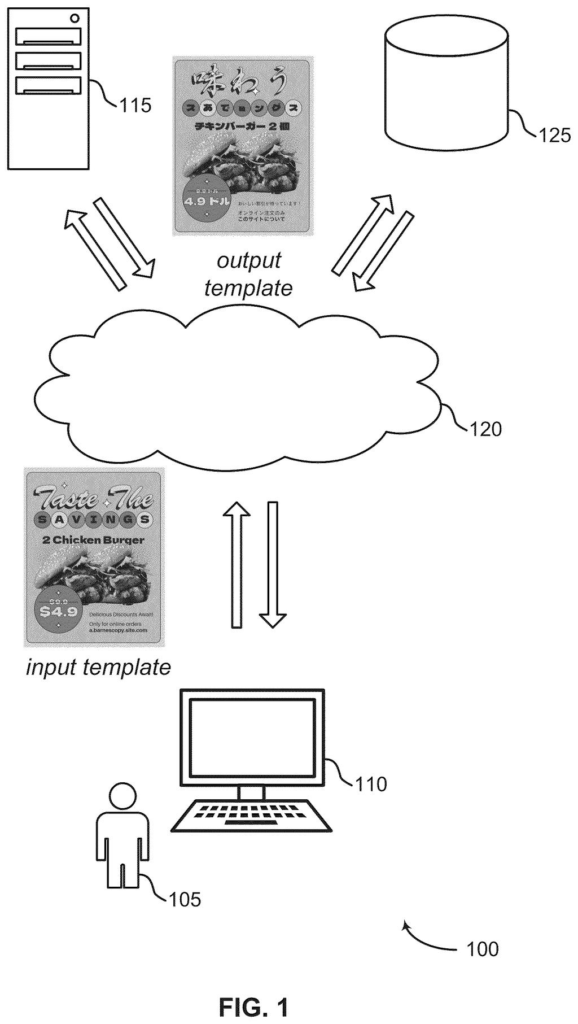
What Adobe's cross-language font matching actually does
Imagine you've built a sleek event poster in English using a bold, modern typeface, and now you need the same poster in Arabic or Hindi. The font you picked doesn't exist in those scripts, so you're back to square one, hunting for something that looks remotely similar.
Adobe's new patent describes a system that handles that search automatically. You feed it an image of your original font, and an AI model analyzes how that font looks, encoding its visual character into a kind of numerical fingerprint. It then compares that fingerprint against fonts in the target language and picks the closest visual match.
The result is a finished document, in the new language, using a font that actually fits the original design's mood. No manual hunting, no mismatched aesthetics.
… encoding, using an image encoder model, the first image to obtain a first image embedding representing the first font; computing a similarity score between the first font and a second font in a second language based on the first image embedding …
Translation: An artificial intelligence model analyzes the visual style of text to compare it against options in another language.
How the image encoder scores font similarity across scripts
The core idea is visual font comparison across writing systems. Here's how the patent describes it working:
- Image input: The system takes an image showing text set in a particular font in the source language (say, a Latin script headline font).
- Image encoding: An image encoder model (an AI that turns visual information into a compact set of numbers, called an embedding) processes that image and produces a numerical representation of the font's visual character.
- Similarity scoring: The model computes a similarity score between the source font's embedding and embeddings for candidate fonts in the target language. Think of it as measuring how close two fingerprints are to each other.
- Font selection and document generation: The font with the highest similarity score is selected, and a new document is generated using that font in the target language.
The approach works from visual appearance rather than metadata, which matters because fonts across different scripts share no naming conventions or technical standards that would let a rule-based system make the comparison. The AI sidesteps all of that by treating fonts as images and comparing how they look.
What this means for multilingual design workflows
Multilingual design is genuinely painful right now. If you work across languages, you know that translating a document usually means rebuilding the typography from scratch. The font you chose for its personality simply doesn't exist in another script, and finding a substitute that feels right is a subjective, time-consuming job that often gets skipped entirely.
For Adobe, a tool like this would plug into products like InDesign or Express and make global publishing much less manual. Adobe's interest in AI-assisted document workflows signals that font matching is one piece of a larger bet on automating the tedious parts of design. If the system works well in practice, it could save real hours for anyone producing content in multiple languages.
Adobe's 26th filing we've tracked in Language AI since May follows patents like one on plain-English database queries and one on text-driven recoloring.
The problem this patent targets is real and underappreciated. Anyone who has tried to produce the same designed document in, say, English and Japanese knows the visual inconsistency that results when no matching font exists. It's not a niche edge case, it affects global brands, publishers, governments, and anyone communicating across language barriers.
The approach of comparing fonts as images rather than by metadata is a reasonable fit for the problem. Fonts across scripts have no shared taxonomy, so visual similarity is one of the few meaningful signals available. That said, 'visually similar' is partly subjective, and a similarity score built from a training dataset may not align with what a human type director would actually choose.
This is a focused, practical filing. It won't make headlines at a design conference, but for someone producing multilingual marketing at scale, it attacks a specific pain point with a method that makes sense.
There are more where this came from
We read every patent application Big Tech publishes and send you the ones worth knowing. Plain English, free, every week.
The drawings
11 drawing sheets from US 2026/0278307 A1 · click any drawing to enlarge


Want this weekly breakdown for a company we don't cover? Patentlyze Pro →