
Samsung Patents an AI System That Tells Your Exoskeleton How Hard to Push You
Samsung has filed a patent for a system that uses an AI model to control the physical force a wearable exoskeleton applies to your body during exercise, adjusting in real time based on how close you are to hitting your fitness goals.
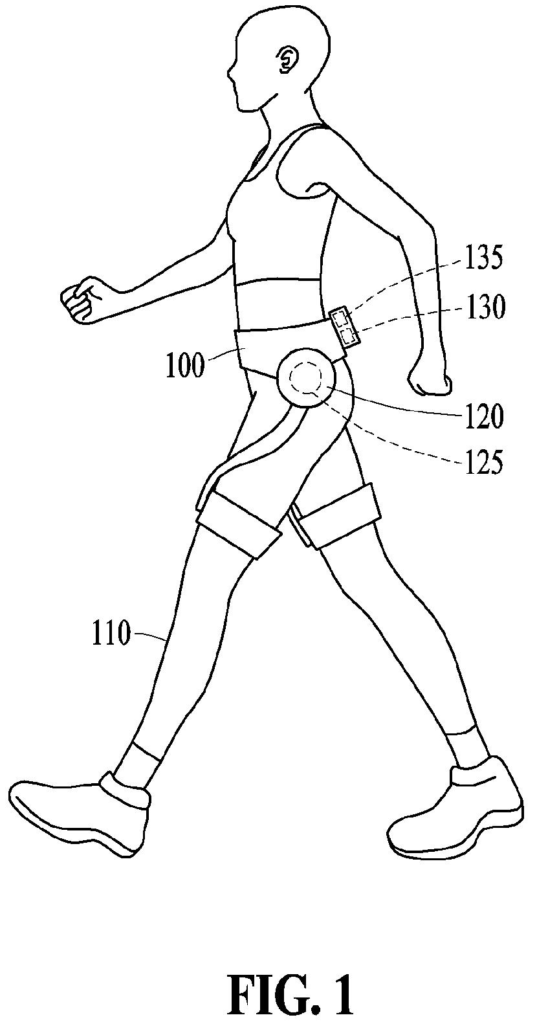
What Samsung's AI-powered exercise exoskeleton actually does
Ever tried to set a fitness goal and actually stick to it? The problem is usually that the effort required keeps changing, and most devices just measure what you do, they don't help you do it.
Samsung's patent describes a wearable device (think a powered brace or exoskeleton you wear on your limbs) that can physically push or resist your movement. An AI watches your exercise data as you work out and uses it to figure out how much mechanical force the device should apply to your body at any given moment, all in service of helping you reach a goal you set before the session started.
In short, you tell the system what you want to achieve, and it adjusts the physical assistance or resistance you feel in real time. The device isn't just tracking you, it's actively participating in the effort.
… determining a torque parameter related to achievement of the exercise goal at least by using a neural network model that receives, as an input, feature data related to an exercise performed by the user while wearing the wearable device and outputs an estimated exercise performance indicator …
Translation: An AI uses your workout history to calculate how much motorized force you need.
How the neural network picks the right torque for your workout
The system has three moving parts working together.
Goal input: The user sets an exercise goal before or during a workout. That goal might be something like a target number of repetitions, a movement quality score, or a performance threshold the device is designed to help you hit.
Neural network inference: A neural network model (an AI that has learned patterns from exercise data) takes in feature data from the ongoing workout, things like movement speed, muscle activation signals, or joint angles, and outputs an estimated exercise performance indicator. Think of that indicator as the AI's read on how you're doing relative to your goal right now.
Torque control: Based on that estimate, the system calculates a torque parameter, which is just a number describing how much rotational force the wearable should generate. A control signal carrying that number is sent to the device, and the device physically adjusts. If you're falling short of your target, it might assist you more; if you're exceeding it, it might back off.
The loop runs continuously, so the mechanical help you feel is always tied to where the AI thinks you stand relative to your goal.
… transmitting a control signal including the determined torque parameter to the wearable device so that the wearable device generates torque on the basis of the determined torque parameter …
Translation: The system sends instructions to the robotic suit so it pushes or pulls you correctly.
What this means for AI-assisted physical training
Powered exoskeletons already exist in medical rehabilitation, but they typically run on fixed programs. A system that uses a live AI model to adjust force in response to your actual performance is a different proposition: the device becomes adaptive rather than preset.
For everyday consumers, this is still speculative. Samsung's interest in health and fitness wearables is well established through Galaxy Watch and related products, but a consumer exoskeleton is a significant hardware leap from a watch band. The patent plants a flag in territory where fitness hardware, AI inference, and powered mechanics all have to converge before anything ships.
Samsung's 44th filing in the wearable patents we cover since May follows one tracking health after medication and one on video decoding math.
The patent describes a system that requires a wearable capable of generating actual physical force on a human body, fed by live sensors and guided by an AI model. Every one of those pieces has to work together before anyone ships anything, and the physical force-generating hardware is the slowest part to build and miniaturize.
The AI portion, a model that reads exercise data and decides how much assistance to apply, is a solvable problem with tools Samsung already has. But that software has nowhere to run until a comfortable, wearable mechanical device exists to receive its instructions.
The shortest route to a real product runs straight through years of hardware development, not a firmware update. Samsung is staking out the design space early, which makes sense, but nothing in this document suggests a gym-ready device is close.
There are more where this came from
We read every patent application Big Tech publishes and send you the ones worth knowing. Plain English, free, every week.
The drawings
14 drawing sheets from US 2026/0284465 A1 · click any drawing to enlarge


Want this weekly breakdown for a company we don't cover? Patentlyze Pro →
Be the first to weigh in