
Tesla Files Patent for a Battery Fluid Recipe That Cuts Gas Buildup
Brand-new batteries burp gas the first time they are charged, and factories have to deal with it. Tesla's patent application adds a second helper chemical to the liquid inside the cell to nearly shut that off.
What Tesla's two-ingredient battery fluid does
Today, when a battery cell gets its very first charge at the factory, it gives off gas. If enough builds up, workers have to break the cell's seal, let the gas out, and seal it again. That extra step takes time, and some of the liquid inside can evaporate along the way.
Tesla's patent application describes a tweak to that liquid, called the electrolyte, which carries electric charge back and forth inside the cell. Battery makers already add small amounts of helper chemicals to make cells last longer. Tesla pairs two of them: a common one, vinylene carbonate, plus a second one called 2-furanone.
In the company's tests, adding the second ingredient cut gas to a negligible amount, and it did not strongly change how well cells held up over long cycling. For you, the payoff would show up indirectly, in how cheaply and quickly EV batteries get built.
… wherein the first operative additive comprises vinylene carbonate; wherein the second operative additive comprises 2-furanone having the following formula (I): wherein the concentrations of each of the first nonaqueous solvent and the second nonaqueous solvent are greater than 6% by weight; …
Translation: The recipe specifies exact weight percentages for two key chemical additives.
How 2-furanone keeps first-charge gas down
Claim 1 covers an electrolyte, the liquid inside a lithium-ion cell. It contains a lithium salt, a carbonate solvent (the main liquid the salt dissolves in), and a second solvent, methyl acetate. Each solvent makes up more than 6% of the weight.
The special part is a pair of additives (small helper chemicals):
- Vinylene carbonate, at 0.25% to 6% by weight, which helps build the protective layer on the negative electrode during the first charge.
- 2-furanone, at 0.1% to 5% by weight, which the inventors found sharply cuts gas.
The dependent claims narrow things down. One sets 2% vinylene carbonate with 0.5% to 1% 2-furanone. Others name a common lithium salt, nickel-manganese-cobalt positive electrodes, and graphite negative electrodes. One claims at least 50% less gas than a cell with only the first additive, and others claim at least 95% of capacity kept after 200 or even 600 charge cycles at 40 °C. The last claim is an electric vehicle with a motor, gearbox, electronics and this battery.
The description reports that cells with 2% of a related additive plus 0.5% 2-furanone made negligible gas, so the unseal-and-reseal step could be dropped. The tradeoff: cells with 2-furanone showed higher internal resistance, which the filing says is outweighed by the gas savings.
What this means for Tesla battery factories
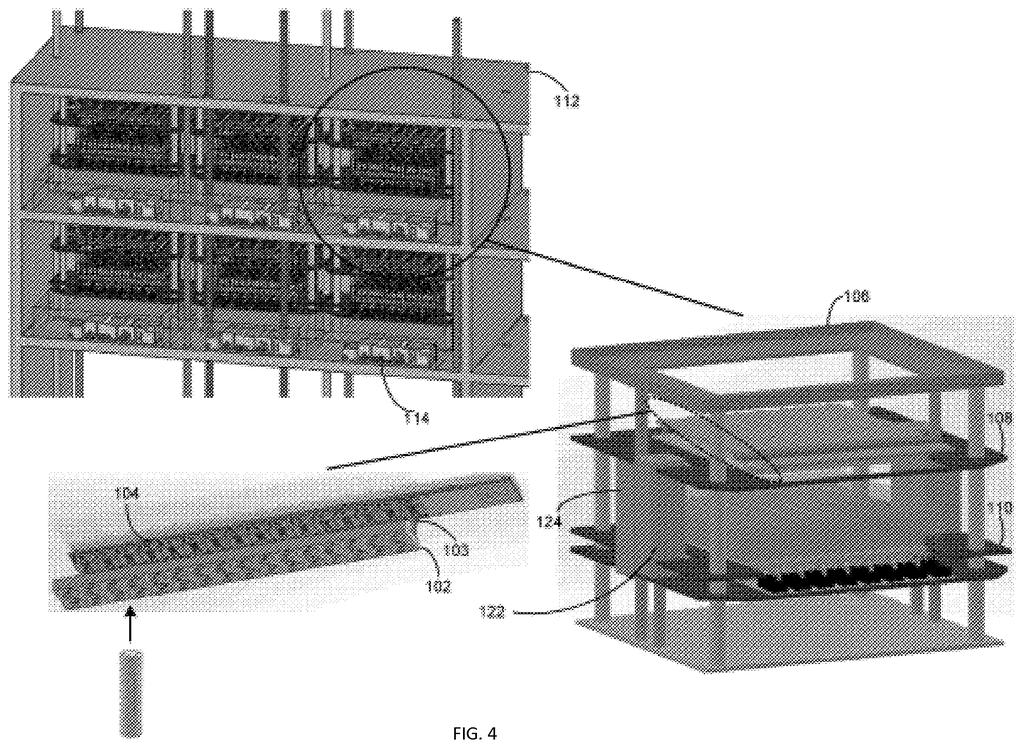
You will never see this on a spec sheet, but it touches the cost of the battery in your next EV. Every step a factory can skip, like opening and resealing cells to vent gas, saves time and cuts the chance of losing solvent. The filing describes a rack that holds 1,792 cells at once, so small savings per cell add up fast.
The filing also pitches this as a cheaper route. Earlier research it cites used three or four additives, and this recipe uses two, with fewer ingredients to buy and mix. The catch is the higher internal resistance the filing admits to, so the real test is whether that costs anything in charging speed once cells leave the lab.
Tesla's 55th filing we've tracked since May follows robot finger tendons and a windshield camera cutout as the company keeps applying to refine how its machines see and move.
Claim 1 is a recipe with a tight list of required ingredients: a lithium salt, a carbonate solvent, methyl acetate, vinylene carbonate, and 2-furanone, each within stated weight ranges. If granted, it would cover battery fluid that includes all of them, and the claim as written asks for every one.
The ranges are wide, though. Vinylene carbonate can sit anywhere from 0.25% to 6% and 2-furanone from 0.1% to 5%, which leaves plenty of room to adjust a recipe and still match the claim. The dependent claims then narrow to the numbers Tesla actually tested, such as 2% and 0.5% to 1%.
Claim 22 extends the idea to a whole electric vehicle with a motor and gearbox, but the car adds little beyond the liquid inside the battery. The verdict: a focused, chemistry-first claim that matters mostly to battery makers, and a routine one for everyone else.
Get our take in your Top Stories
Liked this breakdown? Add Patentlyze as a preferred source on Google, and our plain-English take shows up more often in your Top Stories the next time Tesla patent news breaks.
There are more where this came from
We read every patent application Big Tech publishes and send you the ones worth knowing. Plain English, free, every week.
The drawings
13 drawing sheets from US 2026/0351676 A1 · click any drawing to enlarge


Show the other 5 sheets


Want this weekly breakdown for a company we don't cover? Patentlyze Pro →
Be the first to weigh in