
Google Patents a Multi-Agent AI System That Controls Apps Autonomously
Google is patenting a two-layer AI architecture where one neural network figures out what you want, then hands off control to a second, app-specific neural network that actually does it — all without you lifting a finger beyond the initial request.
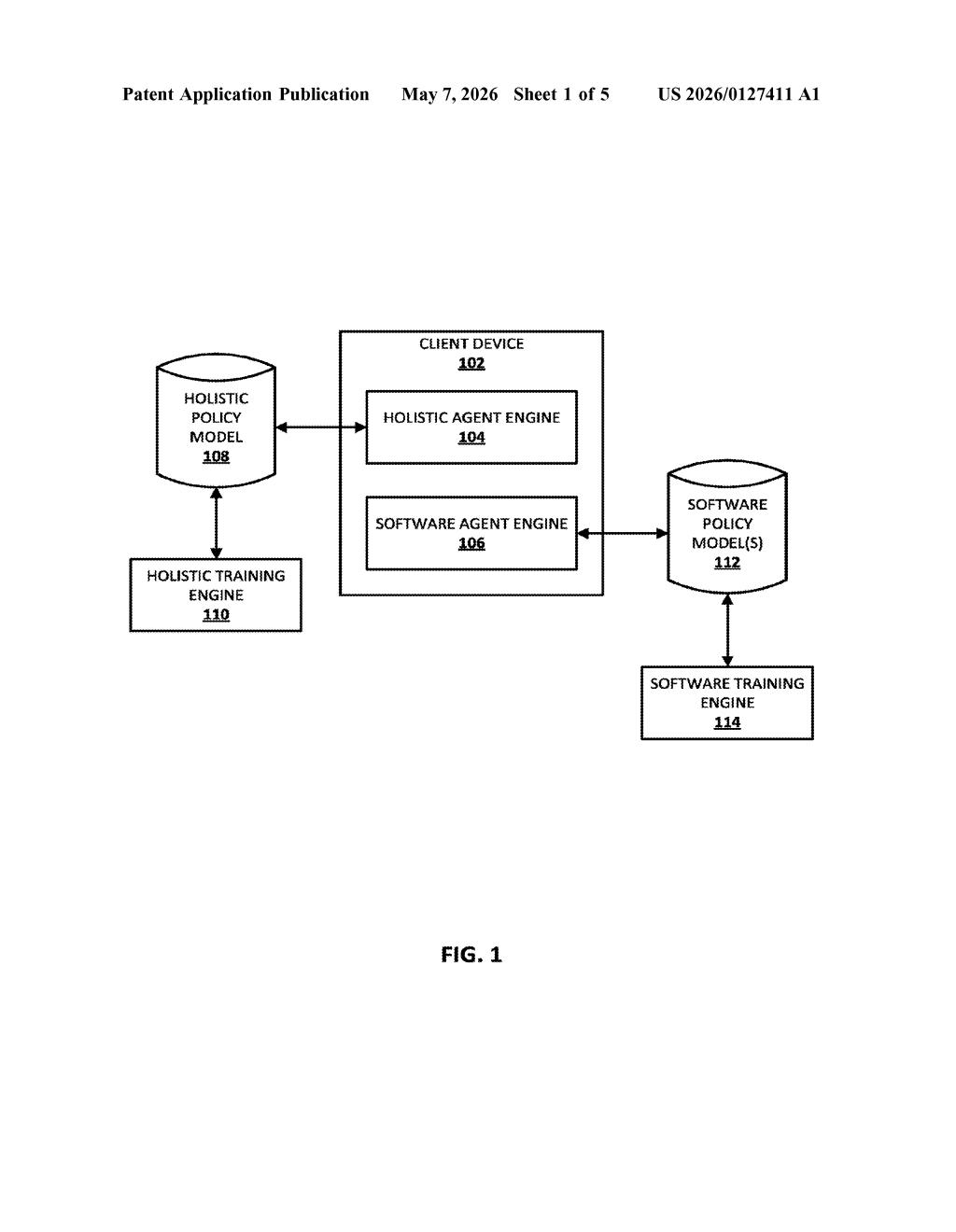
How Google's AI picks an app and runs it for you
Imagine telling your phone 'book me a table at that Italian place for Friday' and having it open OpenTable, search, select a time, and confirm — without you tapping anything. That's the core idea here.
Google's patent describes a system where a high-level AI (called the holistic policy network) reads your request and figures out which app it belongs to. It then hands off to a second, more specialized AI that has been trained specifically on that app — knowing its screens, buttons, and logic. That second AI generates a sequence of taps and inputs to get the job done.
The clever part is the two-tier structure. Instead of one giant AI trying to know every app, you have a smart dispatcher and a fleet of app specialists. Each specialist watches the app's current state as it works, adjusting its actions step by step rather than firing off a fixed script.
How the holistic network routes tasks to app-specific agents
The patent describes a multi-agent reinforcement learning (RL) framework — a setup where AI agents learn to take actions in an environment by trial and error, receiving rewards for good outcomes. Here, the "environment" is a software app running on your device.
The architecture has two layers:
- Holistic policy neural network: A top-level model that takes your raw input (text, voice, or other UI interaction) and classifies which app's specialist agent should handle it.
- Software policy neural networks: A collection of per-app agents, each trained as a sequence-to-sequence model (think of it like a model that reads a story so far and writes the next chapter) specialized for one app's UI logic.
Once the right specialist is selected, it receives two inputs: your original intent, and a running sequence of state data — snapshots of what the app currently looks like. The agent uses both to decide the next action, then updates its view of the app's state, then decides the action after that. This loop continues until the task is complete.
Critically, the specialist isn't following a hard-coded script. It's responding dynamically to whatever the app shows it, which means it can handle pop-ups, loading delays, or unexpected screens — in theory.
What this means for Google's AI assistant ambitions
This is essentially a technical blueprint for what Google Assistant, Gemini, or any future on-device AI agent would need under the hood to actually operate apps rather than just answer questions about them. The two-tier routing design is smart engineering: training one god-model that understands every app perfectly is intractable, but training a lightweight dispatcher plus many focused specialists is much more feasible.
For you as a user, the end state being described is an AI that can chain together multi-step tasks inside real apps — the kind of thing that would make current voice assistants look like glorified alarm setters. Whether this becomes a shipping product or stays research infrastructure is a different question, but the patent signals Google is thinking seriously about agentic AI at the OS and app layer.
This is a genuinely interesting architectural patent, not routine plumbing. The dispatcher-plus-specialist design is a real solution to a real engineering problem — how do you build an AI agent that works across hundreds of apps without becoming impossibly large? That said, the gap between 'we patented a framework' and 'this actually works reliably on live apps' is enormous. Watch for how this connects to Project Mariner or future Gemini on-device announcements.
There are more where this came from
We read every patent application Big Tech publishes and send you the ones worth knowing. Plain English, free, every week.
Want this weekly breakdown for a company we don't cover? Patentlyze Pro →