
Google Patents an AI Assistant That Balances Every User's Preferences at Once
When you ask a shared AI assistant something, whose preferences should it optimize for — yours, or everyone else in the room? Google's new patent tackles exactly that problem with a surprisingly elegant weighting system.
What Google's multi-user merged prompt actually does
Imagine you and your partner are using a shared smart TV and you ask the AI assistant to recommend a movie. The assistant knows your taste runs toward indie thrillers, and your partner's toward romantic comedies. Right now, most AI assistants just answer based on whoever asked — or worse, a generic middle ground. Google's patent describes a smarter approach.
The system detects that you're in a shared context — meaning multiple people are present or connected to the same session — and pulls in the known preferences of everyone in that context. It then builds a single "merged" prompt that bundles all those preferences together before sending the question to the AI.
Critically, it doesn't treat everyone equally. Whoever actually asked the question gets more weight, so the answer still feels personally relevant, but it's nudged by the other users' preferences too. The result is a response that's aware of the whole room, not just the person who spoke.
How Google weights and assembles the merged input prompt
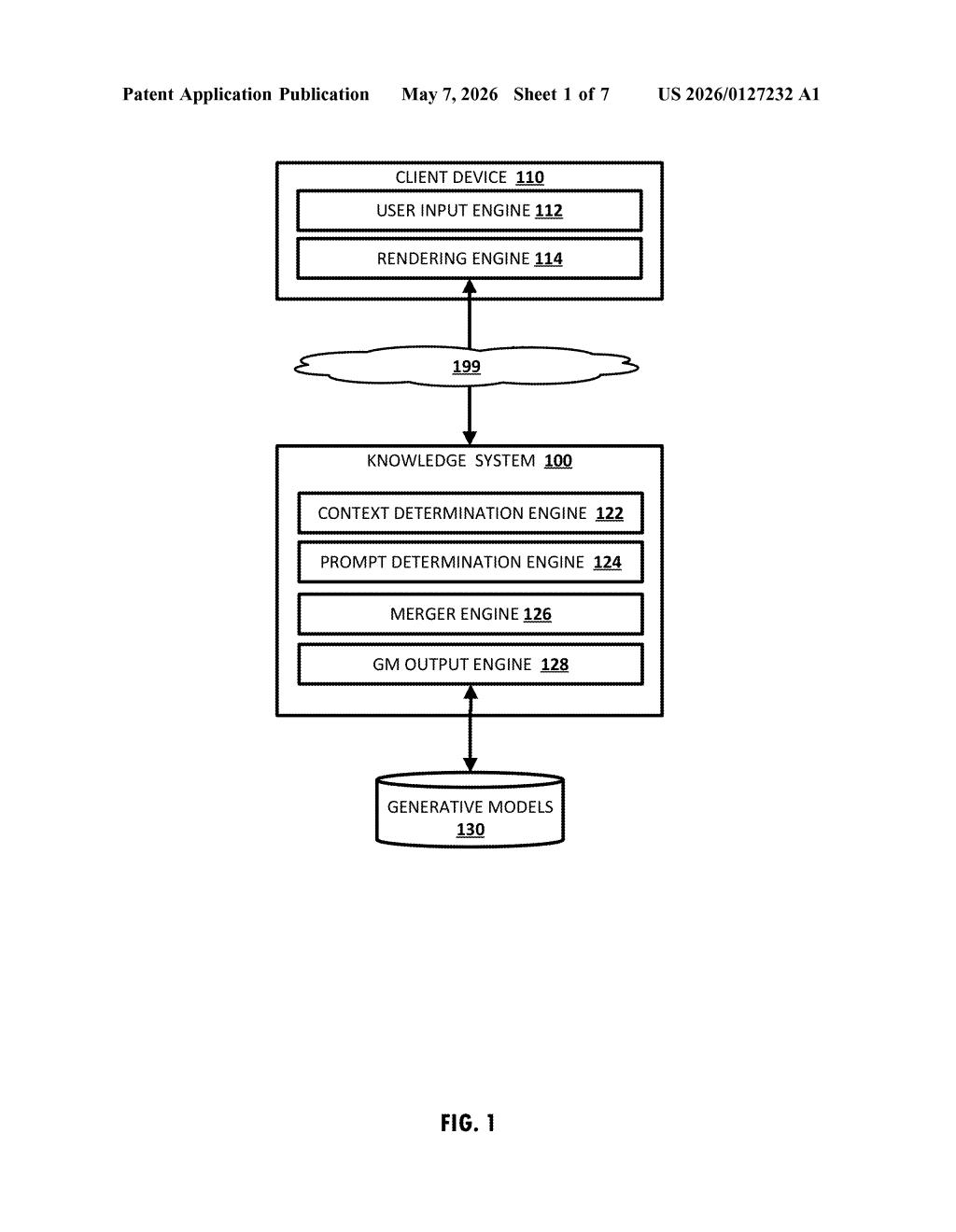
At a technical level, the patent describes a pipeline that sits between a user's natural language query and a generative model. Here's how the pieces fit together:
- Shared context detection: The system uses signals from one or more computing devices — things like proximity, shared session IDs, or device pairing — to determine that multiple users are co-present in the same interaction context.
- Per-user prompt construction: For each detected user, the system assembles a user prompt that encodes that person's known preferences and attributes (think taste profiles, accessibility needs, language preferences).
- Dynamic weighting: The system identifies which user issued the query and assigns weights accordingly — the asker's prompt likely carries more influence, while secondary users' prompts act as soft constraints or modifiers.
- Merged prompt assembly: The natural language query plus all weighted user prompts are combined into a single merged input prompt, which is then passed to one or more generative models.
The output is conditioned on the full merged context, meaning the generative model sees everyone's preferences simultaneously rather than sequentially. The patent doesn't specify a single model architecture, so this could sit atop any large language model backend. The claim also covers rendering the final response on shared output devices — a TV screen, a smart display, or any multi-user endpoint.
What this means for shared-screen AI and family devices
For consumers, this is most obviously relevant to shared household devices — smart TVs, smart speakers, family tablets — where a single AI assistant has to serve people with genuinely different tastes and needs. Right now, these devices either pick one default profile or ignore personalization entirely. A weighted, merged prompt approach could make the assistant feel meaningfully smarter without requiring every person to maintain separate accounts or constantly switch profiles.
For Google specifically, this lines up with its push to embed Gemini deeper into products like Google TV, Nest Hub, and Android. If the assistant knows you're watching with your kids, it can quietly factor in age-appropriate filters without you having to ask. That's the kind of ambient intelligence Google has been promising for years.
This is a genuinely useful idea that solves a real, underappreciated problem: AI assistants are stubbornly single-user by design, even when the device they run on isn't. The weighting mechanism — favoring the asker but not ignoring bystanders — is a clean design decision that avoids the obvious failure modes of either ignoring secondary users or averaging everyone into mush. Whether Google ships this as a discrete feature or bakes it invisibly into Gemini-powered devices, it's the kind of quiet infrastructure work that makes AI feel less antisocial.
There are more where this came from
We read every patent application Big Tech publishes and send you the ones worth knowing. Plain English, free, every week.
Want this weekly breakdown for a company we don't cover? Patentlyze Pro →