
Samsung Patents a Data-Packing Method to Cut Wasted Time in AI Training
Training an AI model is only as fast as the slowest processor waiting around for data. Samsung's new patent targets exactly that bottleneck, with a method for sorting and packing training files so no processor sits idle longer than necessary.
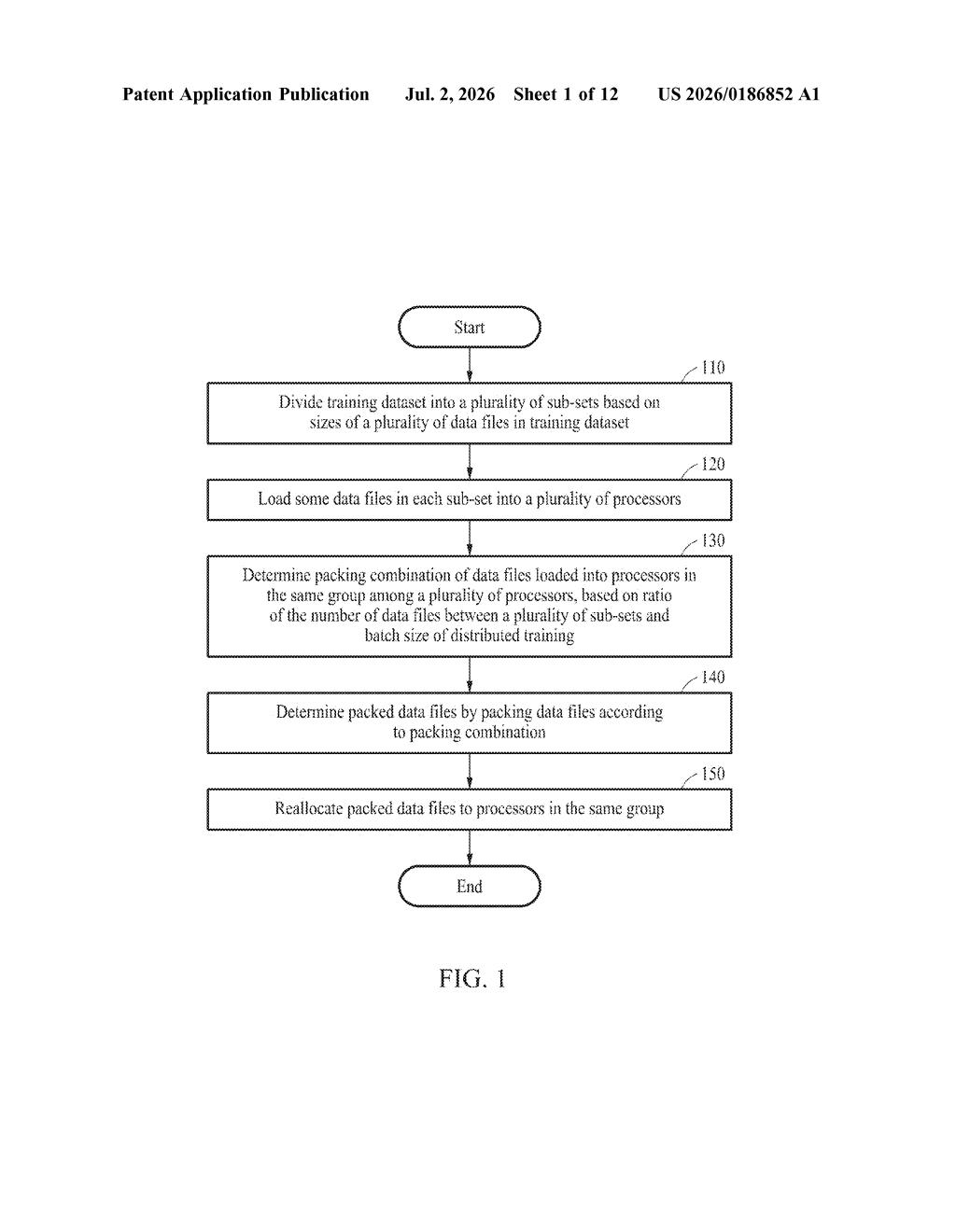
What Samsung's AI training data trick actually does
Imagine a moving company trying to load trucks of different sizes. If you just toss boxes in randomly, some trucks end up half-empty while others are overstuffed, and the whole convoy has to wait for the slowest truck to finish. Training an AI model has the same problem: the system splits a massive pile of data files across many processors, but if the files are different sizes, some processors finish early and wait while others are still crunching.
Samsung's patent describes a method that sorts the data files by size first, then figures out the best way to bundle smaller files together so each processor gets a roughly equal workload. The system picks a bundling strategy based on how the file sizes are distributed and how many files each processor is supposed to handle per training cycle.
The result is that processors spend less time waiting on each other, which means the whole training run finishes faster and wastes less compute time. For companies running large AI training jobs across hundreds or thousands of processors, that idle time adds up to real money.
How the packing combination algorithm works
The patent describes a multi-step process for load-balancing distributed AI training by managing how data files are grouped and sent to processors.
- Step 1 - Sort by size: The training dataset is divided into sub-sets based on file sizes, separating large files from small ones.
- Step 2 - Load files to processors: Some files from each sub-set are pre-loaded onto the available processors, which are organized into groups.
- Step 3 - Find packing candidates: The system generates candidate packing combinations (ways to bundle multiple small files together so they collectively match the compute workload of a large file) based on the largest file size and the batch size (the number of training examples each processor handles per step).
- Step 4 - Pick the best combination: It compares each candidate combination against the actual ratio of file counts across sub-sets to find the option that best balances the load.
- Step 5 - Reallocate packed files: The bundled files are redistributed to processors within the same group so each processor handles a similar amount of work per training step.
The key insight is that the packing strategy is chosen dynamically based on what the actual dataset looks like, rather than using a fixed rule. This makes the approach adaptable to training datasets where file sizes vary significantly, which is common in video, audio, and document datasets used for modern large models.
What this means for large-scale AI training costs
In large-scale AI training, processor idle time is wasted money. Cloud compute time for training frontier models costs millions of dollars, and a meaningful fraction of that cost is processors sitting idle waiting for data to arrive. Any method that keeps processors busier for longer has direct financial value for companies running these workloads.
Samsung builds the processors and chips that power many of these training systems, including its own AI accelerators and memory products. A patented data-loading method like this could be integrated into Samsung's AI hardware or software stack, giving their chips an efficiency edge when customers benchmark training throughput. It's an infrastructure-level improvement, not a flashy feature, but in a market where AI chip buyers compare specs obsessively, even modest efficiency gains matter.
This is unglamorous but genuinely useful work. The problem of uneven data file sizes stalling distributed training is real and well-known, and Samsung is proposing a practical, algorithmic fix rather than a hardware brute-force solution. It won't make headlines on its own, but as part of a broader AI hardware and software stack, this kind of careful engineering is exactly what separates competitive chips from also-rans.
Get our take in your Top Stories
Liked this breakdown? Add Patentlyze as a preferred source on Google, and our plain-English take shows up more often in your Top Stories the next time Samsung patent news breaks.
There are more where this came from
We read every patent application Big Tech publishes and send you the ones worth knowing. Plain English, free, every week.
Want this weekly breakdown for a company we don't cover? Patentlyze Pro →