
Qualcomm Patent Builds Overhead Traffic Maps from Connected-Vehicle Radio Signals
Every modern car already broadcasts its position and speed to nearby vehicles over a wireless standard called V2X. Qualcomm's new patent wants to take all that radio chatter and stitch it into a top-down map of everything moving around a vehicle, no cameras required.
How Qualcomm turns car radio chatter into a traffic map
Imagine you're driving in heavy fog or at a blind intersection. Your car can't see around the corner, but the cars on the other side are constantly broadcasting short radio messages: 'I'm here, I'm moving at this speed, in this direction.' Qualcomm's patent describes a way to collect all those broadcasts and automatically assemble them into a bird's-eye view, like a live overhead map of everything moving nearby.
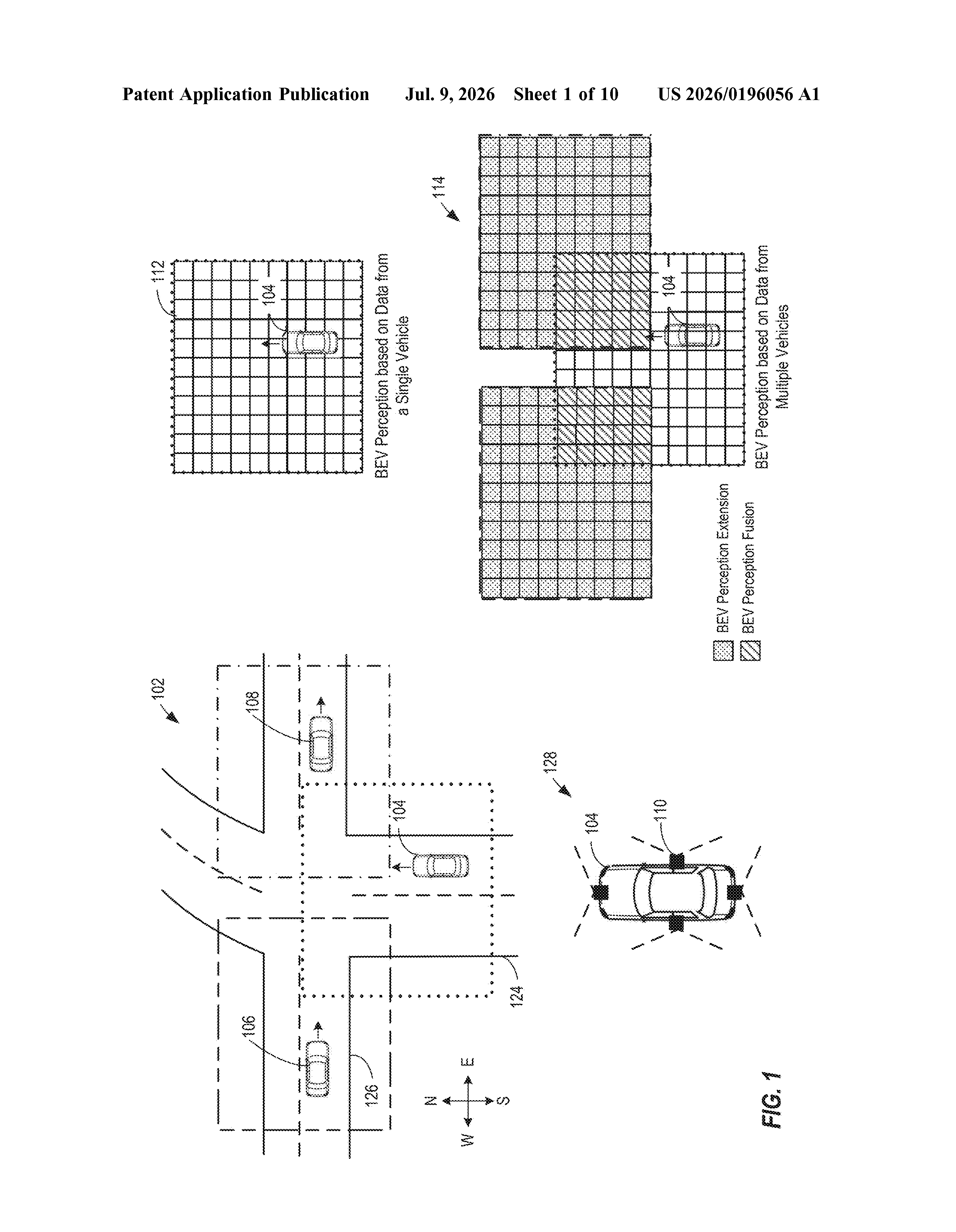
The system listens to a standard called V2X (Vehicle-to-Everything), which cars, traffic lights, and roadside sensors already use to talk to each other. Instead of just logging those messages, the patent's approach pulls the location and motion data out of them and lays it all onto a flat overhead grid, letting a car's computer 'see' objects that its own cameras and radar might miss.
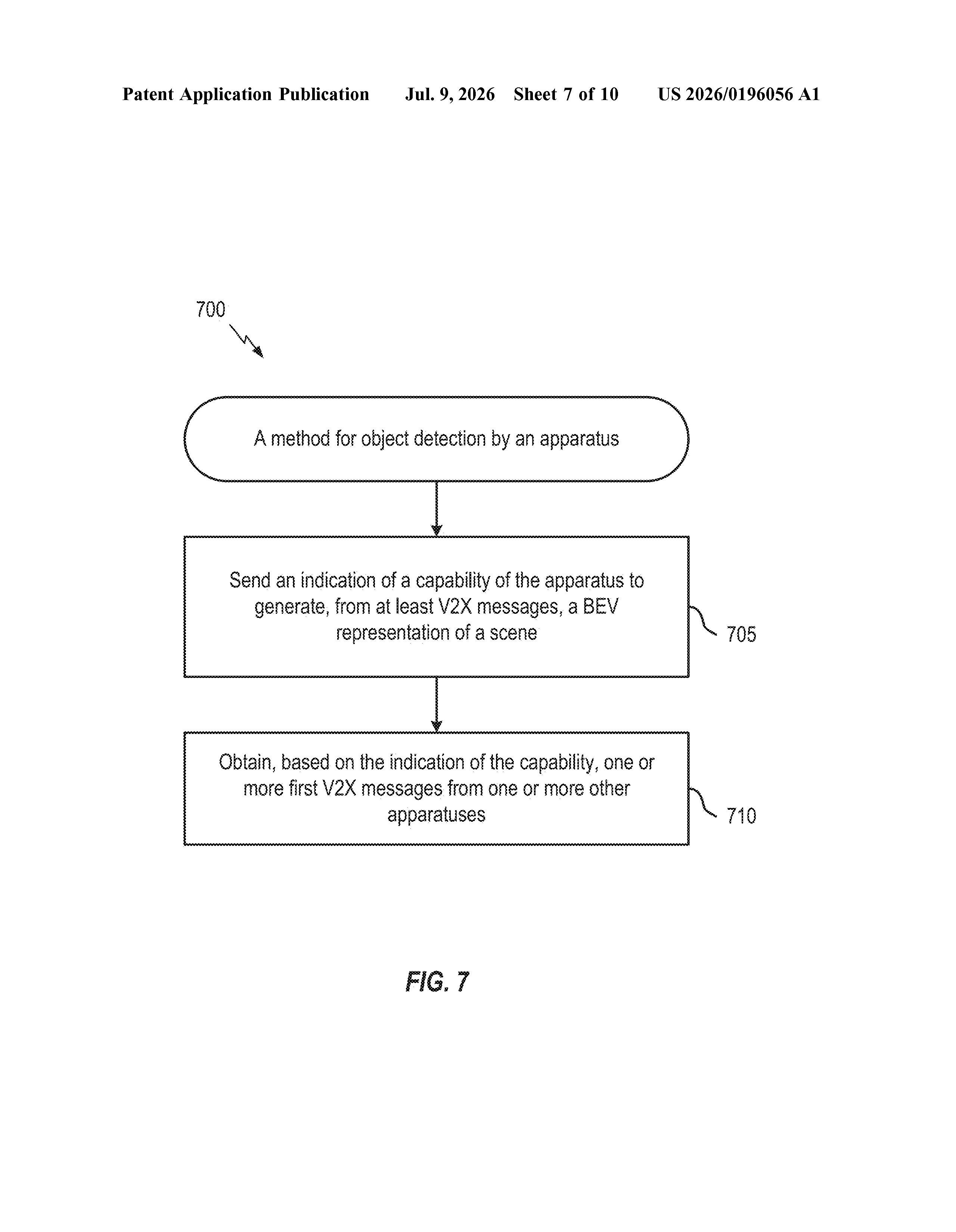
The clever part is that a vehicle first announces it has this capability, which then prompts nearby devices to send it their V2X messages. It's a bit like raising your hand in class so the teacher knows to include you in the group exercise.
How V2X signals get projected into an overhead grid
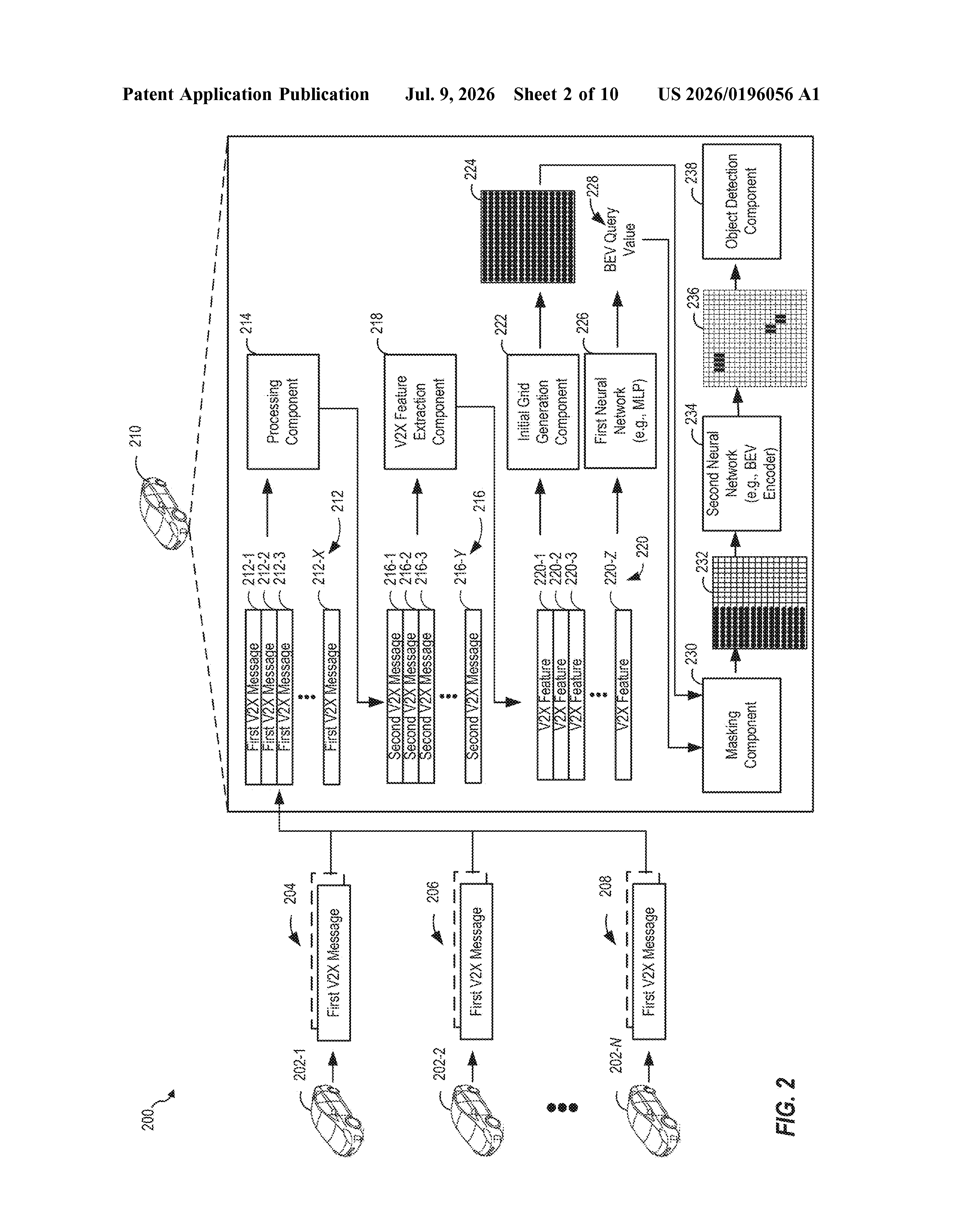
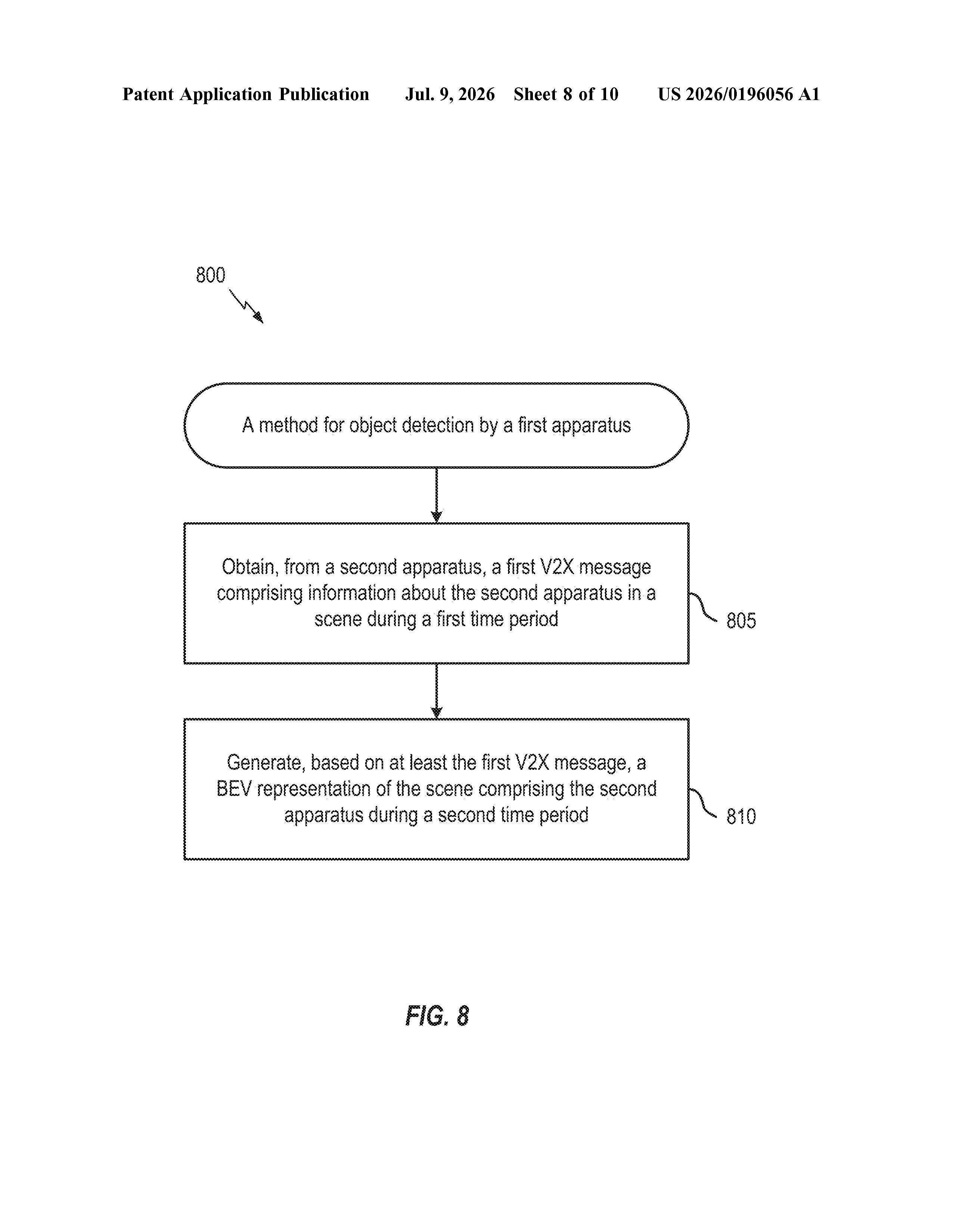
The patent describes a two-step pipeline. First, a vehicle (or roadside unit) broadcasts a capability flag, essentially saying 'I can process V2X data into a map view.' Nearby cars and infrastructure that receive this flag then send their V2X messages back to it.
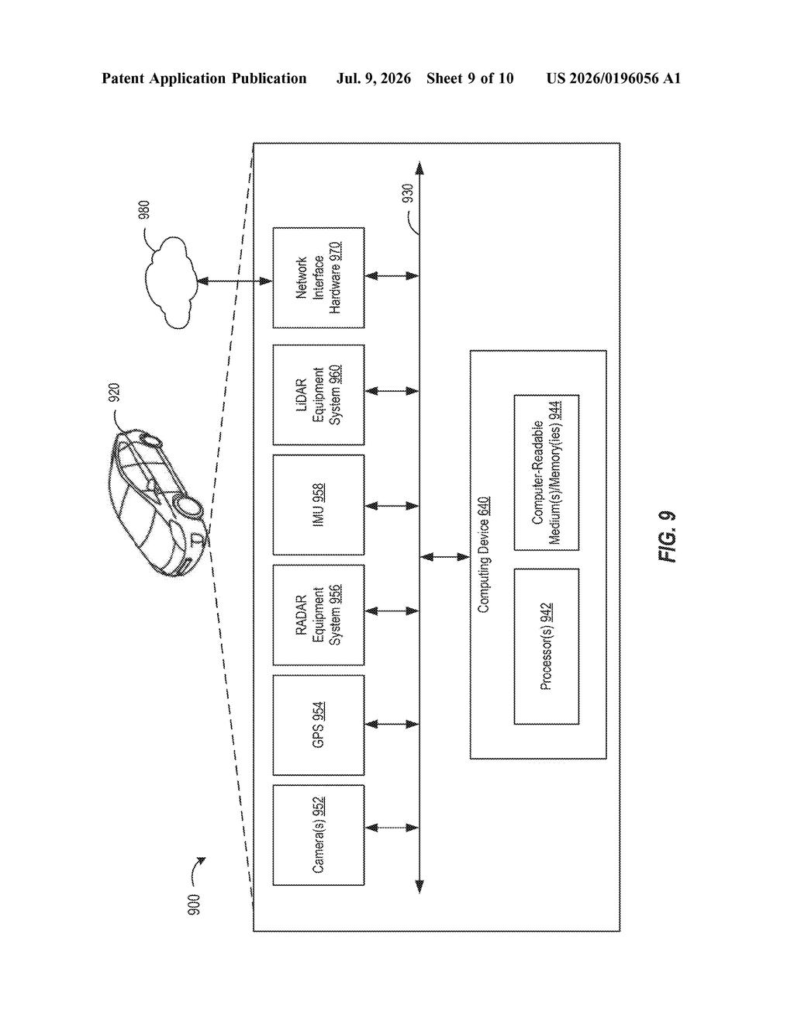
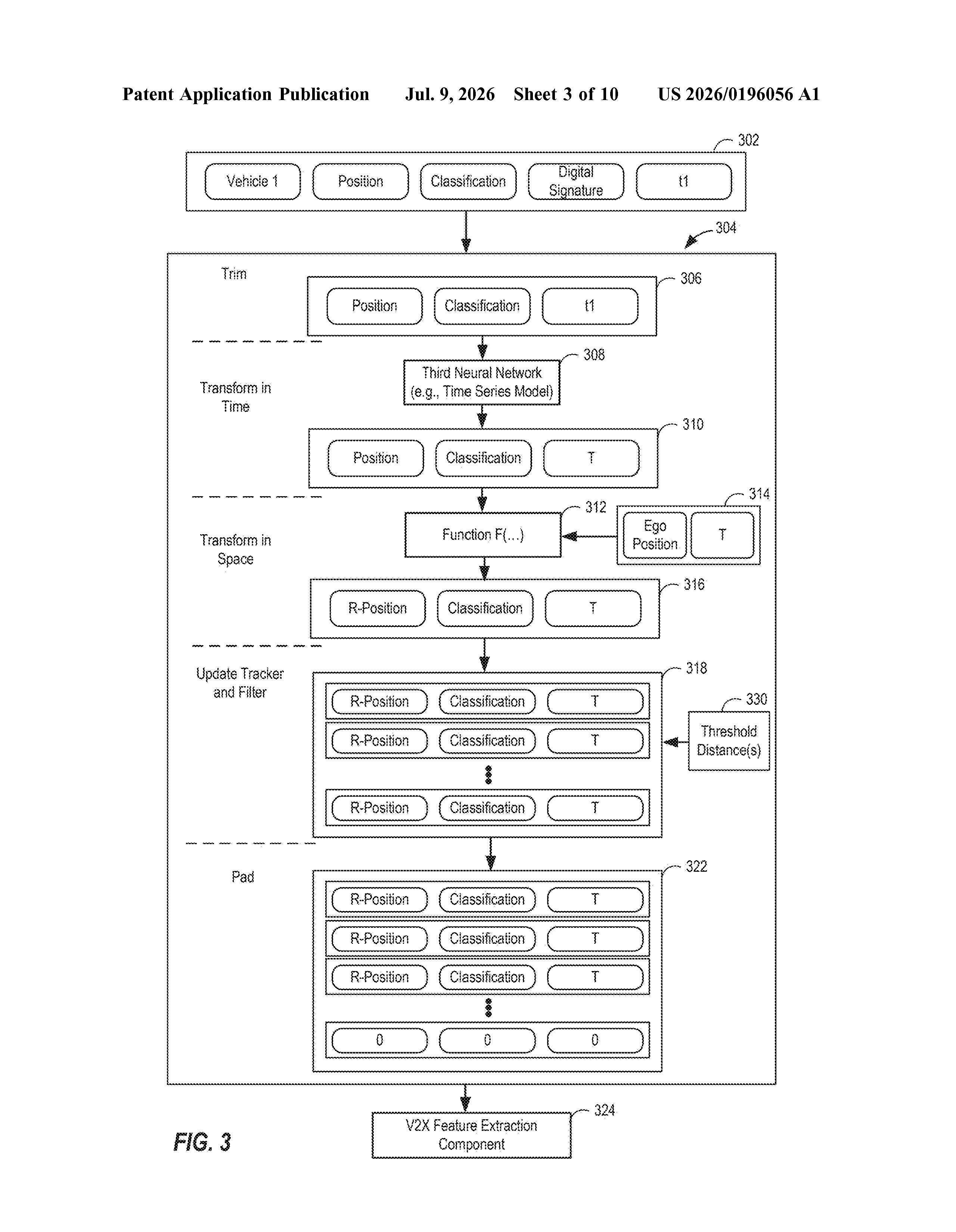
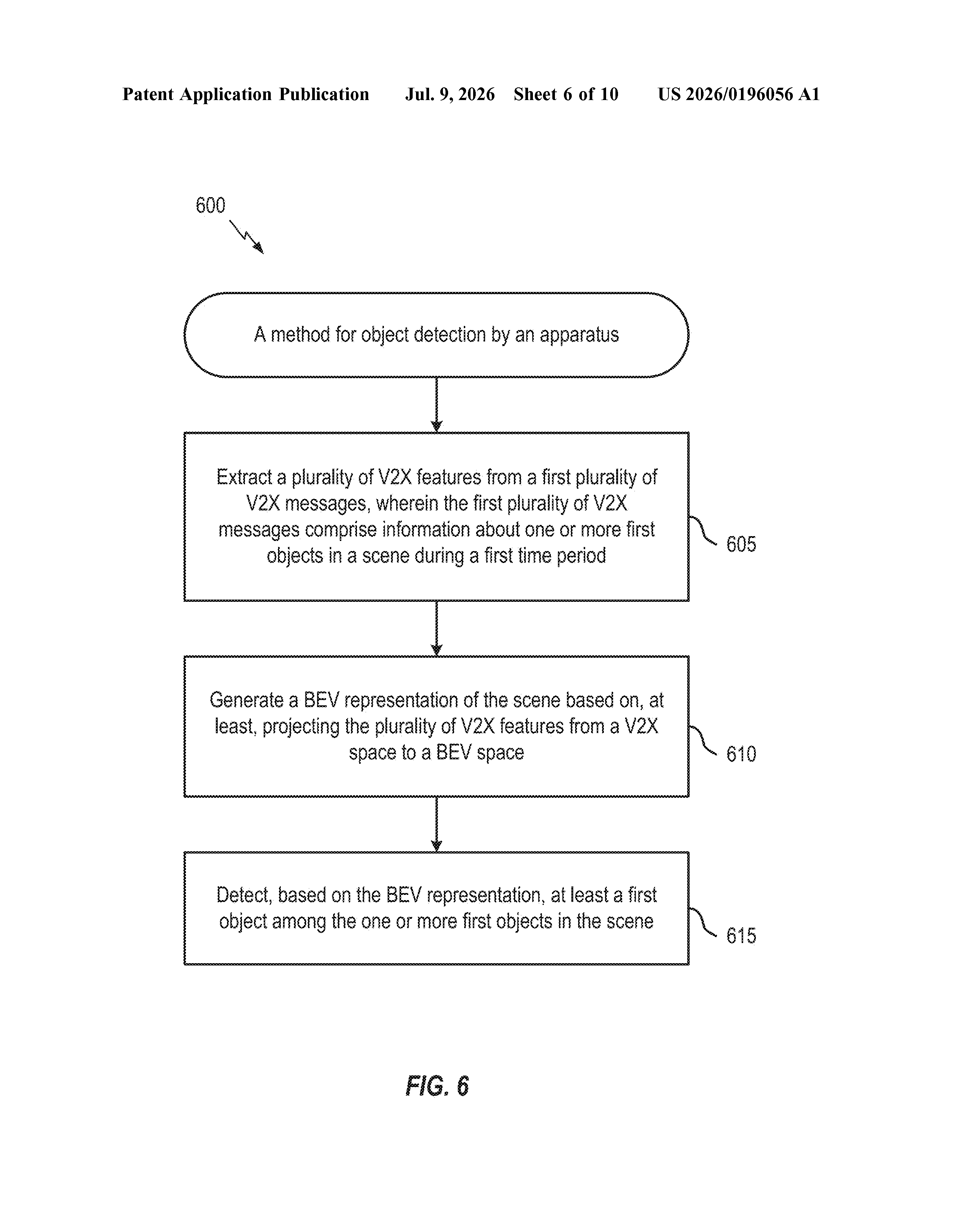
Second, the system extracts V2X features from those messages. These features include things like reported position, heading, speed, and object type. The system then performs a projection, a mathematical transformation that maps each data point from its original coordinate space (each car's own local reference frame) into a shared bird's eye view (BEV) space, a flat, overhead grid centered on the receiving vehicle.
The resulting BEV representation can be fed into an object-detection model, which uses the assembled grid to identify and locate specific objects in the scene, pedestrians, other vehicles, cyclists, and so on, even if they are outside the direct sensor range of the receiving car.
The approach is designed to complement, not replace, traditional camera and radar sensing. By fusing V2X-derived maps with onboard sensor data, a vehicle can get a more complete picture of its surroundings, particularly in dense urban areas or at occluded intersections where line-of-sight sensors struggle.
What this means for self-driving cars without good cameras
Self-driving and driver-assistance systems have a fundamental blind spot problem: cameras and radar only work where they can 'see.' V2X radio signals travel through walls, around corners, and through fog, which makes them a useful supplement. If Qualcomm can make this pipeline efficient enough to run in real time, it could meaningfully extend how far ahead an autonomous system can 'look,' reducing the reaction time needed to avoid collisions.
For you as a driver, this kind of technology could eventually show up as a smarter collision warning that alerts you to a car running a red light before it even enters your field of view. Qualcomm is a dominant chip supplier for automotive systems, so a patent like this sits close to hardware that could actually reach production vehicles rather than staying as a research concept.
This is a practical, plausible idea that builds on infrastructure that is already being deployed in connected vehicles rather than requiring new sensors. The projection math is well-established in autonomous driving research, so the novelty here is more about the capability-announcement handshake and the V2X-to-BEV pipeline architecture than any single algorithm. Worth watching as V2X adoption grows, but not a headline breakthrough on its own.
Get our take in your Top Stories
Liked this breakdown? Add Patentlyze as a preferred source on Google, and our plain-English take shows up more often in your Top Stories the next time Qualcomm patent news breaks.
There are more where this came from
We read every patent application Big Tech publishes and send you the ones worth knowing. Plain English, free, every week.
The drawings
10 drawing sheets from US 2026/0196056 A1 · click any drawing to enlarge
Want this weekly breakdown for a company we don't cover? Patentlyze Pro →