
Patent Lets Video Files Update Themselves After Publishing
Imagine publishing a video and later realizing a stat you cited is wrong. Microsoft's new patent describes a video format where you could fix that without re-uploading the whole file.
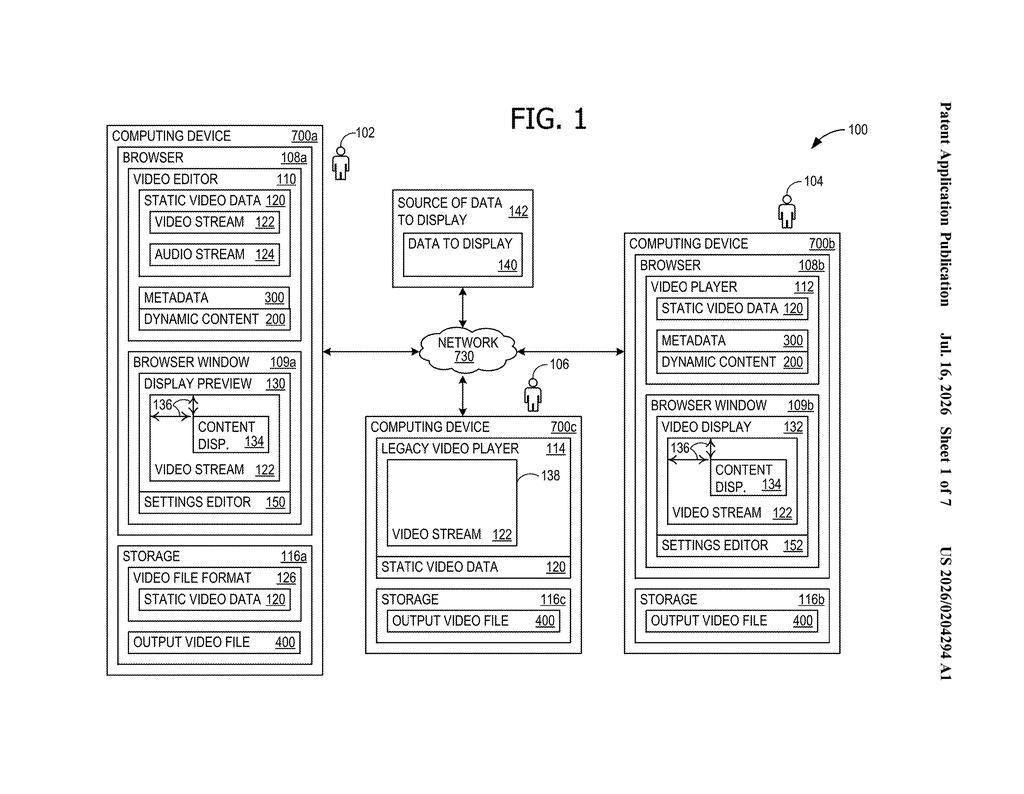
What Microsoft's updatable video format actually does
Picture a training video your company made last year. A policy changed, a number went out of date, or someone's job title is now wrong. Normally, you'd have to re-edit the whole file and redistribute it. Microsoft is patenting a new video format designed to solve exactly that problem.
The idea is to split a video into two layers: the main footage (which stays fixed) and a separate layer of dynamic content, things like text overlays, graphics, or links, that can be swapped out or corrected later. When a newer video player opens the file, it shows both layers together. If you open the same file in an older player that doesn't understand the new format, you just see the regular video, no broken playback.
The dynamic layer can also point to live URLs, meaning the content it displays can be pulled from the web in real time. That's how a single published video file could stay current without ever being replaced.
How the new file format layers dynamic content on static video
The patent describes a video editing system that assembles files in a new format capable of holding two distinct kinds of content inside a single file.
- Static video data: the ordinary recorded footage, stored just like a standard video file so any existing player can read it.
- Metadata with dynamic content: additional material, overlays, graphics, annotations, or referenced URLs, stored alongside the footage and tagged so newer players know to treat it differently.
- A presentation timeline: instructions embedded in the metadata telling a compatible player exactly when during playback each piece of dynamic content should appear.
The tagging system is the backward-compatibility trick. Older players see an untagged, familiar video container and play the footage normally. Newer players read the tags, extract the dynamic layer, and composite everything together according to the timeline.
Because dynamic content can include URL references (links to external resources), a player could fetch updated information at playback time. That means an error in an on-screen caption or a changed statistic could be corrected server-side without touching the video file itself. The patent also describes exposing settings so viewers or administrators can reconfigure how the dynamic layer is displayed, making playback an interactive rather than purely passive experience.
What this means for video publishing and legacy playback
For anyone who produces or distributes instructional, corporate, or news video at scale, re-editing and redistributing files is expensive and slow. A format that separates the footage from the overlay content means corrections can happen without replacing the file, which is a real operational improvement, not just a technical curiosity.
The backward-compatibility design is also smart strategy. Microsoft doesn't need every player in the world to update before the format is useful. The file just degrades gracefully to ordinary video on older software. That lowers the barrier to adoption considerably, and it suggests this could slot into products like Microsoft Stream or Teams video without requiring a wholesale platform change.
This is a genuinely practical idea, not a flashy one. The core problem (published videos becoming stale or containing errors) is real and expensive for enterprise customers, and the backward-compatibility design shows the engineers were thinking about real-world adoption, not just the technology in isolation. Whether Microsoft ships this as a user-facing feature or keeps it as internal infrastructure is the real question.
There are more where this came from
We read every patent application Big Tech publishes and send you the ones worth knowing. Plain English, free, every week.
Want this weekly breakdown for a company we don't cover? Patentlyze Pro →