
Microsoft Patent Uses Ontology Distance Scoring to Grade AI-Generated Answers
When an AI gives a wrong answer, not all wrong answers are equal. Microsoft has filed a patent for a system that measures exactly how wrong an AI's response is, using a structured map of concepts rather than a simple word-matching check.
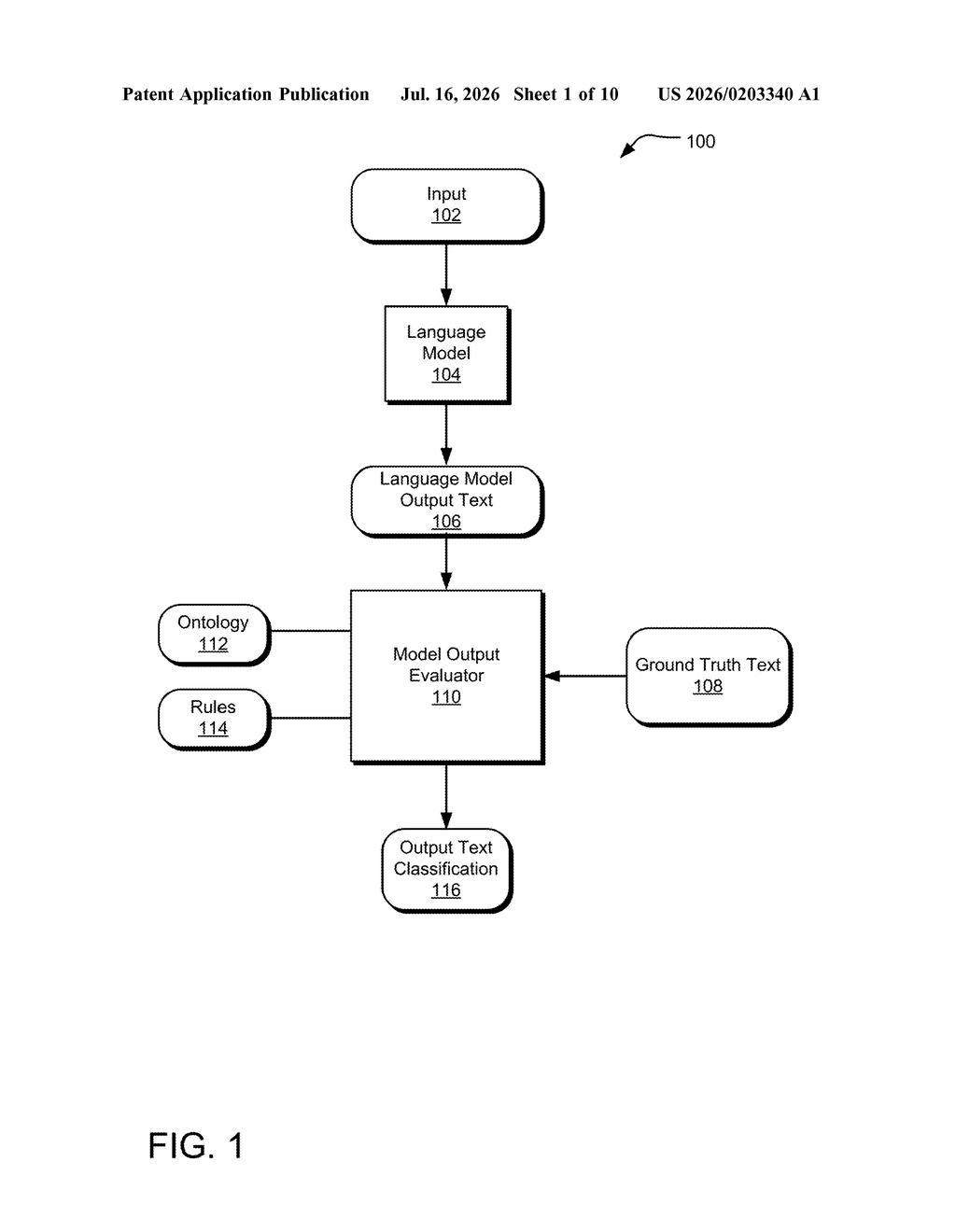
How Microsoft's AI grading system actually works
Imagine asking a doctor a question and getting an answer that's almost right but slightly off in a medically important way. A spell-checker would say it's fine. But a knowledgeable reviewer would catch the gap.
Microsoft's patent describes a system that acts like that knowledgeable reviewer, but for AI. When an AI gives an answer, this system compares it against a "knowledge map", a structured diagram showing how concepts in a subject area relate to each other. If the AI says something close but not quite right, the system can measure how far off it is by counting how many steps away the AI's answer sits from the correct answer on that map.
This kind of grading is especially useful for testing AI tools in fields like medicine, law, or finance, where "close enough" often isn't good enough. It gives developers a more honest picture of whether their AI really knows a topic or is just confidently guessing nearby.
How the ontology traversal score is calculated
The patent describes a method for automatically evaluating whether a language model's output is correct within a specific subject area.
The key pieces are:
- Ontology (a knowledge map): a formal diagram where concepts in a field, say medical conditions, drugs, or legal terms, are represented as nodes, and the relationships between them are drawn as connecting lines called edges.
- Entity linking: the system identifies the key terms (entities) in both the AI's answer and the "ground truth" reference answers, then maps each term to its corresponding node on the knowledge map.
- Traversal distance scoring: the system calculates how many edges (connection steps) separate the AI's entity from the correct entity on the map. Closer means more accurate; farther means the AI has drifted into a conceptually different area.
The system can compare the AI's answer against multiple reference answers at once, and if any comparison score clears a set threshold, the output is classified into a predefined category, such as correct, partially correct, or incorrect.
This goes well beyond simple string matching or keyword counting. Two answers can share no words in common but still be semantically close, and two answers can share words but mean very different things. The ontology-based approach is designed to catch both cases.
What this means for testing AI in high-stakes domains
AI testing today mostly relies on either human reviewers (slow and expensive) or blunt text-similarity scores (fast but often misleading). Microsoft's approach targets a real gap: automated, domain-aware evaluation that can tell the difference between an AI that's slightly wrong and one that's completely off-base.
For enterprise customers deploying AI in areas like healthcare or legal research, this kind of evaluation tool could make automated quality checks much more trustworthy. It also fits into Microsoft's broader push to make AI products deployable in regulated industries, where a vague "accuracy" number on a benchmark is not enough to satisfy compliance teams or customers who need to know exactly how an AI fails.
This is genuinely useful infrastructure work, not a flashy consumer feature. The core idea of using a concept graph to grade AI answers is well-established in research, but filing it as a patent signals that Microsoft sees domain-aware testing as a commercial differentiator, probably in its Azure AI and Copilot for enterprise lines. If this ships as a product, it would address one of the most frustrating real problems in enterprise AI deployment: how do you know your AI is actually right about the things that matter?
Get our take in your Top Stories
Liked this breakdown? Add Patentlyze as a preferred source on Google, and our plain-English take shows up more often in your Top Stories the next time Microsoft patent news breaks.
There are more where this came from
We read every patent application Big Tech publishes and send you the ones worth knowing. Plain English, free, every week.
Want this weekly breakdown for a company we don't cover? Patentlyze Pro →