
Microsoft Patents AI System That Cites Sources and Rejects Off-Topic Questions
One of the most persistent problems with AI assistants is that they confidently answer questions they have no business answering. Microsoft is patenting a training method that teaches AI to say 'that's outside my area' instead of guessing.
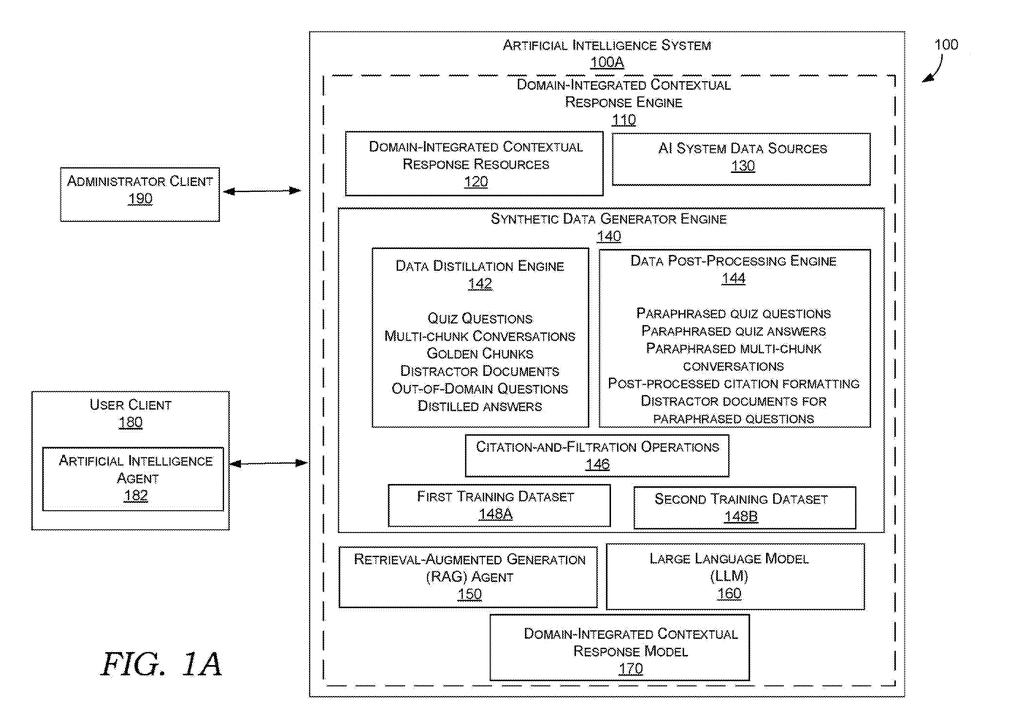
What Microsoft's domain-limited AI actually does
Imagine you hire a contractor who specializes in plumbing. You'd want them to fix your pipes and tell you upfront when you ask about electrical work that it's out of their lane. That's essentially what Microsoft is trying to build for AI.
This patent describes a way to train smaller, specialized AI models that are tuned to a specific industry or company's knowledge. When you ask the AI something it knows about, it answers and cites where that answer came from. When you ask something outside its designated area, it declines rather than making something up.
The system uses two types of training data working together: one set that teaches the AI what to answer and how to cite sources, and another that teaches it to recognize the same question even when it's phrased differently. The goal is a reliable AI assistant that a business can actually trust with customer-facing or internal tasks.
How the two-dataset training process works
The patent describes a training pipeline for what Microsoft calls a domain-integrated contextual response model, a smaller AI tuned to a specific company or industry's knowledge base.
The process starts with a synthetic data generator that creates two types of practice questions: in-domain questions (things the AI should know) and out-of-domain questions (things outside its scope). The system then runs those questions through a more powerful AI model, like a large language model (LLM), to generate high-quality example answers. This is called skill distillation (learning how to answer from a bigger model) combined with knowledge distillation (learning what to answer from the company's own data).
Two training datasets are built from this process:
- First dataset: teaches the model to answer in-domain questions with cited sources and to refuse out-of-domain questions entirely
- Second dataset: uses paraphrased versions of the same questions, so the model isn't thrown off by different wording
The result is a smaller model that can be deployed by a specific business, handles Retrieval-Augmented Generation (RAG) tasks (meaning it pulls answers from a real document store rather than pure memorization), and stays reliably within its lane.
What this means for enterprise AI tools like Copilot
For businesses deploying AI, the biggest risk isn't what the AI doesn't know. It's what the AI doesn't know it doesn't know and answers anyway. A customer service bot that confidently gives wrong legal or medical information creates real liability. This patent addresses that directly by building refusal behavior into the training itself, not just bolting it on as a filter afterward.
Microsoft's Copilot products are already pushing into enterprise workflows across finance, healthcare, and legal sectors. A system like this would let those customers deploy an AI that behaves like a narrow specialist rather than a generalist that wanders into dangerous territory. That's a meaningful selling point for regulated industries.
This is exactly the kind of unglamorous infrastructure patent that determines whether enterprise AI is actually usable or just a liability. Teaching an AI to reliably say 'I don't know' is harder than it sounds, and Microsoft patenting a systematic training approach for it suggests they're serious about making Copilot trustworthy in high-stakes industry deployments. Worth watching.
There are more where this came from
We read every patent application Big Tech publishes and send you the ones worth knowing. Plain English, free, every week.
The drawings
10 drawing sheets from US 2026/0220141 A1 · click any drawing to enlarge


Want this weekly breakdown for a company we don't cover? Patentlyze Pro →