
IBM Patents AI Copies of Workers That Track and Flag Job Stress
IBM has patented a system that creates a personalized AI model of each worker, watches how they use their computer, and tries to predict when they are about to burn out before they do.
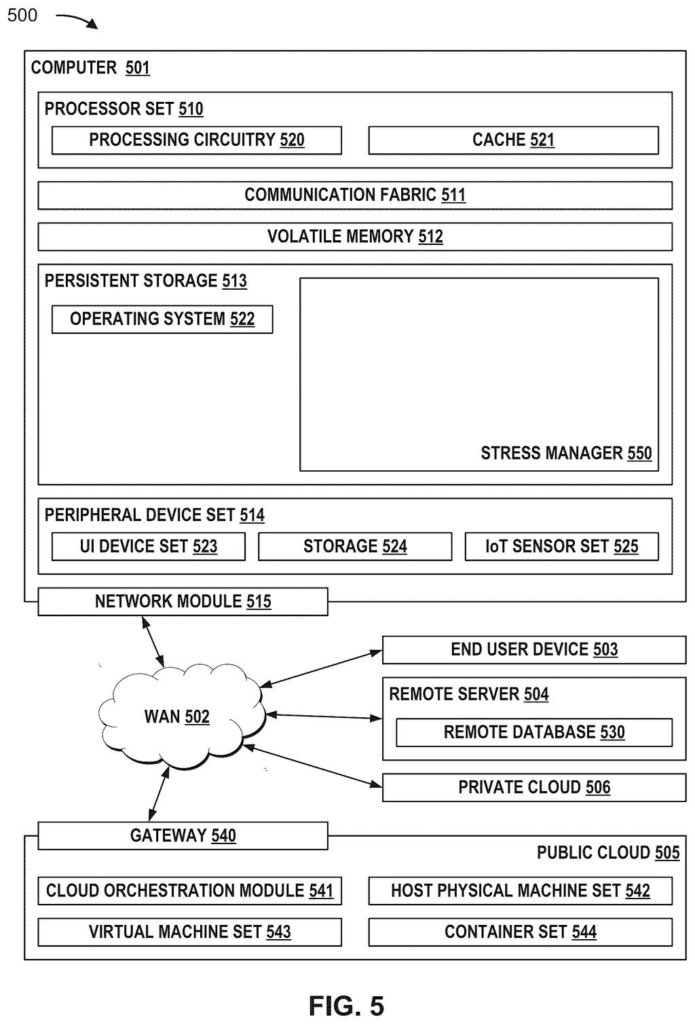
What IBM's digital-human stress tracker actually does
Imagine your computer watching how you type, click, and move through your workday, and feeding all of that into a model that is specifically built to understand your stress patterns, not a generic average. That is the core idea in IBM's new filing.
The system creates what IBM calls a digital human for each employee, essentially a personalized AI twin trained on that person's own behavior data. As you interact with your development tools, that twin learns what your normal looks like and flags when things start to drift toward overload.
When the system detects elevated stress, it sends a signal to a "mitigation component," which is IBM's term for whatever intervention gets triggered next, whether that is a nudge to take a break, a flag to a manager, or something else entirely. The patent does not lock in what that response looks like, leaving room for different workplace configurations.
How the AI learns your personal stress signature
The system works in three broad stages.
- Building the digital human: For each user, the system generates a personalized machine learning model (think of it as an AI profile) tied to that individual's behavior. It is not a shared model; each person gets their own.
- Training on interaction data: Monitoring components watch how the user interacts with their computer during software development work. Things like typing cadence, application switching, and other human-computer interaction (HCI) signals feed into the model. The model learns to map those patterns to predicted stress levels.
- Deploying and predicting: Once trained, the model takes a fresh batch of behavioral data (the "deployment parameter values") and outputs a predicted stress score. A component called the stress weight generator engine adjusts how much each signal matters depending on data availability, so the system stays functional even when some inputs are missing.
The output goes to a mitigation component, which handles whatever the appropriate response is. IBM deliberately leaves the mitigation step open-ended in the patent, so the same core system could plug into many different workplace platforms.
What this means for developer wellness and workplace monitoring
For software companies managing remote or hybrid teams, burnout is one of the hardest problems to spot early. A system that tracks individual stress patterns in real time, rather than relying on quarterly surveys, could give managers (or workers themselves) a much earlier warning signal.
The flip side is obvious: this patent describes continuous monitoring of how you use your computer at work, all day, to build a behavioral model of your emotional state. Even if the stated goal is wellbeing, the same data and infrastructure could be used for performance surveillance. IBM's filing does not address those guardrails, which is exactly the kind of gap that tends to attract regulatory attention as AI-in-the-workplace rules develop.
This is a genuinely interesting filing because it sits right at the intersection of two things employers really want (early burnout detection) and two things employees really do not want (constant behavioral surveillance and AI judgment of their mental state). IBM is not the first to think about AI wellness tools, but attaching it to a personalized digital twin for each worker adds a layer of specificity that makes the privacy question much sharper. Whether this ships as a product or stays theoretical, the debate it represents is very real.
There are more where this came from
We read every patent application Big Tech publishes and send you the ones worth knowing. Plain English, free, every week.
The drawings
9 drawing sheets from US 2026/0211482 A1 · click any drawing to enlarge


Want this weekly breakdown for a company we don't cover? Patentlyze Pro →
Be the first to weigh in