
IBM Patent Grades AI Models Using Artificially Generated Practice Data
Picking the best AI foundation model for a specific job usually means running expensive tests on real data. IBM's new patent proposes doing that comparison with mathematically generated fake data instead, then ranking the models using a single ratio score.
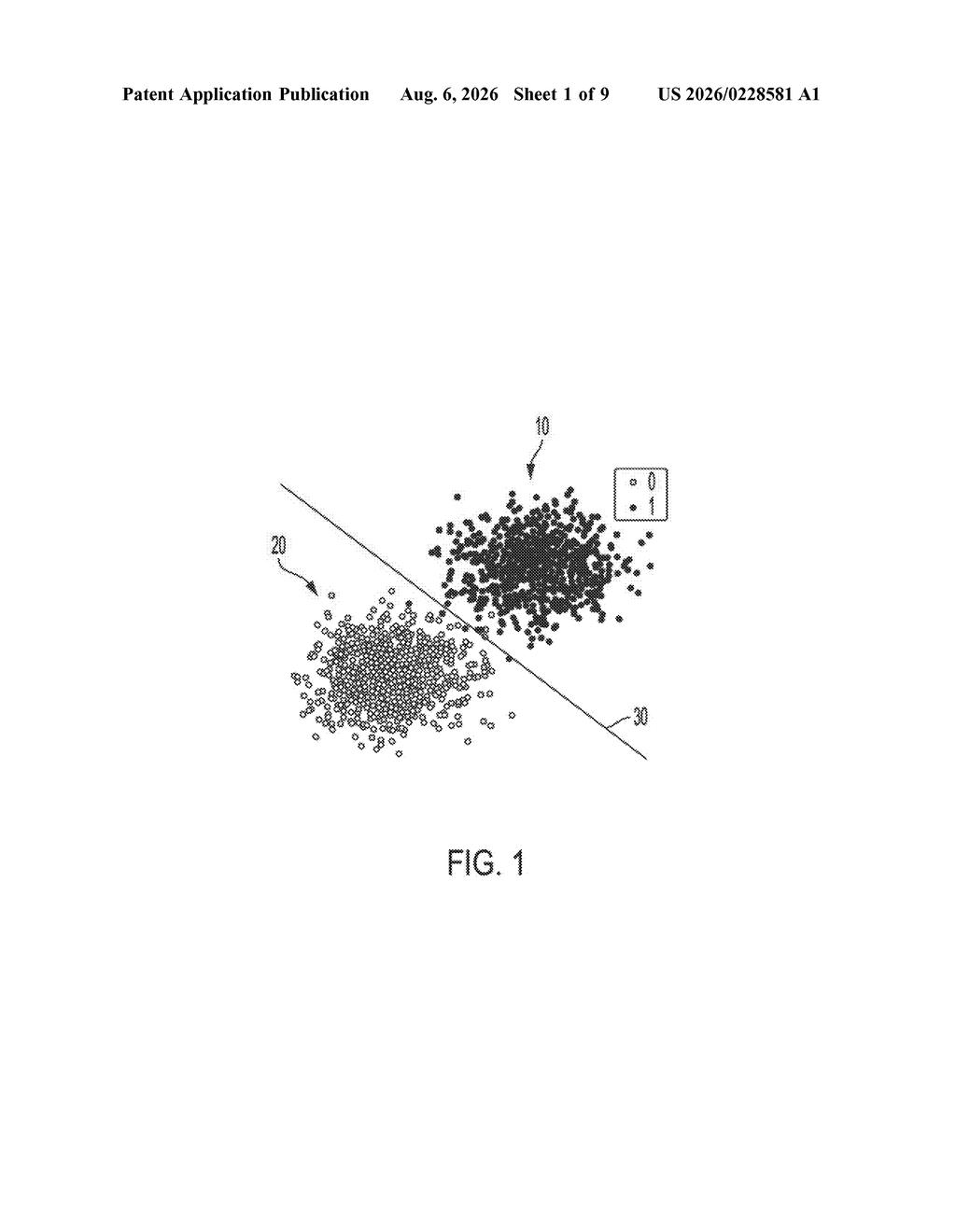
How IBM ranks competing AI models using fake data
Imagine you want to hire the best chef for your restaurant, but instead of using your actual recipes to test them, you design a perfectly controlled cooking challenge that reveals each chef's real skill level. IBM's patent is trying to do something similar for AI models.
When a company wants to pick the best AI model for a task, like sorting customer emails or flagging fraud, they typically test several models on real data. That process is expensive, slow, and raises privacy concerns. IBM's approach generates artificial "test data" using a well-understood statistical recipe, then runs each candidate model through the same challenge and assigns each a score based on how well it performs.
The model with the highest score wins. The idea is that this controlled, synthetic benchmark can reliably predict which model will do best in the real world, without ever needing to touch actual customer data.
Synthetic data is generated for binary classification for a downstream task, by random sampling of a mixture of two Gaussian probability distributions.
Translation: Artificial test data is created by mixing two probability distributions to simulate real-world tasks.
How the synthetic scoring formula actually works
The patent describes a benchmarking pipeline for comparing multiple foundation models (large pre-trained AI systems like the kind that power chatbots or classification tools) against each other for a specific downstream task.
Instead of using real data, the system generates synthetic samples by drawing from a mixture of Gaussian distributions (think: two overlapping bell curves, each representing one category). This gives a clean, controlled dataset where the mathematically correct answer is already known.
Each candidate model is then run on that synthetic data, and its outputs are judged using an epsilon-robust Bayes optimal classifier (a theoretical gold-standard classifier that also accounts for small adversarial perturbations, meaning slight manipulations of the input). The key outputs are:
- E(a): the expected best-case performance on the synthetic data at a given accuracy level
- E(θm, ε, a): how well model m actually performs under those same conditions, accounting for robustness
- Rm: the ratio of these two quantities, integrated across all accuracy levels above a threshold
The model with the highest Rm score is declared the winner. Essentially, it measures how close each model gets to the theoretical ideal.
… selecting m*=argmax (R m ) for m ∈ (1, . . . , M), which identifies a best foundation model m*.
Translation: The system calculates a final score for each model and picks the highest one as the best performer.
What this means for enterprise AI model selection
For enterprises deploying AI, choosing between foundation models today is largely trial and error. You spend money fine-tuning and testing, often on sensitive production data. A reliable synthetic benchmark that predicts downstream performance would make that selection process faster, cheaper, and safer from a privacy standpoint.
The approach also bakes robustness into the scoring, meaning a model that scores well isn't just accurate on clean data but is also harder to fool with slightly corrupted inputs. For industries like finance, healthcare, and security, where adversarial inputs are a real concern, that built-in robustness measurement could matter as much as raw accuracy.
This is careful, methodical research from IBM's AI science team, not a splashy product announcement. The math is genuinely non-trivial and the problem it solves, picking the best foundation model without burning real data, is one that every serious enterprise AI buyer faces. Whether it translates into a shipping product or stays as a research contribution is the real open question.
There are more where this came from
We read every patent application Big Tech publishes and send you the ones worth knowing. Plain English, free, every week.
The drawings
9 drawing sheets from US 2026/0228581 A1 · click any drawing to enlarge


Want this weekly breakdown for a company we don't cover? Patentlyze Pro →
Be the first to weigh in