
Qualcomm Patents a Camera Sensor That Dials Down Its Own Light Sensitivity
Taking a photo in blinding sunlight or of a bright stage can overwhelm a camera sensor, leaving you with a washed-out mess. Qualcomm's new patent describes a way to dial down how much light a sensor soaks up, without relying solely on a fast shutter or a physical filter.
What Qualcomm's reduced-sensitivity camera mode actually does
Imagine trying to fill a glass of water from a fire hose. If the water comes too fast, it overflows and you lose track of how much you actually had. Camera sensors face the same problem in very bright conditions: too much light floods the sensor and the photo turns pure white in the bright areas, erasing all detail.
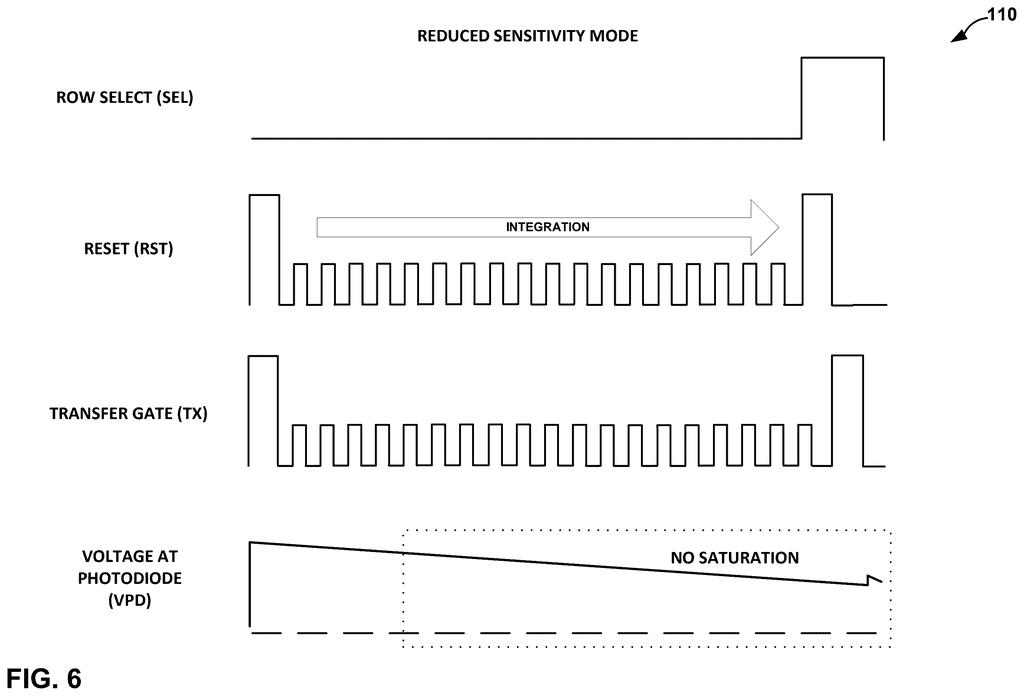
Qualcomm's patent describes a way to fix this by briefly interrupting how the sensor collects light during the moment it's capturing a photo. Instead of letting the sensor drink in light continuously, the system flickers a voltage signal at a tiny component inside each pixel. This effectively shortens how long each pixel is "open" to incoming light, without changing the actual shutter speed in the traditional sense.
The system can switch into this mode automatically, for example when it detects that a long exposure time would otherwise overload the sensor, or when you ask for it manually. It's a hardware-level trick that gives the camera more control over bright scenes.
… toggle a first voltage at a reset transistor for one or more pixels of the image sensor during an integration time while capturing the image with the reduced sensitivity mode; …
Translation: It rapidly pulses electricity to a pixel switch while taking a photo to dim the sensor.
How the reset transistor toggling cuts light intake
Every camera sensor pixel contains a photodiode (a tiny component that converts light into an electrical charge) and several transistors that control how that charge is collected and read out. One of those transistors, called the reset transistor, is normally used to wipe the pixel clean before each new photo.
Qualcomm's patent repurposes this reset transistor during the integration time (the window when the sensor is actively gathering light). Instead of leaving it in a steady state, the processing circuitry rapidly toggles the voltage at the reset transistor back and forth between a low and a high level. The key detail: the high voltage used here is intentionally set below the normal reset voltage, so it partially drains accumulated charge without fully wiping the pixel. This reduces how much light each pixel effectively captures.
In sensors with a four-transistor (4T) pixel design (the most common layout in modern smartphone cameras), the system also toggles a second voltage at the transfer gate, a component that moves charge from the photodiode to the readout circuit. Together, these two toggles give the system fine-grained control over sensitivity.
The patent outlines three ways the system decides when to use this reduced-sensitivity mode:
- When the required integration time would be too long for the lighting conditions
- When flicker from artificial lighting (like fluorescent or LED lights) could cause banding in the image
- When the user explicitly requests it
… alternates the first voltage between a first low voltage level and a first high voltage level at a first frequency, where the first high voltage level is less than a reset voltage used to reset photodiodes of the image sensor.
Translation: The chip switches the voltage back and forth below the normal reset level to limit light intake.
What this means for bright-scene photos on mobile cameras
High dynamic range (bright-to-dark range) has been a battleground for smartphone cameras for years. Most phones handle very bright scenes by shortening the exposure time or stacking multiple exposures, but both approaches have limits. Qualcomm's method works at the transistor level inside the pixel itself, which means it could offer a third path that doesn't depend on mechanical shutter speed or multi-frame processing.
Because Qualcomm makes the Snapdragon chips that power a large share of Android flagship phones, a technique like this could eventually show up in camera systems across a wide range of devices. It's particularly relevant for video recording, where you can't always change the shutter speed freely without affecting motion blur, and for shooting under artificial lighting where flicker is a persistent problem.
This is a solid, specific camera engineering patent that solves a real problem at the hardware level rather than patching it in software after the fact. It won't rewrite what smartphone cameras can do, but if it ships in a Snapdragon camera ISP, it could make bright-scene and indoor video noticeably cleaner.
There are more where this came from
We read every patent application Big Tech publishes and send you the ones worth knowing. Plain English, free, every week.
The drawings
8 drawing sheets from US 2026/0230717 A1 · click any drawing to enlarge


Want this weekly breakdown for a company we don't cover? Patentlyze Pro →
Be the first to weigh in