
Sony Patents a System for Teaching 3D Avatars How Necks Actually Move
When a digital human turns its head or grimaces, the neck skin barely moves in most 3D software. Sony is filing patents to fix exactly that.
What Sony's neck-deformation model actually does
Ever noticed that CGI characters often look slightly off, even when the face itself looks great? A lot of the time, the problem is the neck. When you tense your jaw or tilt your head, the muscles and skin on your neck shift in subtle ways. Most 3D animation software treats the neck as an afterthought, and your brain picks up on the wrongness even if you can't name it.
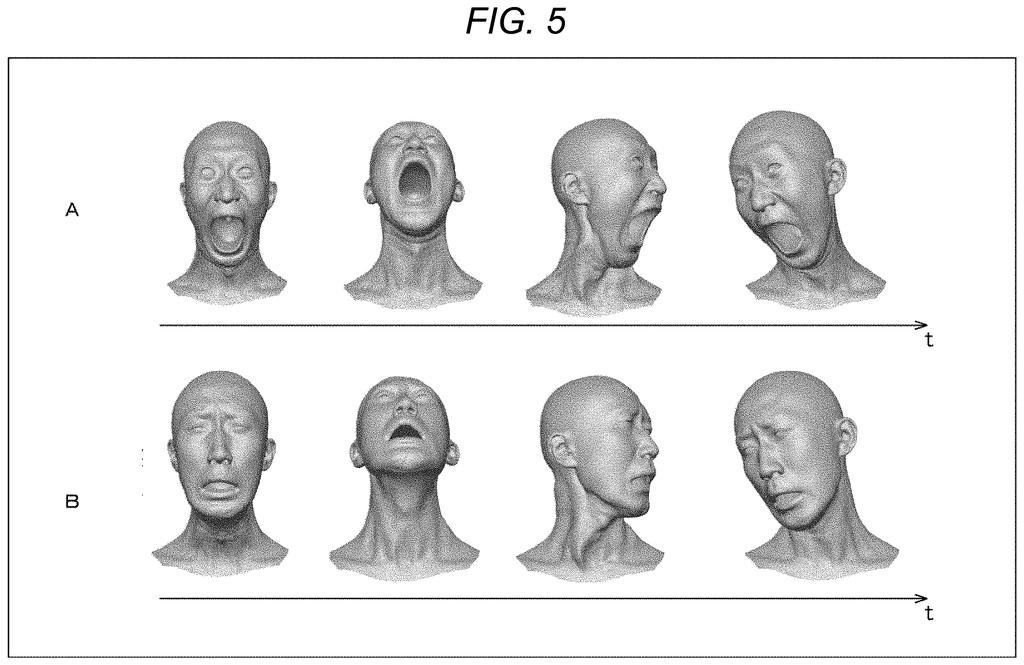
Sony's new patent tackles this by training a computer model specifically on neck movement. It studies thousands of examples of how facial expressions and neck deformation go together, then learns a set of base neck shapes that can be mixed and matched to reproduce realistic results. The goal is that when a digital human character smiles, winces, or turns to look at you, the neck moves the way a real person's would.
Sony calls out "Digital Human technology" as the target application, which covers everything from virtual actors in films to lifelike avatars in games and virtual reality.
a neck mesh acquiring unit that acquires a neck mesh representing deformation of only a neck region from a training mesh representing a correlation between facial expression and neck deformation …
Translation: The system isolates the neck area from 3D models to study how specific facial expressions change the shape of the neck.
How the system learns neck shapes from facial data
The patent describes a two-part learning pipeline focused exclusively on the neck region of a 3D character.
Step one: isolating the neck mesh. The system starts with a "training mesh," a large dataset of 3D scans or animation data that captures the relationship between facial expressions (the full face moving) and how the neck skin deforms in response. A neck mesh acquiring unit strips out everything else and extracts only the neck-region geometry, so the model isn't distracted by what the face or shoulders are doing.
Step two: learning base shapes. A first learning unit then analyzes that neck-only data and learns two things simultaneously: a set of neck base shapes (think of these as the alphabet of possible neck positions and wrinkles) and a matching set of coefficients (weights that say how much of each base shape to blend together for any given expression). Crucially, each coefficient maps one-to-one to a single base shape, which keeps the model interpretable and controllable.
This approach is related to blend-shape modeling (a standard technique in 3D animation where a final pose is built by combining weighted reference shapes), but here the base shapes and their weights are both learned from data rather than hand-sculpted by an artist. The result is a compact, data-driven representation that can reproduce a wide range of realistic neck deformations automatically.
The present disclosure can be applied to Digital Human technology for representing realistic humans using 3DCG.
Translation: Sony intends to use this technology to make computer generated characters look more like real people.
What this means for Sony's Digital Human push
For anyone building lifelike digital humans, the neck is one of those details that separates "almost convincing" from "actually convincing." Film studios and game developers spend significant time hand-crafting neck correctives, small mesh adjustments that an artist adds by hand for specific poses. A learned model that generates those correctives automatically would cut production time and potentially produce more consistent results across a character's full range of motion.
Sony's PlayStation, film production, and VR businesses all have direct reasons to care about this. The company has invested publicly in Digital Human research, and this patent fits that track record. It also sits alongside a broader wave of new tech patents in avatar and 3D character rendering, where machine-learning methods are gradually replacing the manual labor that photorealistic digital characters have always required.
Claim 1 is narrow in a way that matters. It covers the specific combination of isolating a neck-only mesh from expression-correlated training data and then learning both the base shapes and their one-to-one coefficients together. That pairing is tighter than a generic claim on "learning blend shapes from scans," which means it would be harder to invalidate on prior-art grounds, but also easier for a competitor to design around by, for example, decoupling the coefficient learning into a separate stage. The practical blocking power is real but limited to implementations that mirror this particular training architecture. For Sony's own pipeline the claim is a useful placeholder; for the broader industry it's a fence around one corner of a large field.
There are more where this came from
We read every patent application Big Tech publishes and send you the ones worth knowing. Plain English, free, every week.
The drawings
15 drawing sheets from US 2026/0237134 A1 · click any drawing to enlarge


Want this weekly breakdown for a company we don't cover? Patentlyze Pro →
Be the first to weigh in