
New AI Patent Converts Surface Photos Into 3D Material Data
Snap a photo of a brick wall, a piece of leather, or a sheet of metal, and Adobe's patented system could hand you a complete, physically accurate 3D material ready to drop into any scene. No studio scanning equipment required.
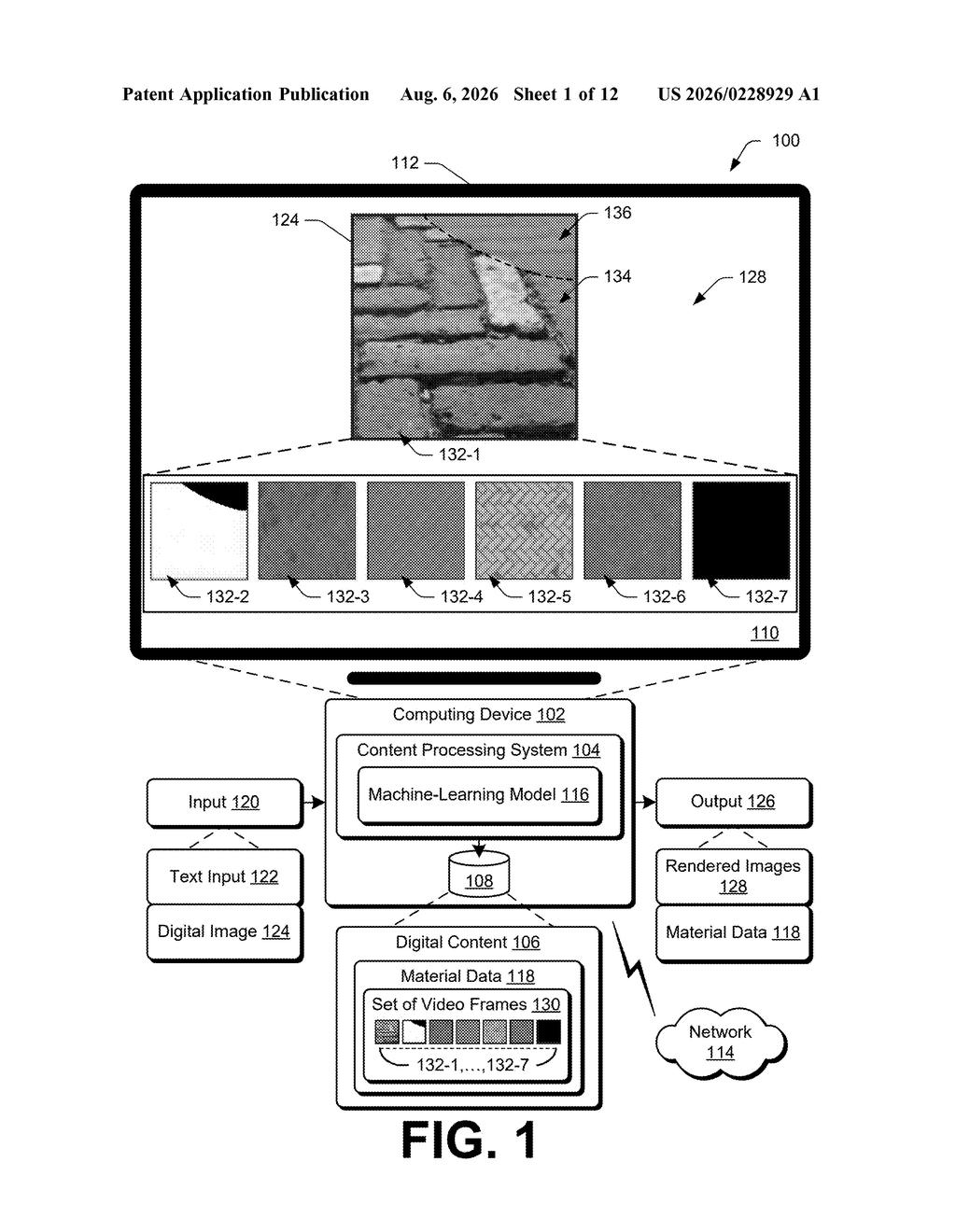
What Adobe's photo-to-3D material trick actually does
Imagine you're building a 3D scene and you want the floor to look exactly like the tile in your kitchen. Right now, getting that right usually means either buying expensive pre-made material packs or owning specialized scanning hardware that captures how a surface reflects, absorbs, and scatters light.
Adobe's new patent describes an AI system that skips all of that. You give it a plain digital photo of any surface, and it generates a full set of material properties that a 3D renderer needs to make that surface look convincingly real under any lighting condition.
The clever part is that the AI produces its output as a sequence of video frames rather than a single image, which gives it a richer way to capture how the surface would look from different angles or under different light. That sequence then gets translated into the actual material files a designer can use.
… generating, by the processing device, a set of video frames depicting physically-based rendering properties of the material, the generating performed using a video generative machine-learning model based on the digital image; …
Translation: An AI video model creates frames showing how the material reacts to light using just the photo.
How the video AI model extracts surface properties
The system takes a single digital image of a surface and feeds it into a video generative machine-learning model, the kind of AI that normally produces short video clips from text or image prompts. Here, that model is repurposed to output a series of frames that each encode different physically-based rendering (PBR) properties of the material.
PBR is the standard approach in 3D graphics for making surfaces look realistic. A complete PBR material includes several data layers, such as:
- Albedo (the base color, stripped of lighting effects)
- Roughness (how blurry or sharp reflections appear)
- Normal maps (which encode tiny surface bumps without adding geometry)
- Metalness (how much the surface behaves like a metal)
By generating those properties as video frames rather than separate static images, the model can use the temporal structure it was trained on to produce outputs that are consistent and coherent with each other. The frames are then decoded into the final material data files that 3D software can load directly.
The patent does not specify which video generation architecture is used, but the approach of repurposing a video model for multi-channel material prediction is the central technical bet here.
Techniques for machine-learning material data generation are described. In an example, a processing device is operable to receive a digital image depicting a material and generate a set of video frames depicting physically-based rendering properties of the material.
Translation: The system takes a picture of a surface and uses machine learning to create video frames that display its physical texture.
What this means for 3D artists and designers
For 3D artists, game developers, and product designers, sourcing realistic materials is a recurring bottleneck. High-quality PBR material libraries exist but cost money, cover limited surfaces, and rarely match a specific real-world reference exactly. Adobe's approach, if it works reliably, could let a designer photograph any real object and immediately have a production-ready material, cutting a task that might take hours down to seconds.
For Adobe, this fits squarely into a broader push to embed generative AI across its creative tools. Substance 3D, Adobe's existing suite for material creation, is the obvious home for this kind of feature. If the system ships there, it could make Substance 3D meaningfully more accessible to designers who currently find manual material authoring too technically demanding.
This is a genuinely interesting technical bet: using a video model not to make video, but to produce the multiple correlated data channels that define a 3D material. Whether the outputs are accurate enough for professional use is the real question, but the approach is creative and the problem it solves is real. Worth watching when Adobe's next Substance 3D updates land.
There are more where this came from
We read every patent application Big Tech publishes and send you the ones worth knowing. Plain English, free, every week.
The drawings
12 drawing sheets from US 2026/0228929 A1 · click any drawing to enlarge


Want this weekly breakdown for a company we don't cover? Patentlyze Pro →
Be the first to weigh in