
X Development Patents AI-Guided Optimization for Biological Synthesis Processes
X Development — Alphabet's moonshot lab — is building an AI system that doesn't just optimize biological processes for scientific performance, but for economic viability too. It's a rare attempt to close the loop between the lab bench and the balance sheet.
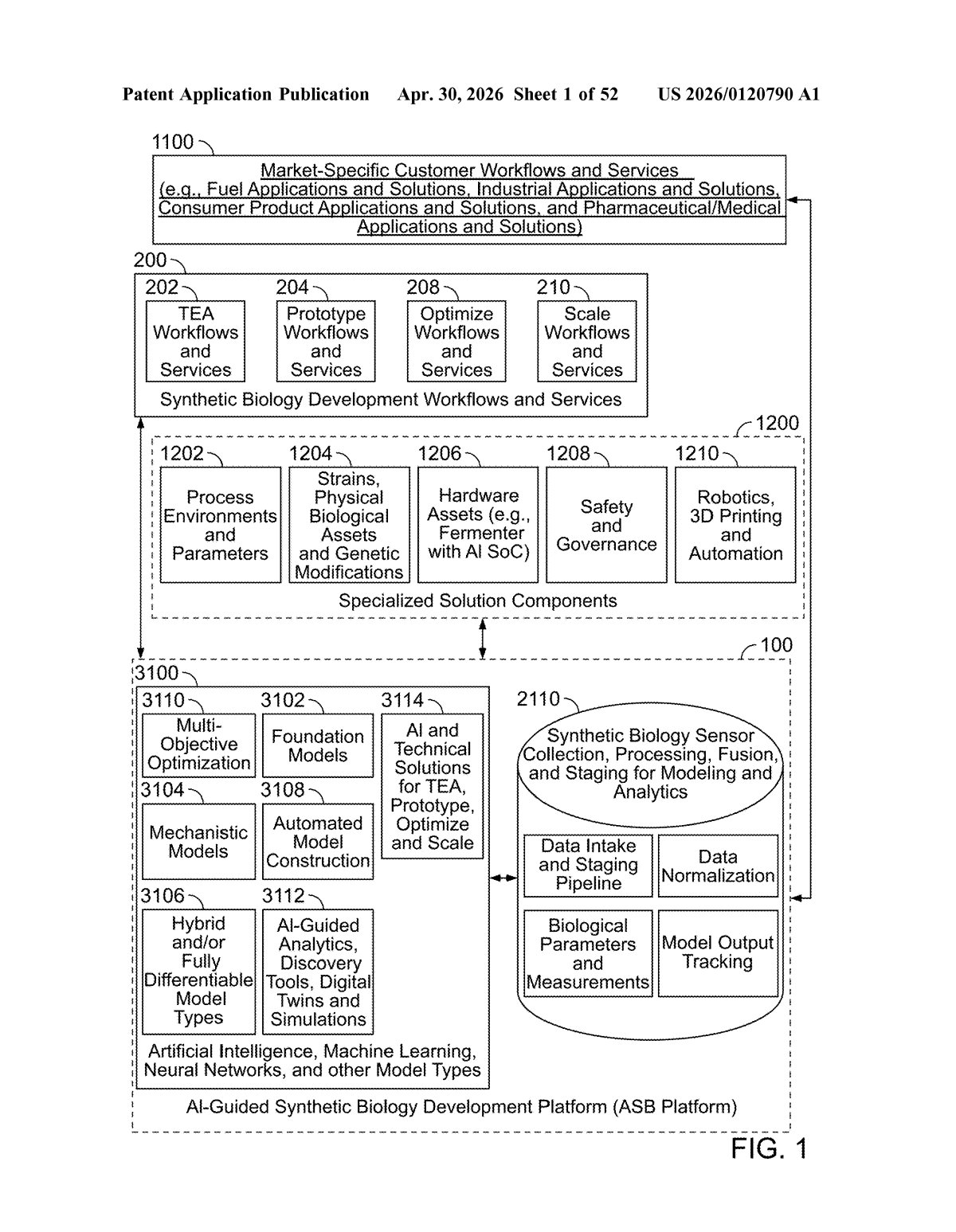
How X Development's system picks the best biological variants
Imagine a brewery trying to engineer a yeast strain that produces a valuable compound. You could optimize the yeast to produce the most compound possible — but that might require expensive equipment, rare ingredients, or a process that's impossible to scale up cheaply. What if your software could weigh all of those trade-offs automatically?
That's essentially what X Development is patenting here. Their system starts with a known biological "parent" — say, a base organism or molecule — and uses AI to identify at least two competing goals (like yield versus cost) grounded in a techno-economic analysis (a fancy term for modeling both the technical feasibility and the real-world economics of a process). It then figures out which variant of that biological product best balances those goals.
In short: instead of optimizing biology in a vacuum, this system keeps one eye on the spreadsheet the whole time. That's a meaningful shift for synthetic biology, where promising lab results often fail commercially because nobody ran the numbers early enough.
How techno-economic analysis drives the variant selection loop
The patent describes a computer-implemented method with three core steps:
- Selecting a parent: The system starts with an existing biological entity — an organism, strain, or molecule — as the baseline to improve upon.
- Identifying objectives: At least two optimization targets are defined, each rooted in a techno-economic analysis (TEA — a modeling approach that estimates both technical performance and economic cost/feasibility of a process at scale). So objectives might include things like production yield, raw material cost, fermentation time, or downstream purification expense.
- Determining a variant: The system uses the TEA to select or design a modified version of the parent that best satisfies the objectives — essentially a multi-objective optimization (finding the best trade-off when you can't perfectly maximize everything at once).
The broader system described in the abstract is more elaborate: it integrates mechanistic models (physics/chemistry-based simulations of the process), digital twins (virtual replicas of physical bioreactors or fermenters), AI and neural networks, and physical automation hardware including robotics. The claim language is broad — "one or more computers" selecting variants based on TEA — which keeps the patent's scope wide while the spec describes a sophisticated closed-loop platform.
What this signals about Alphabet's synthetic biology ambitions
Synthetic biology has a well-documented valley of death: organisms that look great in a lab often collapse economically when you try to manufacture them at scale. By baking techno-economic analysis into the optimization loop from the start, X Development's approach could help companies kill bad ideas earlier and focus engineering resources on variants that are actually manufacturable at a viable cost.
For Alphabet, this fits a longer-term pattern of applying software and AI infrastructure to hard physical sciences. X Development has previously spun out companies like Dandelion Energy and Malta — both capital-intensive physical-world bets. A platform that makes biological manufacturing more predictable and economically legible could underpin a significant new spinout, or provide infrastructure for partners in pharma, agriculture, or materials.
The core claim here is broad to the point of being almost procedural — 'pick a parent, set two economic objectives, find a variant' is a pretty thin description of a genuinely complex system. What makes this interesting isn't the claim itself but what it signals: X Development is seriously investing in a platform that treats biological engineering as a software optimization problem with economic constraints baked in. That framing is genuinely underexplored, and if the full system works as described, it could be one of the more practical contributions to industrial synthetic biology in years.
There are more where this came from
We read every patent application Big Tech publishes and send you the ones worth knowing. Plain English, free, every week.
Want this weekly breakdown for a company we don't cover? Patentlyze Pro →