
Google Patents an AI Gatekeeper That Decides Which Photos Are Worth Enhancing
Not every blurry photo deserves the full AI treatment — and Google is patenting a system smart enough to know the difference. Instead of running heavy enhancement algorithms on every image, this approach first asks: 'How much better could this actually get?'
What Google's photo 'improvability' scorer actually does
Imagine your photo app tried to 'fix' every single picture you took, even the ones that are already perfectly sharp. That would waste battery, slow things down, and possibly make good photos worse. Google's new patent is about solving that problem with a smarter gatekeeper.
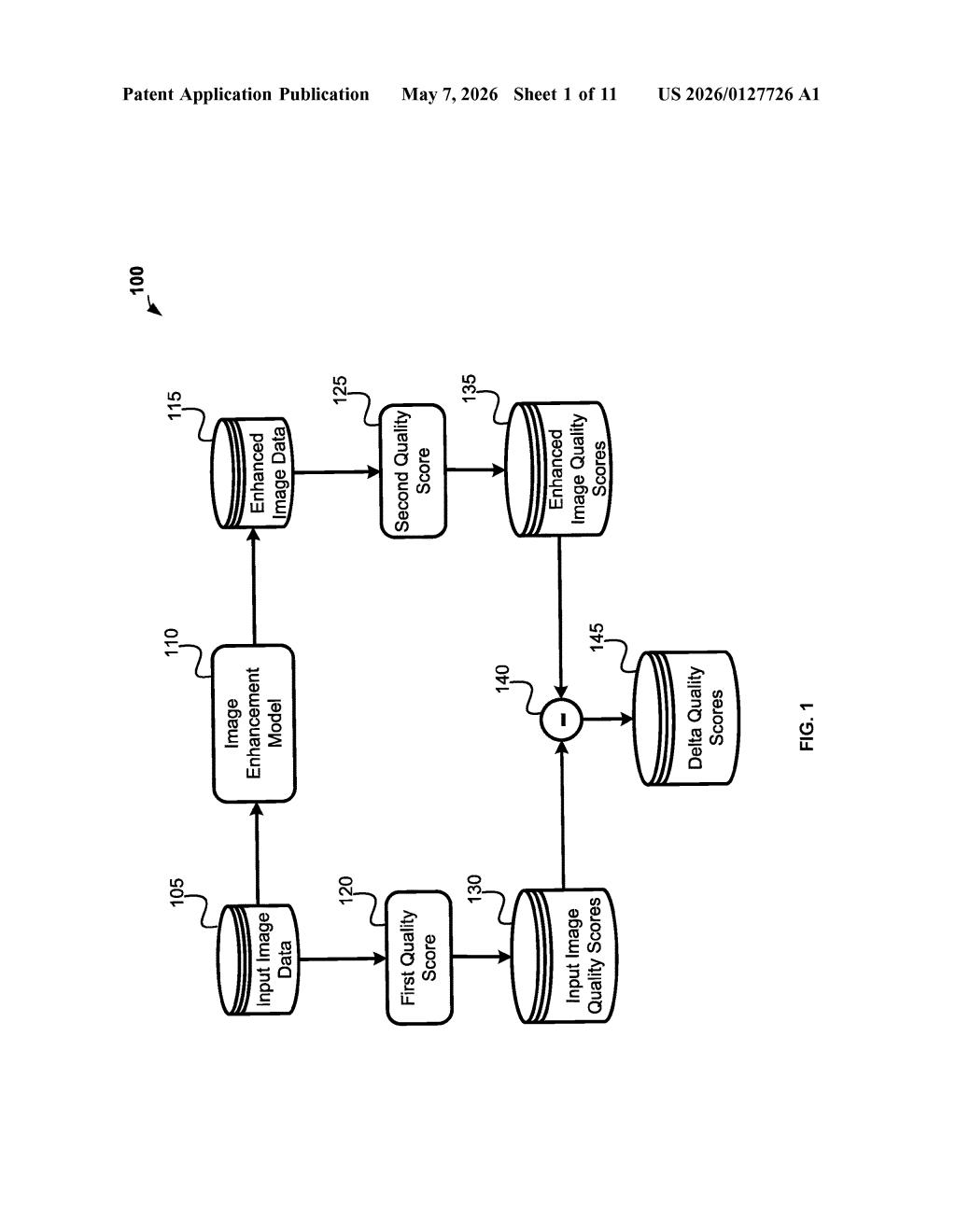
The idea is to train a small, fast AI model whose only job is to look at a photo and predict a quality-improvability score — basically, a number that says 'this image would benefit a lot from enhancement' or 'don't bother, it's fine as-is.' That score is calculated by comparing the original photo's quality rating to the rating of a version the enhancement AI already processed.
The result is a lightweight screener that runs before any heavy processing kicks in. Your phone (or Google's servers) only spend resources doing the full enhancement job on photos that are actually worth the effort — saving time, power, and avoiding unnecessary edits on photos that look great already.
How the delta quality score trains the gatekeeper model
The patent describes a two-stage training pipeline designed to produce a lean quality assessment model that predicts whether a given image is worth enhancing.
Stage 1 — Building the training data: An existing image enhancement model (one already trained to remove blur, noise, compression artifacts, etc.) processes a large batch of images. For each image, the system calculates:
- A first quality score for the original image
- A second quality score for the AI-enhanced version
- A delta quality score — the difference between the two, representing how much the enhancement actually helped
Stage 2 — Training the gatekeeper: Those delta scores become labels in a new training dataset. A separate, lighter quality assessment model is then trained on this dataset to learn the visual patterns that predict a high or low delta — meaning it learns to recognize the kinds of degradation (soft focus, grain, JPEG blocking) that enhancement tools can meaningfully fix.
At inference time, only this small model needs to run first. It outputs a quality-improvability score for any new input image, letting the system decide whether to invoke the costly enhancement pipeline at all. The patent's framing around perceptual quality (how humans judge image appearance, not just pixel-level metrics) suggests the scoring is tuned to match human visual preferences rather than abstract mathematical measures.
What this means for Google Photos and on-device AI
For products like Google Photos, this kind of selective triggering is a meaningful efficiency win. Running full neural-network enhancement on every uploaded image — billions per day — is expensive. A fast classifier that routes only 'fixable' images to the heavy pipeline could cut compute costs significantly without degrading user-visible quality.
For you as a user, the more interesting angle is on-device processing. Modern Pixel phones already use AI to sharpen and denoise photos at capture time. A lightweight improvability scorer could make that process smarter — skipping the enhancement step on already-clean shots, which helps preserve natural tonality and prevents over-processing artifacts. It's the kind of invisible plumbing that makes camera software feel more reliable over time.
This is unglamorous but genuinely useful infrastructure work — the kind of 'decide before you act' optimization that separates mature ML systems from naive ones. Google's computational photography team (Milanfar and Delbracio are well-published researchers in this area) clearly understands that knowing when <em>not</em> to enhance is as important as knowing how. Don't expect a flashy announcement, but do expect something like this quietly shipping inside Google Photos or Pixel camera software.
There are more where this came from
We read every patent application Big Tech publishes and send you the ones worth knowing. Plain English, free, every week.
Want this weekly breakdown for a company we don't cover? Patentlyze Pro →