
Samsung Patents a Faster Way for Wireless Earbuds to Recover Lost Audio Sync
Your wireless earbuds drop out, then spend frustrating seconds trying to reconnect to the audio stream. Samsung's new patent targets exactly that gap, describing a way for earbuds to bounce back almost immediately by remembering the broadcast before the dropout happened.
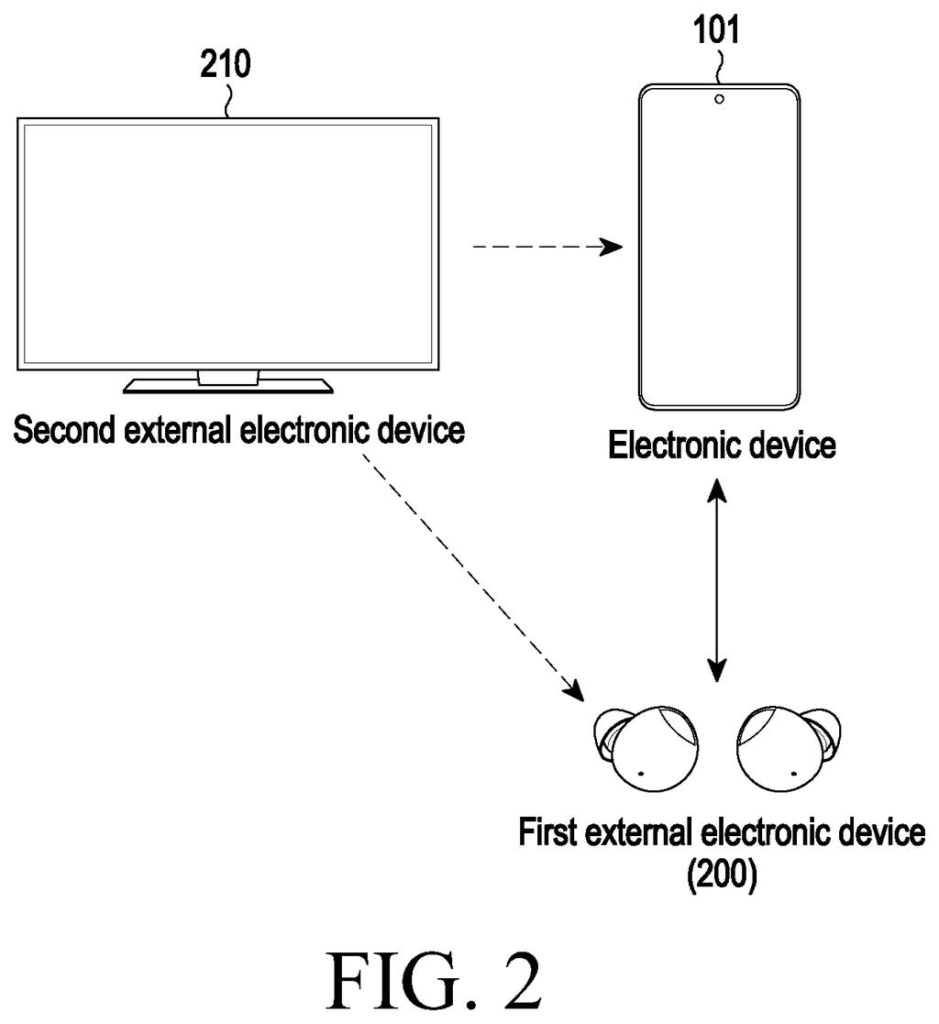
What Samsung's earbud sync-recovery patent actually does
Ever had wireless earbuds cut out right in the middle of a song or a public announcement? That stutter before the audio comes back is the problem this patent is trying to fix.
When your earbuds receive audio over a Bluetooth broadcast, they first have to sync up with a group of settings the transmitter sends out. Samsung's system saves those settings locally on the earbuds. If something goes wrong and the connection breaks, the device already has everything it needs to rejoin the stream quickly, without waiting to receive all that setup information again.
The practical target is shared audio situations: think airport gate announcements, museum audio guides, or the wireless sharing feature that lets one phone broadcast to multiple pairs of earbuds at once. In those cases, a dropout means waiting to resync from scratch. This patent describes a way to skip that wait.
… perform, via the communication circuitry, a first synchronization operation for at least one broadcast isochronous stream (BIS) broadcast by the external electronic device …
Translation: The earbuds first connect to the audio stream sent by your phone.
How the device stores and reuses broadcast group data
The patent centers on Bluetooth LE Audio, specifically a broadcast mode called Broadcast Isochronous Group (BIG). A BIG is a bundle of synchronized audio streams a single transmitter (like a phone or a TV) sends out to any compatible listener nearby, without requiring a one-to-one pairing. Each individual stream inside that bundle is called a Broadcast Isochronous Stream (BIS).
Here is the sequence the patent describes:
- The receiving device (earbuds or headphones) gets configuration data about the BIG from the transmitter and saves it to local memory.
- It then locks on to one or more BIS streams and starts receiving audio.
- If a BIG asynchronous event occurs (meaning the sync between the device and the broadcast breaks down, a dropout), the device detects that loss.
- Instead of waiting to receive fresh BIG configuration data from the transmitter all over again, it pulls the saved copy from memory and uses it to perform a second synchronization operation immediately.
The key technical claim is that reconnection is driven by locally stored configuration data rather than data re-fetched over the air. That distinction is small but the timing difference it creates in real conditions is what the patent argues as the improvement.
… detect a BIG asynchronous event corresponding to an asynchronous state for the BIG, and based on the BIG asynchronous event, perform, via the communication circuitry, a second synchronization operation …
Translation: When the earbuds notice they lost connection, they immediately try to reconnect using saved settings.
What this means for Bluetooth audio in crowded spaces
For everyday users, the gap this addresses is the annoying pause before audio resumes after a Bluetooth hiccup. In standard Bluetooth audio, a dropout forces the receiving device to rescan and resync from zero. In a crowded stadium, an airport, or any place where shared broadcast audio is being used, that delay is noticeable and repeated.
The patent matters most for Auracast, the Bluetooth standard that lets a single device broadcast to unlimited listeners simultaneously. Samsung's track record in Bluetooth audio patents suggests the company is preparing its hardware for wider Auracast rollout in Galaxy earbuds and hearing-accessible devices. A faster recovery mechanism is a quiet prerequisite for Auracast to feel reliable in public settings.
That makes this Samsung's 40th filing in Wearable patents we cover since May, a group that includes a self-designing watch face and single-signal color video decoding.
No new hardware is required here. The patent describes software logic that existing wireless earbuds and phones can already run, meaning a firmware update pushed over the air could be enough to ship it.
The improvement itself is narrow but deliberate. When a wireless audio broadcast drops and reconnects, this saves the session details so the device can rejoin immediately rather than starting the handshake from scratch, shaving off a noticeable pause.
That gap matters most in places where audio reliability is a hard requirement, like assistive listening devices in theaters or public announcement systems, rather than casual music streaming. This is infrastructure work that stops a future product from earning complaints it otherwise would not deserve.
There are more where this came from
We read every patent application Big Tech publishes and send you the ones worth knowing. Plain English, free, every week.
The drawings
12 drawing sheets from US 2026/0281666 A1 · click any drawing to enlarge


Want this weekly breakdown for a company we don't cover? Patentlyze Pro →