
Microsoft Patents a Tool That Shows How AI Systems Interpret Your Prompts on Video
Getting an AI to reliably do what you want is more art than science right now, and there's rarely a clear explanation for why a tweak to your phrasing suddenly fixes everything. Microsoft is filing a patent for a system that records and replays exactly how an AI model processes your instructions, turning a guessing game into something you can actually watch.
What Microsoft's AI prompt visualizer actually does
You're fine-tuning an AI chatbot for your company and it keeps giving slightly wrong answers, no matter how you reword your instructions. You change one sentence and it gets better, change another and it gets worse, but you have no idea why.
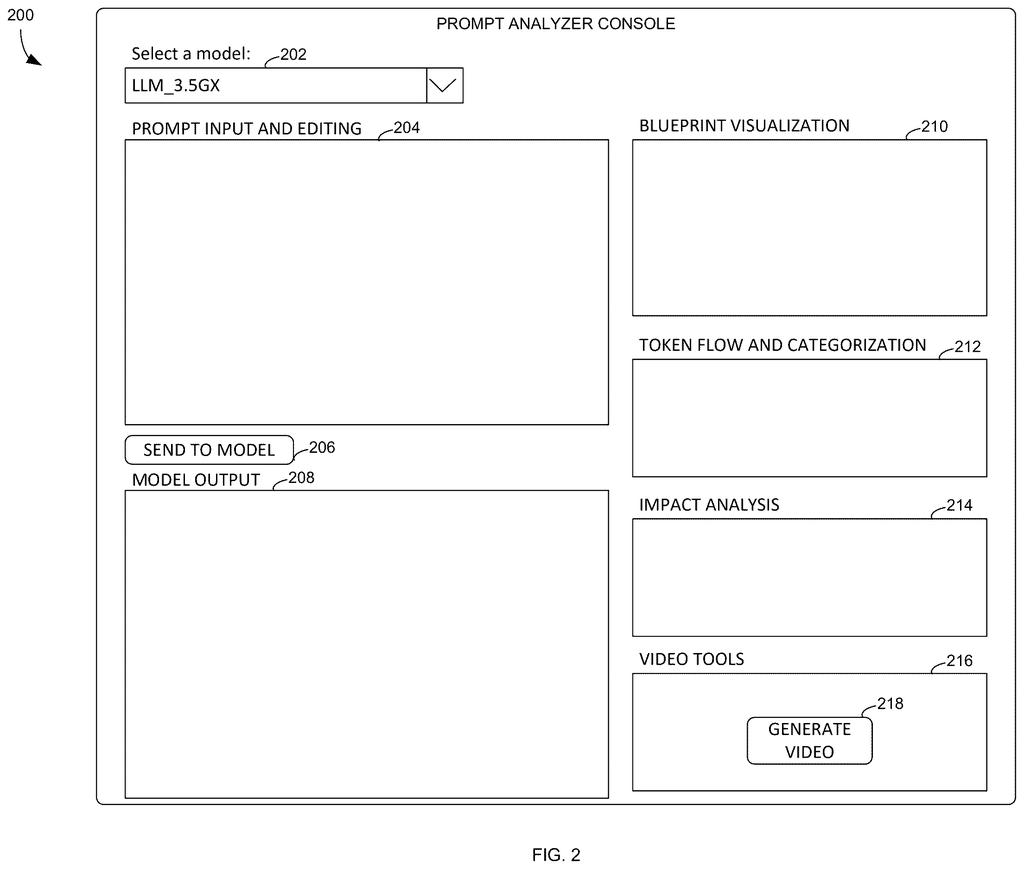
Microsoft's patent describes a tool that makes the AI's reasoning visible. It breaks your instructions into labeled chunks, things like your examples, your commands, and your background context, and then shows which parts of the AI's internal structure each chunk connects to. That relationship gets recorded as a short video so you can scrub through it and see exactly where things went sideways.
There's also a live console where you can edit your instructions and immediately see how the changes ripple through the AI's decision-making. Instead of submitting a new version and waiting for a result, you watch the impact in real time.
… categorizing tokens of the input prompt into categories comprising thoughts, actions, examples, and grounded data; rendering the model blueprint into a nodal format; generating, via a prompt-to-blueprint adapter, linkages between the categorized prompt tokens and corresponding nodes in the rendered model blueprint …
Translation: The tool breaks down your text into pieces like thoughts and examples, then maps them directly to the AI's internal traits.
How the blueprint maps your words to AI decision points
The system works in three main stages.
First, it builds a model blueprint. The AI model is mapped into a set of nodes, each representing a distinct property of the model: its areas of trained expertise, the rules it uses to choose one word over another (called token selection criteria), and so on. Think of it as an X-ray diagram of how the model thinks.
Second, it categorizes your prompt. Your input text is broken into tokens (roughly, words or word-fragments) and then sorted into four buckets: thoughts (reasoning steps), actions (instructions), examples (sample inputs and outputs), and grounded data (factual context you supply). A component called a prompt-to-blueprint adapter then draws connections between each categorized token and the relevant nodes in the blueprint.
Third, it records and replays the flow. A debugging console visualizes how information moves through the blueprint nodes based on those connections. You can edit the prompt live and watch the linkages update. The system also generates a video file that captures the entire interaction, so you can review or share a recording of how a specific prompt version behaved.
The video output is the headline feature: it gives developers a replayable artifact instead of just a static log.
This visualization system transforms prompt engineering from trial-and-error to a systematic approach by providing detailed insights into how LLMs interpret and process prompts.
Translation: It replaces guessing games with clear data on how the AI actually reads your instructions.
What this means for people who build with AI tools
Anyone building a product on top of a large language model, whether that's a customer service bot, a coding assistant, or an internal search tool, spends a lot of time rewriting prompts through trial and error. There are few tools to explain why one version works better than another. A visual, replayable debugger would make that process faster and more predictable, especially for teams sharing work across developers.
Microsoft's run of AI developer-tooling filings points to a consistent investment in making large language models easier to work with at the production level, not just easier to talk to as an end user. For developers, a patent like this sits squarely in that gap: less guesswork, more evidence.
Microsoft files its 56th patent in our Language AI coverage since May, adding to earlier work like one on layered graphic design and text to animation code.
Getting AI to produce useful output requires giving it careful instructions, and right now nobody can see why one set of instructions works and another fails. Teams spend days rewording and retesting with no visibility into what changed or why, which is an expensive way to build anything.
That invisible feedback loop is exactly what this patent targets, and the stakes are high enough to justify serious tooling. The sharpest idea is the video recording of how instructions moved through the system, something you could attach to a report or replay in a team meeting rather than starting from scratch each time something breaks.
The open question is whether the map matches the territory. Real AI models do not have clean labeled regions the way the patent's diagram suggests, and if the visualization is more metaphor than measurement, teams could walk away feeling informed while still guessing.
There are more where this came from
We read every patent application Big Tech publishes and send you the ones worth knowing. Plain English, free, every week.
The drawings
5 drawing sheets from US 2026/0278327 A1 · click any drawing to enlarge


Want this weekly breakdown for a company we don't cover? Patentlyze Pro →