
Google Patents a Voice Assistant That Improves Itself by Watching What You Do Next
Every time a voice assistant mishears you, it usually just moves on. Google is patenting a system that turns your reaction after that error into a lesson the assistant can actually learn from.
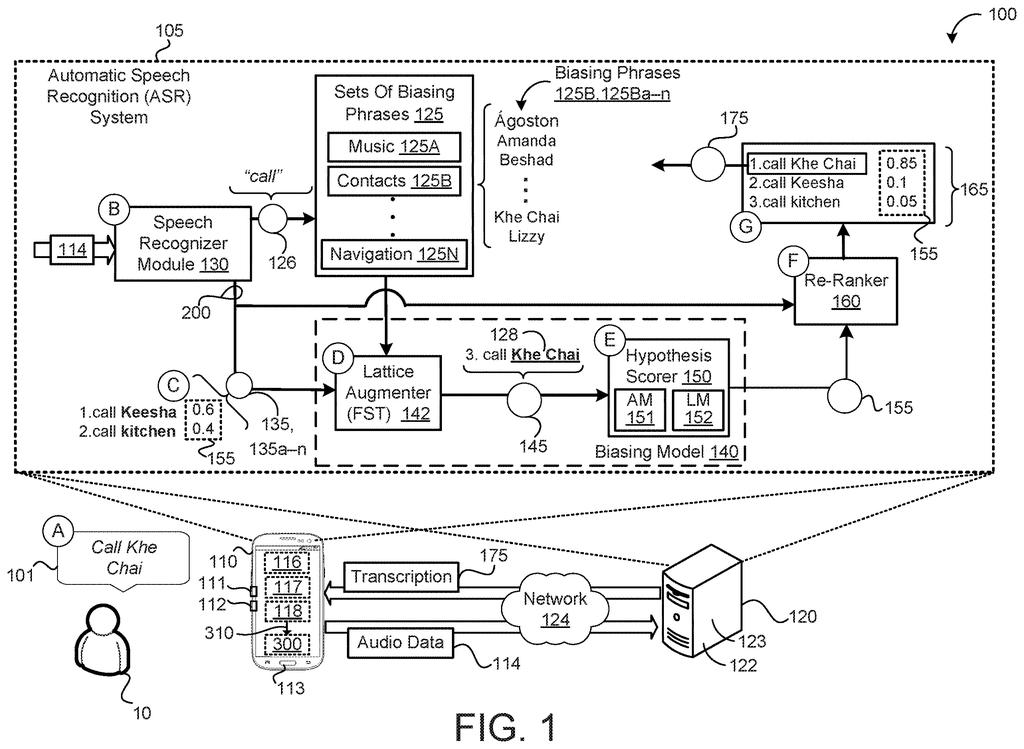
How Google's voice AI learns from your reaction
You're trying to set a reminder by voice and your phone pulls up the wrong app. You immediately close it and try again. To your assistant, that's just a failed command. To Google's new system, that sequence of events is data.
This patent describes a way for a voice assistant to watch what happens after it acts on a voice command. Did you accept the result? Did you undo it? Did you ignore it entirely? Those reactions become a score that tells the system how confident it should be in its own transcription. If the score is high, the transcription gets used to train the speech model. If the score is low, it gets skipped.
The system is also built around personalized vocabulary, so if you use a specific shorthand for a contact or a playlist, the assistant learns to favor that phrase for your account specifically. It's a feedback loop that runs in the background without asking you to correct anything manually.
… receiving a behavior signal representing an interaction between the user and the application associated with the application performing the action specified by the biased transcription; processing, by a trained machine learning model, the behavior signal representing the interaction between the user and the application to generate a confidence score …
Translation: The system watches how you react to the app's action to figure out if it understood you correctly.
How behavior signals feed back into the speech model
The patent describes a three-stage pipeline that connects voice transcription to user behavior to model training.
First, when a user speaks a voice command, a speech recognizer produces a biased transcription: a version of the text that has been nudged toward a personalized vocabulary list. If you have a contact named "Mo" or a playlist called "chill set," the system is pre-loaded to recognize those phrases as candidates, making them more likely to appear in the transcription output.
Second, once the assistant acts on that transcription, a behavior signal is collected. This could be a tap, a swipe away, an undo action, or simply continued engagement with whatever the app opened. The patent treats these interactions as implicit feedback, avoiding the need for the user to say "that was wrong."
Third, a trained confidence model (a machine learning model that estimates how likely a transcription was correct) takes those behavior signals as input and outputs a score. That score gates the training step: transcriptions with high confidence scores are used to update the speech recognizer; low-scoring ones are filtered out. This prevents bad transcriptions from compounding errors in future recognition.
… generating, as output from a confidence model, a confidence score of the biased transcription based on the one or more user behavior signals input to the confidence model and, based on the confidence score output from the confidence model, training a speech recognizer on the biased transcription.
Translation: It uses your subsequent behavior to grade its own performance and get better at understanding you.
What self-correcting voice AI means for your daily use
The biggest frustration with voice assistants is that they feel static. You correct them, they forget, and you correct them again. This patent describes a path toward an assistant that accumulates knowledge from your normal behavior without ever asking you to do anything extra. Over time, the system would theoretically get better at the words and phrases you actually use.
For users who rely on voice input heavily, such as people with motor disabilities or anyone driving, this kind of passive learning matters more than it does for someone who occasionally asks for the weather. Google has been filing around personalized speech recognition since at least 2023, and this patent adds a behavioral feedback layer that earlier approaches lacked.
Google's 36th filing we've tracked since May on AI agents that act for you, after earlier work on fetching login codes from email and voice search across streaming apps, adds to a pattern of Google building software that acts for you.
The problem this patent addresses is real and persistent. Voice assistants fail on proper nouns, nicknames, and niche vocabulary at a rate that frustrates everyday users, and the standard fix is to manually teach the assistant or repeat yourself until it gets lucky. That friction drives people to stop using voice input altogether.
The approach here is proportionate to the problem. By treating post-command behavior as a signal rather than requiring explicit corrections, Google sidesteps the biggest barrier to personalization: people simply do not bother to train their own devices. A system that improves from what you already do naturally is a more realistic path to accuracy than one that asks for effort.
The open question is whether behavior signals are clean enough to be useful. Closing an app after a voice command could mean the assistant was wrong, or it could mean you changed your mind, got distracted, or just finished the task. How the confidence model distinguishes those cases is not fully detailed here, and that gap is where the idea either delivers or falls apart.
There are more where this came from
We read every patent application Big Tech publishes and send you the ones worth knowing. Plain English, free, every week.
Want this weekly breakdown for a company we don't cover? Patentlyze Pro →