
Google Patents a Way to Let AI Assistants Run App Tasks Without Tapping the Screen
Google has a plan to make AI assistants actually useful inside your apps, and it doesn't require app developers to do much extra work. The trick is pre-built automation scripts that live inside the app itself.
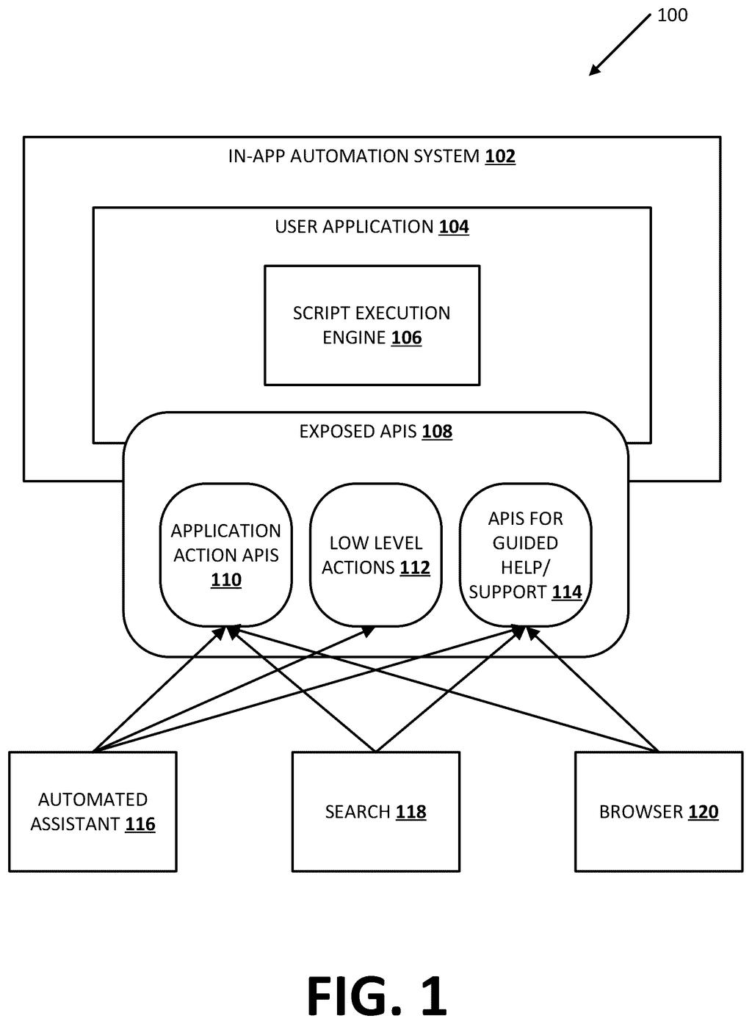
What Google's in-app automation scripts actually do
You're using a shopping app and you ask your phone's AI assistant to reorder last month's purchase. Right now, that kind of request usually fails, stalls, or requires the assistant to awkwardly tap through menus it can barely read. It's unreliable because most apps weren't built to be controlled by AI.
Google's patent describes a system where small automation scripts are packed inside the app itself before it ever reaches your phone. When you give the AI a task, it checks whether one of those pre-written scripts can handle it. If yes, the script runs the steps in the background, no tapping required.
The clever part is that developers don't have to write these scripts by hand. Google proposes generating them automatically when an app is submitted to the app store, or letting developers add them through a software toolkit. Either way, the goal is apps that an AI can operate as fluently as a human user would.
… processing the instruction using a script execution engine of the user application to determine whether an automatically generated script of a set of automatically generated scripts can perform the given task …
Translation: The app checks if a pre-made automation script can handle the user command.
How the script engine picks and runs the right task
The system centers on a script execution engine, a small piece of software embedded directly inside a user's app. When you give an instruction to an AI assistant, the engine checks a library of pre-generated scripts to see if any of them match the task you described.
Each script is a sequence of low-level UI actions (the same taps, swipes, and form entries a human would make) recorded and packaged ahead of time. Crucially, these scripts were generated before you ever made a request, so there's no delay while an AI tries to figure out the interface on the fly.
Script generation can happen two ways:
- Automatically when an app is published to an app store, so no developer effort is needed
- Via a software development kit (SDK) that developers can integrate themselves for more control
If a matching script exists, it runs locally on your device inside the app. If no script covers the task, the system can fall back to other methods, such as a generative AI model attempting to handle the request differently. The design deliberately avoids depending on developers building custom APIs (application programming interfaces, the connectors apps normally use to talk to outside software), which historically has been the bottleneck for AI-app integration.
… a script execution engine is integrated directly into the user application, where the script execution engine executes script(s) to perform task(s) in the user application without extensive use of developer-implemented application programming interfaces …
Translation: Built-in software runs tasks inside the app without needing special developer tools.
What this means for AI assistants on your phone
For regular users, this would mean an AI assistant that can actually finish tasks inside third-party apps instead of just opening them and handing control back to you. Booking a table, filing an expense, or skipping to a specific setting could all happen in the background while you stay in another app.
For the broader AI assistant market, this is a meaningful architectural bet. Apple's Siri and Google's own Gemini have both struggled to take real action inside apps without deep developer cooperation. Google's string of AI-assistant integration filings suggests the company is trying to solve that problem through infrastructure rather than waiting for every app maker to build support from scratch.
Google's 38th filing we've tracked since May on agents that act for you builds on earlier work like pulling action items from meetings and learning from what you do next.
The central cost of this design is fragility. Pre-written instructions work fast and run without an internet connection, but if an app update moves a button or renames a menu, those instructions break and the user just sees their task fail with no explanation.
Google's answer is to regenerate the instructions automatically whenever a developer uploads a new app version, keeping them current. That's a reasonable fix, but it depends on the app store review process being fast and reliable, which is not always how that process goes in practice.
The trade reads as worth accepting. Asking an AI to interpret a live screen in real time on every single tap is slower, more error-prone, and drains battery and data. Packaging tested instructions inside the app at publication time is quiet, behind-the-scenes work, but that kind of quiet work is usually what actually reaches people at scale.
There are more where this came from
We read every patent application Big Tech publishes and send you the ones worth knowing. Plain English, free, every week.
The drawings
9 drawing sheets from US 2026/0277771 A1 · click any drawing to enlarge


Want this weekly breakdown for a company we don't cover? Patentlyze Pro →