
Google Patents an AI That Listens to Your Environment and Suggests What to Do Next
Google is patenting a system where your device passively listens to what's happening around you, figures out what you probably want to do next, and presents an ordered list of suggested actions — no wake word required.
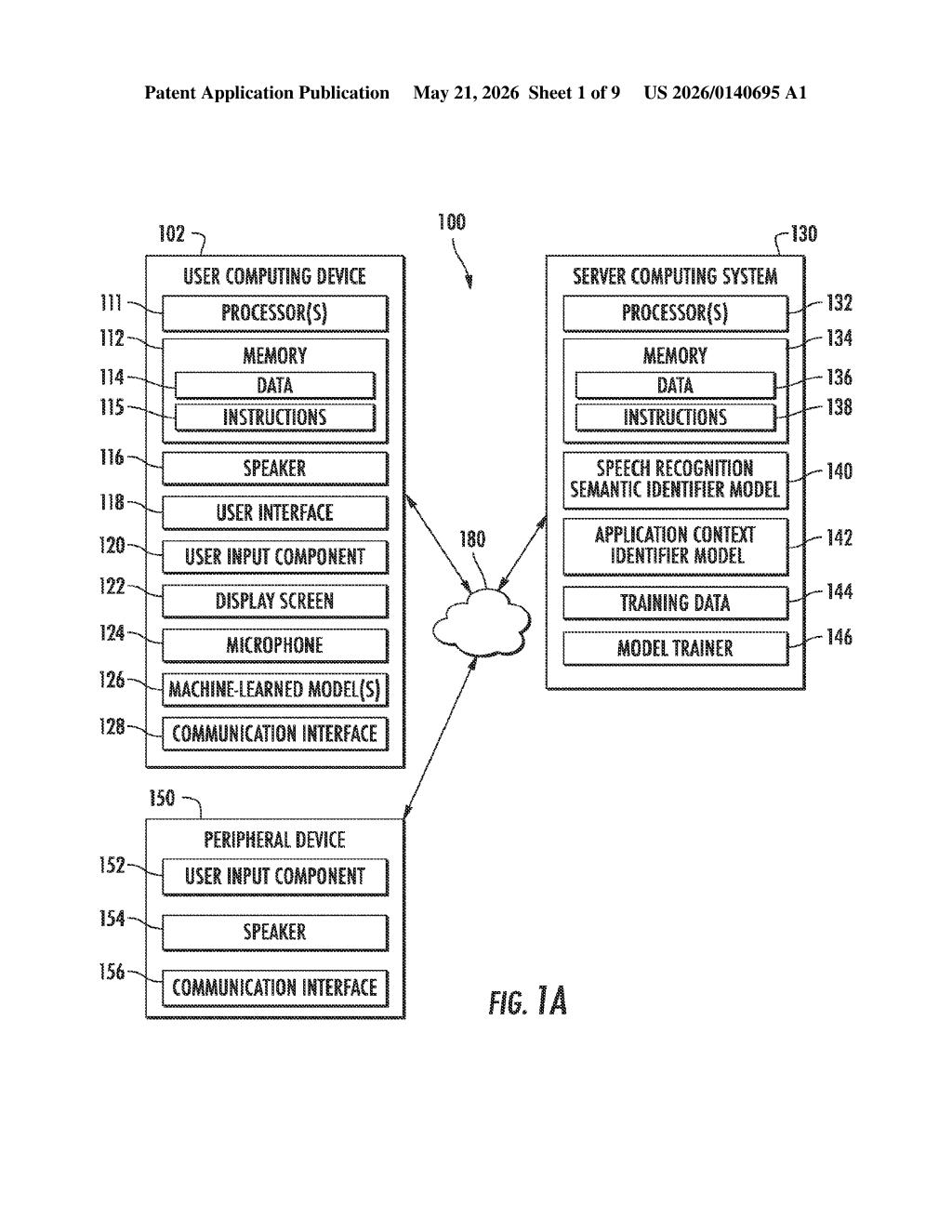
What Google's ambient-audio command system actually does
Imagine you're in a meeting and someone says, "Can you send me that report?" Your phone, sitting on the table, has been passively listening. Instead of you manually pulling up an app and navigating, the phone surfaces a small interactive menu: "Share document," "Draft email," "Start a call." You tap the one you want, and it happens.
That's roughly what this Google patent describes. The system captures ambient audio — background sound and conversation in your environment — and uses it as context to figure out what actions would be most useful right now. It then generates a ranked, ordered list of those actions, called a command path, and shows it to you as a UI element you can tap.
The key design choice here is that you stay in control. The AI doesn't just act on what it hears — it proposes options and waits for your explicit selection. Think of it less like a genie and more like a very attentive assistant who lays out your options and lets you decide.
How the system builds and presents a command path
The patent describes a server-connected computing system that runs an Application Context Identifier Model — essentially an AI model trained to infer user intent from surrounding audio and other context signals.
The pipeline works in a few stages:
- Context capture: The device continuously collects an ambient audio signal (passively recorded background sound, not necessarily a direct command).
- Command path generation: The AI model processes that audio alongside other context data to produce an ordered sequence of command actions — ranked by predicted relevance to what the user likely needs next.
- Interactive UI presentation: The system surfaces these options as a visual, tappable interface element — not a voice prompt, but something you look at and choose from.
- Confirmed execution: Only after the user explicitly selects an action does the system actually perform it.
The claim is notably broad — it covers any computing device, any ambient audio signal, and any resulting command actions. The server-side model doing the inference suggests this is designed to be resource-light on the device itself, with the heavy AI lifting happening in the cloud.
What this means for Google Assistant and Pixel devices
For Google, this is squarely in the territory of making Google Assistant — or whatever evolves from it — feel less like a tool you invoke and more like something that anticipates you. Right now, voice assistants require explicit activation. This patent describes a world where the device is contextually aware all the time and surfaces suggestions proactively, while still requiring a human tap to act.
The privacy implications are real and obvious: persistent ambient audio capture is exactly the kind of thing that makes people uneasy. But the human-confirmation step baked into this design is notable — it suggests Google is at least architecturally aware of that tension and is building in a check. Whether that's enough will depend heavily on what "ambient audio" means in practice and how data is handled.
This is a meaningful directional signal from Google — it points toward a future where your assistant doesn't wait to be called but instead reads the room and prepares your options. The human-confirmation requirement is a smart design choice that makes it less creepy than fully autonomous action, but the ambient-audio angle will draw scrutiny regardless. Worth watching closely as Google's Pixel hardware and Gemini assistant roadmap develop.
Get our take in your Top Stories
Liked this breakdown? Add Patentlyze as a preferred source on Google, and our plain-English take shows up more often in your Top Stories the next time Google patent news breaks.
There are more where this came from
We read every patent application Big Tech publishes and send you the ones worth knowing. Plain English, free, every week.
Want this weekly breakdown for a company we don't cover? Patentlyze Pro →