
IBM Files Patent for Teaching AI Assistants to Understand Vague Time References
Ask a database for sales from "last weekend" and it has to guess whether you mean Saturday alone or Saturday and Sunday. IBM has a patent application on a way to stop the guessing.
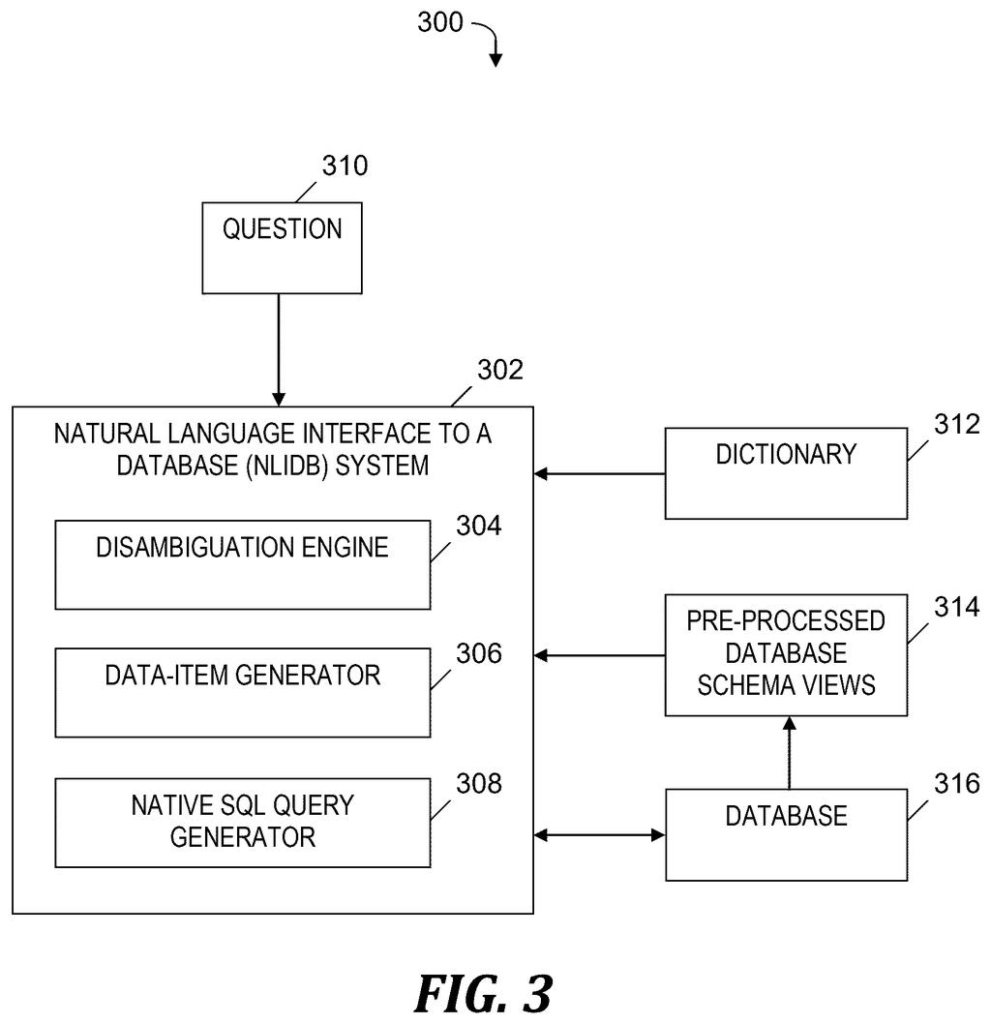
What IBM's time-phrase decoder actually does
Every time someone at a company types "show me sales for last weekend" into a reporting tool, the software has to guess what that means. Is it just Saturday, or Saturday and Sunday? And when a question asks what hasn't sold yet, does "yet" mean as of today?
IBM's patent application describes a way for a question-answering tool to sort these fuzzy time phrases into types and handle each one differently. Business shorthand like year-to-date gets looked up in a dictionary and worked out step by step. Phrases like "last weekend" get whatever meaning your company has chosen, using a specially prepared view of the data.
You ask in everyday English, and the tool turns the time phrase into exact dates before it fetches your answer. That makes it less likely to come back wrong or inconsistent.
… detecting a temporal expression in the question and identifying a type of the detected temporal expression, the type being an irregular, a user-defined, or a special temporal expression …
Translation: The system spots vague time words and categorizes them into different types like irregular or user defined.
How IBM turns 'last weekend' into a database query
The system takes a plain-language question, finds any time phrase in it, and sorts that phrase into one of three types: irregular, user-defined, or special (tied to a particular business use case).
Irregular phrases are business shorthand such as year-to-year (YTY), year-to-day (YTD) or Q1. The system spots them by matching against a dictionary, then runs a series of extra steps through its NLP pipeline (a chain of language-processing stages), shaped by what the user knows about their own business. For "YTY revenue growth for this quarter," asked on June 10, 2022, it compares April 1 to May 30, 2021 with the same stretch of 2022, then works out the percentage change.
User-defined phrases get a meaning the company picks, such as "last weekend" meaning Saturday only or both weekend days. Special phrases depend on the use case. In both, the database is prepared ahead of time with "views" (saved, reshaped look-ups of the data). In a billing example, each timestamp is split into year, month, quarter and day-of-week columns. In a purchasing example, a $12,000 savings spread over 12 months is prorated to $6,000 for the first half of 2022.
After that, the pipeline follows these steps:
- Replace the time phrase with exact dates and rewrite the question.
- Parse the rewritten question into a data item with time filters.
- Convert it into a native SQL query (the standard database language).
- Send it to the database and return the answer.
Why this matters for finance and buying teams
If your company has a tool where you type questions about sales, billing or savings, the time phrase is where answers most easily go wrong. This patent targets that weak spot. The examples come from billing and invoicing and from purchasing, the areas where a figure for "this quarter" or "until today" can change which decision gets made.
The patent office has approved this application. Once IBM pays the final fee, it should be issued as a granted patent. It is not a product, and the filing does not name one. It shows how IBM is thinking about making business data tools answer ordinary questions correctly on the first try.
IBM's 401st filing in our IBM coverage since May adds to a run that includes plain-English security queries and sorting private documents blindly.
Nothing here needs new hardware. It is all software that sits between a person typing a question and a database that already exists, which puts it close to the shippable end of the spectrum.
The real cost is the setup. Someone has to build the dictionary of company terms, decide what "last weekend" means, and prepare the database with extra columns and views before the first question arrives. Each business area, such as billing or purchasing, needs its own preparation.
The shortest route to a product is a feature inside an existing business reporting or chat tool, with a customer's own analyst filling in the definitions. It is useful, practical work for finance and procurement teams, and it asks very little of a reader's imagination.
Get our take in your Top Stories
Liked this breakdown? Add Patentlyze as a preferred source on Google, and our plain-English take shows up more often in your Top Stories the next time IBM patent news breaks.
There are more where this came from
We read every patent application Big Tech publishes and send you the ones worth knowing. Plain English, free, every week.
The drawings
4 drawing sheets from US 2026/0320035 A1 · click any drawing to enlarge


Want this weekly breakdown for a company we don't cover? Patentlyze Pro →
Be the first to weigh in