
Nvidia Files Patent to Read Your Texts Aloud in the Sender's Own Voice
Your phone reads texts aloud in one flat, generic voice. Nvidia's filing describes a version that speaks each message in a voice resembling whoever wrote it.
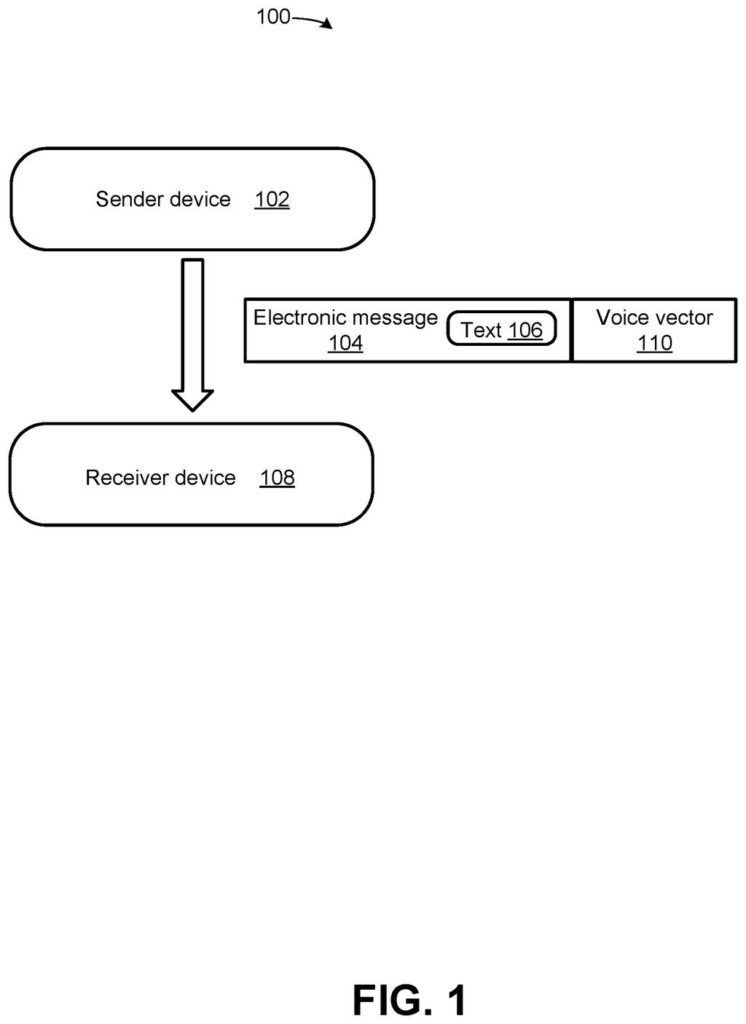
What Nvidia's voice-matched text reader does
When your phone or car reads a text out loud today, it uses one generic voice for everybody. Your mom, your boss and a delivery notice all sound the same. Nvidia's filing describes a way to read each message in a voice that resembles the person who wrote it.
Here is the idea. Your phone listens to you talk, for example during phone calls, and boils your voice down to a compact set of numbers covering things like pitch, speed and accent. That voice profile travels with your message, or gets saved in the recipient's contacts. When your friend gets your text, their device combines your words with your profile and speaks the message in a voice that sounds like yours.
The filing also covers reading messages aloud in a different language, and playing them through a car's speaker while you drive.
… generate, using the one or more neural networks, a synthetic speech recording based on an electronic message, wherein audio properties of the synthetic speech correspond to the plurality of vectors representing the one or more properties of the user's voice.
Translation: AI turns a text message into spoken audio that matches a specific person's vocal traits.
How a short voice profile shapes the speech
Claim 1 covers a processor that, when software asks for it through an API call (a standard request one program makes to another), does two things with neural networks (software trained on examples to spot patterns). First, it produces several lists of numbers, called vectors, of different lengths that describe features of a person's voice. Second, it generates a synthetic speech recording of an electronic message whose sound matches those vectors.
The description fills in the setup. The sender's device builds the voice profile from samples of speech, with examples of 1 to 10 minutes of audio gathered from phone calls, video calls or reading prompts. From there:
- The profile can ride along with the message as metadata (behind-the-scenes label data), or be sent separately.
- The receiving device can store it in a contact list under the sender's identifier.
- A multi-speaker text-to-speech model (software that can talk in many different voices) takes the text plus the profile and produces the audio.
The filing also describes encrypting the profile with keys that expire, translating the text into another language first (English to German is the example), and converting text like '3:45' into spoken form. The profile types it names are d-vectors, x-vectors and i-vectors, which are different ways of boiling a voice down to numbers. Those numbers can also be used to identify a speaker.
Apparatuses, systems, and techniques to translate an electronic message into speech.
Translation: Hardware and software methods convert typed messages into spoken words.
Why texts read aloud could sound like the sender
The practical upside is for messages you hear instead of read, such as while you drive or cook. They could sound like the people who wrote them, so you can tell by ear whether a text is from your sister or your boss. The filing specifically mentions a phone passing a text to a car's speaker while the vehicle is in motion.
The catch is that a voice profile works as a voice fingerprint. The filing notes a vector like this can verify who is speaking, which is why it describes encrypting the profile, limiting it to one use or a time window, and using privacy settings to control who can access it. How well those controls work would matter a lot in any real product.
This is the 24th Nvidia filing in our voice and speech AI coverage since May, following one on fixing 'NVIDIA' mishearing and one on stopping face glitches.
Claim 1 is short and wide. It covers a processor that, when another program asks through an API call, builds sets of numbers describing someone's voice and then produces a spoken recording of a message matching those numbers.
Look at what the claim leaves out. Nothing in it mentions texting, sending the profile along with a message, encryption, contact lists or cars. Those details live only in the description. As written, the claim describes any chip that turns written words into speech shaped by a person's voice profile, whoever the message came from.
The odd phrase is 'vectors of varying dimensionalities,' meaning number lists of different lengths. The description talks about a single fixed-length profile (one example has 500 numbers), so that wording is the part of the claim most likely to narrow it. The broad reading still carries the story: a chip-level claim on speaking in a person's voice.
Get our take in your Top Stories
Liked this breakdown? Add Patentlyze as a preferred source on Google, and our plain-English take shows up more often in your Top Stories the next time Nvidia patent news breaks.
There are more where this came from
We read every patent application Big Tech publishes and send you the ones worth knowing. Plain English, free, every week.
The drawings
55 drawing sheets from US 2026/0341269 A1 · click any drawing to enlarge


Show the other 47 sheets


Want this weekly breakdown for a company we don't cover? Patentlyze Pro →
Be the first to weigh in