
Qualcomm Patents an AI System That Manages 5G Chip Memory on the Fly
Your phone's 5G modem constantly juggles memory to handle dropped packets and incoming data — and Qualcomm thinks a generative AI model trained on wireless protocol 'language' can do that job far more efficiently than today's fixed rules.
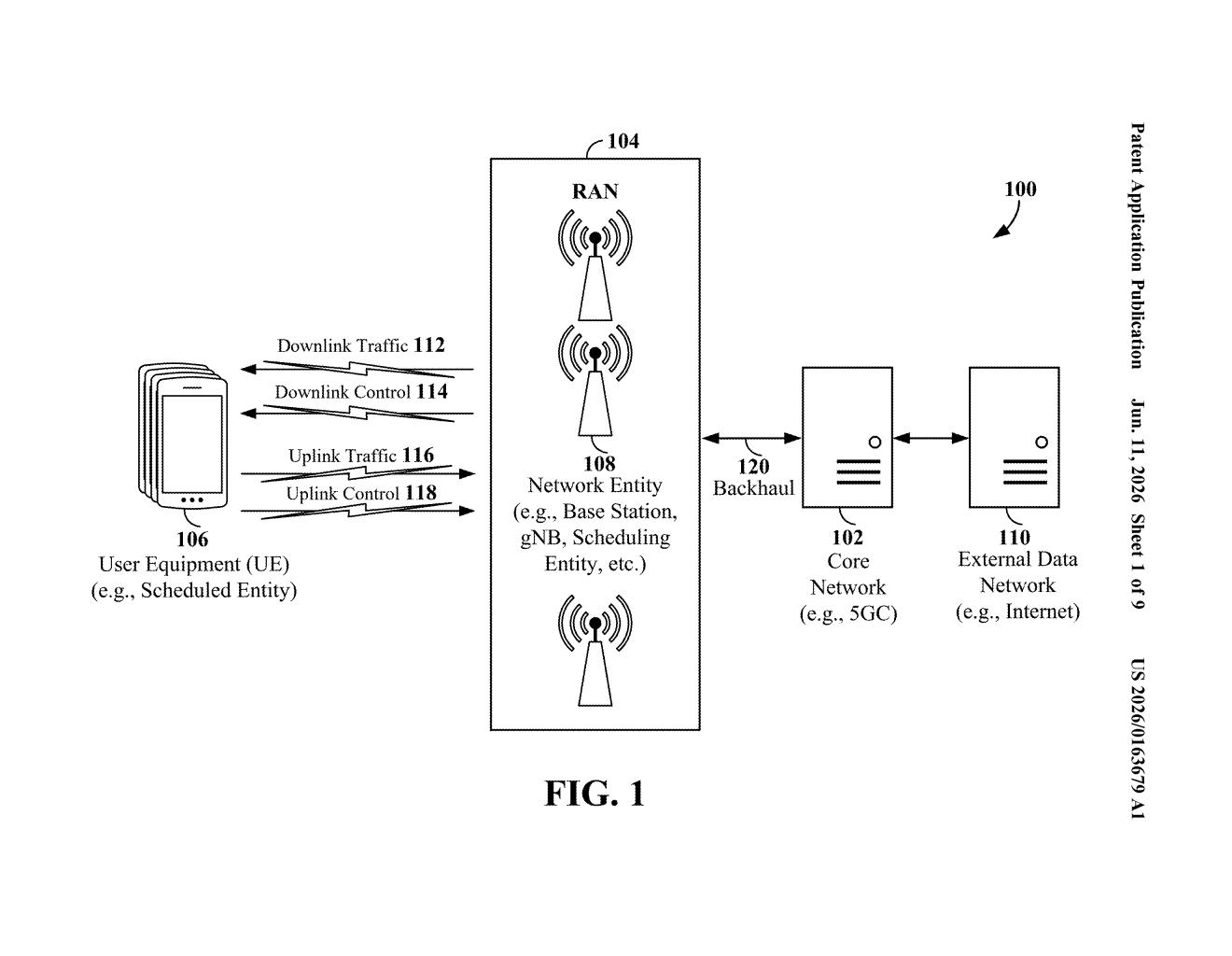
What Qualcomm's AI-driven 5G memory trick actually does
Imagine your phone's 5G connection as a busy postal sorting office. When a package goes missing, the system has to hold space in reserve just in case it needs to resend it. Right now, that reserved space — the buffer — is allocated by static rules baked into the chip. Qualcomm's patent describes replacing those rules with an AI that actually reads the wireless signals coming in.
The AI model is trained on what Qualcomm calls a "wireless language" — essentially a structured way of representing 5G protocol messages, the same way a language model learns English. It converts incoming network signals into tokens (chunks the AI can reason about), detects patterns in how the network is behaving, and then tells the chip how much memory to reserve — or release — at any given moment.
The practical upside: less wasted memory on your modem chip, which could mean better performance under congested network conditions and, potentially, lower power draw. It's a narrow but real improvement to something you'd never see but definitely feel.
How the generative AI model reads and reshapes buffer allocation
The patent describes a processor-and-memory system that runs a generative AI foundation model — a large pretrained model similar in architecture to the kind that powers chatbots, but trained specifically on wireless protocol data rather than human text.
Here's the pipeline the patent outlines:
- Input conversion: Raw wireless protocol messages are translated into a "wireless language" — a structured representation the AI understands.
- Tokenization and embedding: That language is broken into tokens (discrete units) and mapped to numerical vectors called embeddings, which carry semantic meaning the model can process.
- Pattern capture: The foundation model identifies statistical patterns and relationships across those embeddings — essentially learning what the network is likely to do next.
- Memory controller output: Those statistics (or the model's direct output) feed into a dynamic memory management controller, which decides how much HARQ buffer memory (the space used to store packets that may need to be retransmitted) and logical channel buffer memory (holding data awaiting transmission) to allocate or free up in real time.
HARQ (Hybrid Automatic Repeat Request) is the 5G mechanism that asks a base station to resend lost data packets — a fundamental part of keeping your connection reliable. Managing that buffer poorly wastes memory; managing it well keeps the modem lean and fast. The AI's job is to predict when to hold more memory in reserve and when to let it go.
What this means for 5G modem efficiency and battery life
5G modems — including Qualcomm's Snapdragon X-series chips found in most flagship Android phones and recent Windows laptops — have to balance memory allocation constantly. Static rules are inherently conservative: they reserve more buffer space than necessary to avoid edge cases, which wastes on-chip memory and draws extra power.
If Qualcomm can replace that conservative static logic with an AI that accurately anticipates network behavior, you could see real-world gains in connection stability under load, lower modem power consumption, and potentially more room on the chip for other functions. It's not a headline feature, but modem efficiency is one of the less-discussed levers in smartphone battery life — and Qualcomm controls more of that market than anyone else.
This is unglamorous infrastructure work, but it's exactly the kind of place where applying AI actually makes engineering sense — the input data is structured, the goal is clearly defined, and the current approach (static rules) has an obvious ceiling. Whether the inference overhead of running even a lightweight foundation model on a modem chip offsets the memory savings is the real question, and the patent doesn't answer it. Worth watching if you follow modem silicon.
There are more where this came from
We read every patent application Big Tech publishes and send you the ones worth knowing. Plain English, free, every week.
Want this weekly breakdown for a company we don't cover? Patentlyze Pro →