
Apple Patents the Internal Mechanics Behind the Apple Watch Crown
Apple has filed a patent laying out exactly how the Digital Crown on an Apple Watch handles two very different kinds of input at once: spinning and pressing. It's a window into the mechanical engineering that makes one tiny knob do two distinct jobs.
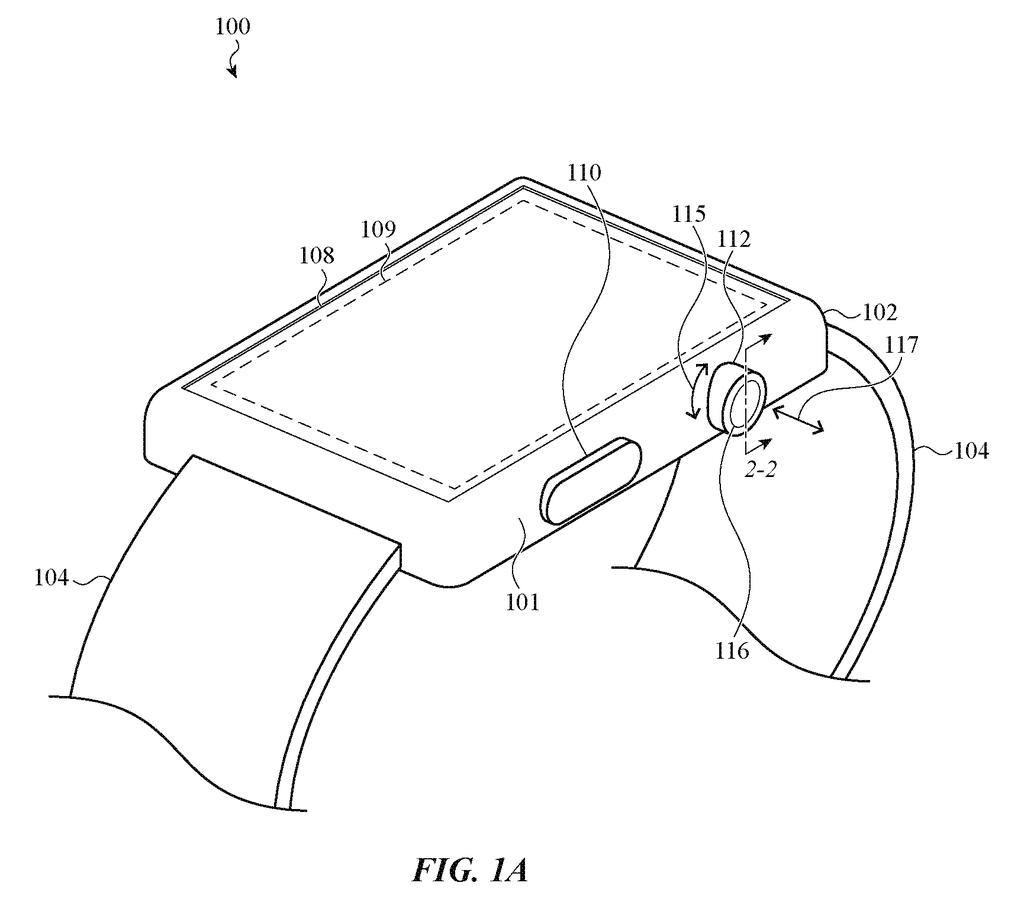
What Apple's Watch crown patent actually covers
Imagine turning the small knob on the side of an Apple Watch to scroll through a list, then pressing it in like a button to confirm a selection. Those feel like two completely different actions, and internally, they are handled by two completely different systems packed into a very small space.
Apple's patent describes how the crown's internal shaft travels through a slot inside the watch housing and through a dedicated switch element. When you spin the crown, a rotation sensor picks that up. When you push the crown inward, a physical feature on the shaft presses against the switch and registers a click.
This is fundamentally a description of existing Apple Watch technology, filed to establish or protect the specific mechanical arrangement Apple uses. It's less about a new invention and more about documenting the precise design of a system millions of people already use every day.
How the shaft assembly handles both spin and press
The patent describes an input system inside an electronic watch that supports two distinct types of input from a single crown component: rotation and translation (pushing inward).
The key components work together like this:
- A knob sits outside the watch housing, exposed for the user to touch.
- A shaft assembly connects to the knob and threads through an opening in the watch's side wall, then through a hole in a dedicated switch element positioned inside the housing.
- The shaft has a built-in actuation feature, a physical protrusion or shoulder, that physically contacts and triggers the switch element when the crown is pushed inward (translational input).
- A separate rotation sensing system monitors the spinning motion independently.
By routing the shaft through the switch element rather than alongside it, Apple's design lets pressing and spinning use the same crown without the two sensing systems interfering with each other. The switch element's opening along its top is specifically shaped to accommodate the shaft passing through it while still responding to the push motion.
What this means for Apple Watch input design
The Apple Watch Digital Crown is one of the more elegant input solutions in consumer electronics: a single physical control that scrolls, selects, and in some models measures heart rate. Patents like this one protect the specific mechanical implementation Apple developed, making it harder for competitors to replicate the exact internal arrangement.
For Apple Watch users, nothing changes day-to-day. But for the broader wearables industry, detailed mechanical patents like this define the design space other companies have to work around. If Apple's specific shaft-through-switch geometry is protected, rival smartwatch makers need to find different internal layouts to achieve the same two-in-one crown behavior.
This is a fairly routine mechanical design patent covering technology that almost certainly already ships in Apple Watch. It's not a peek at something new; it's Apple formalizing its intellectual property around a control scheme it has sold for over a decade. Worth a quick look if you're curious about what's inside the crown, but don't expect any product reveals here.
There are more where this came from
We read every patent application Big Tech publishes and send you the ones worth knowing. Plain English, free, every week.
The drawings
19 drawing sheets from US 2026/0219637 A1 · click any drawing to enlarge


Want this weekly breakdown for a company we don't cover? Patentlyze Pro →