
Apple Patents an Apple Watch That Detects Surface Taps Using Light
Apple is working on an Apple Watch that can tell when your hand taps a table, desk, or any surface — without you ever touching the watch itself. The trick is an optical sensor hidden behind the watch crown.
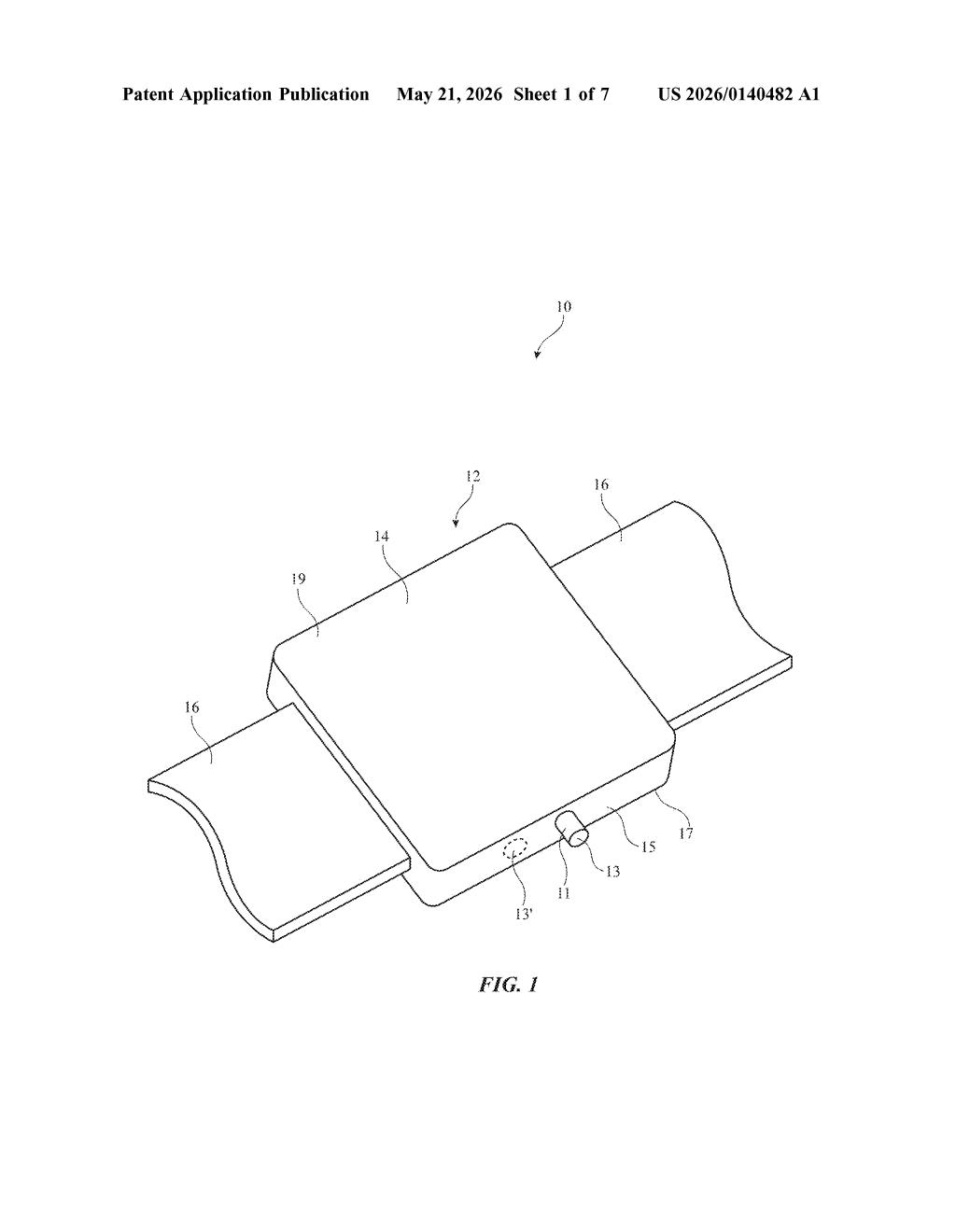
What Apple's surface-tap detection on Apple Watch actually does
Imagine you're in a meeting and want to pause your music without fumbling for your phone or tapping your watch face. What if the watch could just notice that you tapped the table?
That's what this Apple patent describes. A sensor tucked inside the Apple Watch — peeking out through a small window near the crown — shines a light onto your hand and measures how that light bounces back. When your hand strikes a surface, the motion changes the reflected light in a detectable way, and the watch interprets that as a tap command.
Those detected taps could then trigger actions on your Apple Watch or on another device entirely — like your iPhone or Mac. It's essentially turning your own hand and any nearby surface into a discreet input device.
How the optical sensor through the crown reads your taps
The patent describes a wristwatch housing with a dedicated sensor window built into the sidewall — specifically positioned near or through the crown. Behind that window sits a surface touch sensor made up of two components: a light emitter and a light detector.
The light emitter fires infrared (or similar) light toward the user's hand. That light bounces off the hand and returns to the detector — a technique called reflective optical sensing (the same general principle used in heart-rate monitors on the watch's back). The difference here is the sensor is aimed sideways, watching the hand rather than the wrist.
When the user taps their hand on an external surface — a table, a knee, a steering wheel — the sudden deceleration and contact change the reflected light pattern. The sensor picks up that change and classifies it as a tap event.
- The watch's own UI can respond (scroll, pause, dismiss alerts)
- A paired external device (iPhone, Mac, HomePod) can also be adjusted remotely
- The sensor window through the crown keeps the sensing element protected while still having line-of-sight to the hand
What this means for Apple Watch gesture controls
Apple Watch already supports Double Tap (pinching fingers together, detected via accelerometer and heart-rate sensor fusion). This patent adds a meaningfully different modality: detecting contact with the external world rather than finger-to-finger gestures. That matters because it could let you control your watch or phone without any visible hand movement toward the device — useful while driving, cooking, or in situations where discretion matters.
The crown placement is worth noting too. Apple has spent years packing optical and electrical sensors into that small cylindrical button. Routing a hand-facing optical sensor through the crown is a clever reuse of existing real estate, and it suggests this could be an incremental hardware addition rather than a complete redesign.
This is a legitimately interesting extension of Apple Watch input methods — not a routine maintenance patent. Detecting surface taps optically rather than through motion sensors alone could be more reliable and context-aware than the current Double Tap implementation, which occasionally misfires. If Apple ships this, it would quietly expand what the watch can sense without adding any new buttons.
Get our take in your Top Stories
Liked this breakdown? Add Patentlyze as a preferred source on Google, and our plain-English take shows up more often in your Top Stories the next time Apple patent news breaks.
There are more where this came from
We read every patent application Big Tech publishes and send you the ones worth knowing. Plain English, free, every week.
Want this weekly breakdown for a company we don't cover? Patentlyze Pro →