
Samsung Patents a Camera Sensor That Recovers Color from Blown-Out Highlights
When part of a photo is so bright the camera just records white, color data is usually gone for good. Samsung's new patent describes a sensor that keeps a backup reading handy so it can reconstruct what that color should have been.
What Samsung's overexposed-pixel fix actually does
Imagine taking a photo of someone standing in front of a sunny window. The bright area behind them often turns pure white in the final image, losing all detail. That's called highlight clipping, and it happens because the sensor's light-collecting cells fill up completely, leaving no way to tell red from green from blue.
Samsung's patent describes a sensor that reads each group of pixels twice: once using all the pixels in the group for a full brightness reading, and once using only some of them for a lower-range backup reading. If the full reading is clipped (maxed out and useless for color), the sensor falls back on the partial reading to figure out the color balance.
That color ratio is then used to correct the blown-out value, giving the image processor something meaningful to work with instead of a wall of white. The goal is photos that hold onto color in the brightest parts of a scene, without requiring you to shoot in a special mode.
How the sensor reads partial pixels to rebuild color
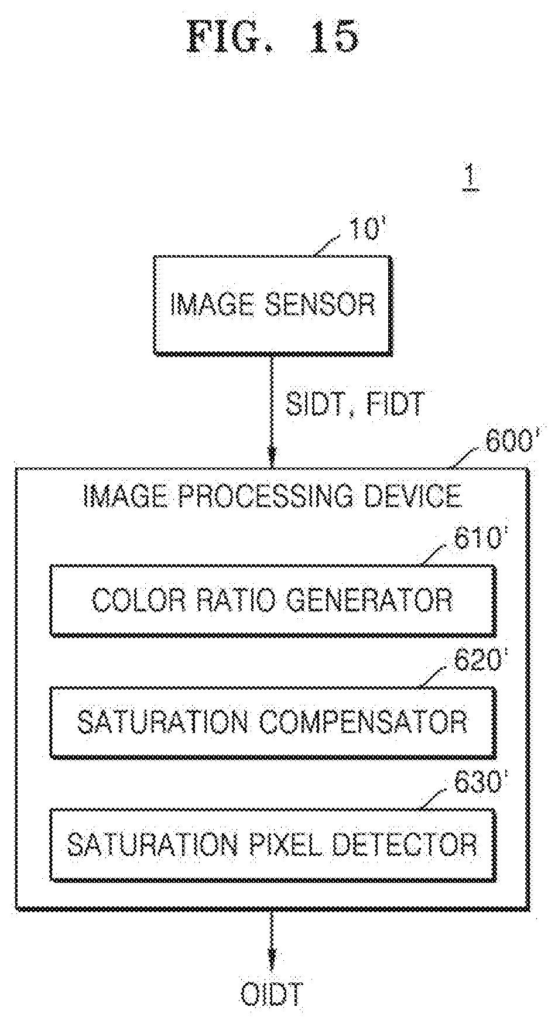
The patent describes an image sensor with an on-chip processor (an image signal processor, or ISP) that handles overexposed pixels in real time.
Each group of pixels on the sensor produces two separate outputs:
- A full pixel value: based on light signals from every pixel in the group, giving maximum sensitivity but saturating easily in bright light.
- A sub pixel value: based on only some of the pixels in the group, effectively a lower-range reading that is less likely to clip.
When the ISP detects that a pixel group's full value is saturated (meaning it has hit the sensor's ceiling and can no longer encode color differences), it looks at the corresponding sub pixel value. Because fewer pixels contributed, that reading is lower and may still sit within the sensor's usable range. The ISP calculates a color ratio from that sub pixel value, essentially working out the proportion of red, green, and blue present.
Finally, it applies that ratio to correct (compensate) the clipped full pixel value, restoring a plausible color estimate. This happens inside the sensor itself, before the image data is handed off anywhere else.
What this means for low-light and high-contrast shots
Highlight recovery is one of the trickier problems in mobile camera engineering. Most phones today handle it through software HDR processing, which stacks multiple exposures taken a fraction of a second apart. That approach works well for still scenes but can produce ghosting artifacts when anything in the frame moves. A sensor that recovers color data from a single capture, at the hardware level, sidesteps those issues entirely.
For Samsung's Galaxy camera lineup, this kind of on-sensor processing could mean cleaner high-contrast shots without the computational overhead of multi-frame HDR. It could also be useful in video, where per-frame exposure stacking is even harder to do cleanly.
This is a specific, well-scoped engineering solution to a real and common camera problem. It won't rewrite how cameras work, but it addresses something that genuinely frustrates people every day. The fact that Samsung is pursuing it at the sensor level rather than purely in software suggests they see headroom for hardware differentiation in a segment where specs are converging fast.
There are more where this came from
We read every patent application Big Tech publishes and send you the ones worth knowing. Plain English, free, every week.
The drawings
17 drawing sheets from US 2026/0214347 A1 · click any drawing to enlarge


Want this weekly breakdown for a company we don't cover? Patentlyze Pro →
Be the first to weigh in