
Samsung Patents a Camera That Fixes Skewed Angles Before You Even Shoot
Ever taken a photo of a building or a document and ended up with a trapezoid instead of a rectangle? Samsung is patenting a way to fix that distortion live in your camera viewfinder, before you tap the shutter.
What Samsung's tilt-correction camera preview actually does
Imagine you're photographing a whiteboard at an angle because you can't stand directly in front of it. The text looks warped and the edges bow inward. Right now, you'd have to fix that after the fact in an editing app.
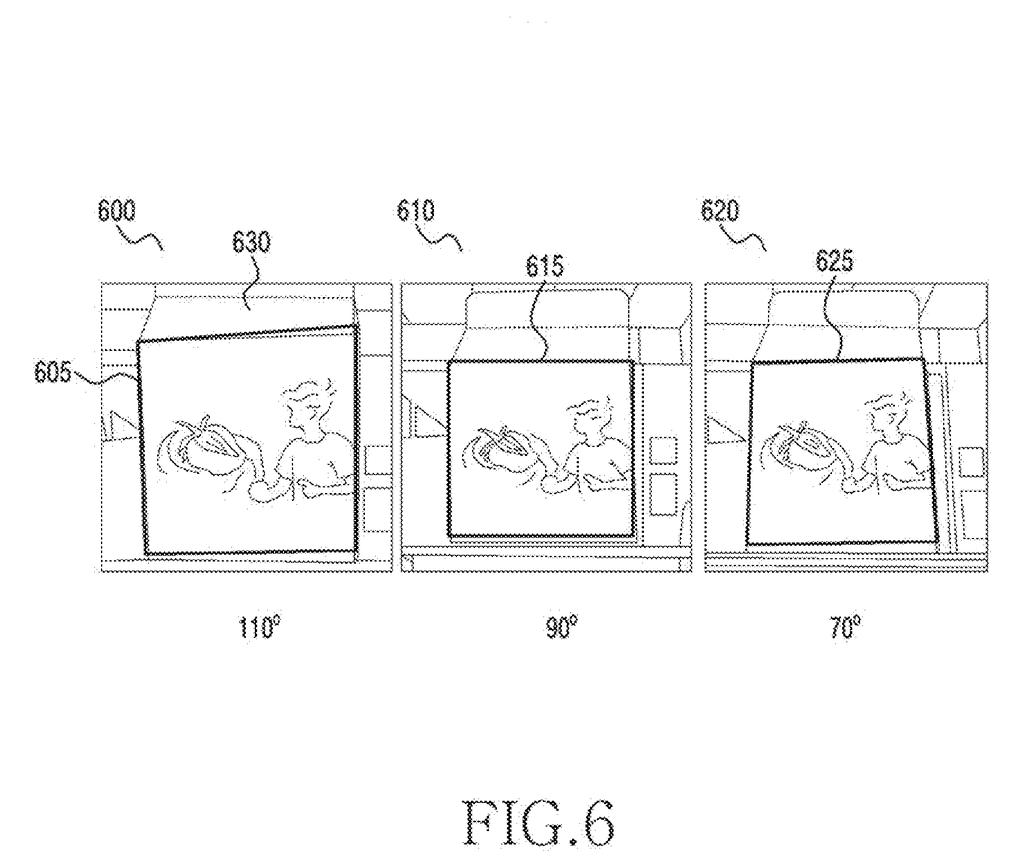
Samsung's patent describes a camera that detects the physical tilt of your phone using its built-in sensors, figures out exactly which direction the lens is pointing relative to a flat surface, and then corrects the perspective of your subject in the live preview. You see the fixed version on screen before you take the shot.
The correction is applied only to the specific object or area you care about, not the entire frame. So if you're shooting a document sitting on a messy table, the document gets straightened while everything around it stays as-is. It's the kind of fix that currently lives in Google Lens or a dedicated scanner app, potentially baked directly into the camera viewfinder.
How the projection matrix corrects the region of interest
The system works in three stages once you open the camera.
First, the device defines a region of interest inside the live preview. This is the specific object (a document, a sign, a painting) that the camera identifies and isolates from the rest of the scene.
Second, the phone reads its tilt using onboard sensors (likely the accelerometer and gyroscope). From that data it calculates angle information, which tells the system exactly how far off-perpendicular the camera is relative to a flat reference plane, essentially how crooked the shot is.
Third, the system calculates a projection matrix (a mathematical grid that describes how to warp, stretch, or compress a 2D image to simulate a different viewing angle) and applies it specifically to the isolated region of interest. The result is a second preview image where that region looks as if you were standing directly in front of it, even though you aren't.
- Tilt detection from physical sensors
- Object-specific region isolation
- Real-time perspective correction via projection matrix
- Corrected view shown in the live preview, before capture
What this means for everyday phone photography
For most people, perspective correction is a post-processing chore done in Google Photos, Adobe Lightroom, or a dedicated scanner app. Doing it live in the viewfinder means what you see is what you get, which is especially useful when you're quickly capturing receipts, business cards, menus, or slides in a meeting.
Samsung already ships document-scanning features in its Gallery and Notes apps, and its recent Galaxy AI push has leaned into real-time image processing. This patent fits squarely into that direction. If it ships, it would give Samsung's camera app a practical everyday edge that goes beyond megapixel counts or zoom ranges.
This is a genuinely useful, focused idea rather than a speculative moonshot. Real-time perspective correction in a viewfinder solves an annoyance that almost every phone photographer has run into. The interesting question is whether Samsung ships it as a camera feature or buries it inside a document-scanning mode where most people will never find it.
There are more where this came from
We read every patent application Big Tech publishes and send you the ones worth knowing. Plain English, free, every week.
The drawings
20 drawing sheets from US 2026/0222674 A1 · click any drawing to enlarge


Want this weekly breakdown for a company we don't cover? Patentlyze Pro →
Be the first to weigh in