
Google Patents an AI System That Controls How Fast Your Content Feed Loads
Google wants an AI model to decide not just *what* shows up in your content feed — but *how fast* it delivers new items to you. It's a subtle but potentially powerful lever for keeping you engaged (or, in theory, helping you disengage).
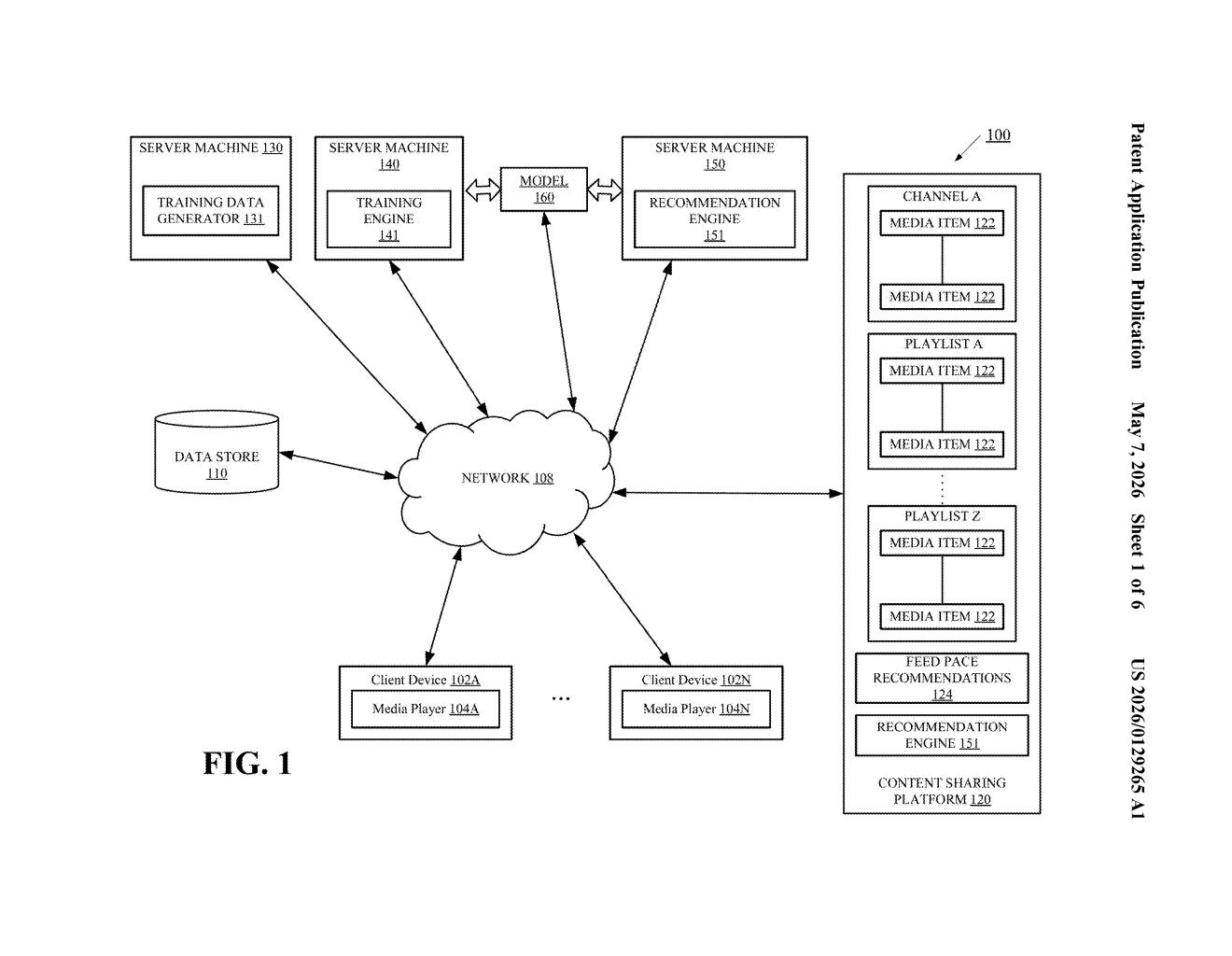
What Google's AI-paced content feed actually does
Imagine you open YouTube and start scrolling. Most recommendation systems spend their energy picking which videos to show you. This patent is about something different: controlling the pace of that feed — how quickly new content appears or gets served up as you consume it.
Google's system would use an AI model to figure out your ideal "content feed pace" at any given moment, based on signals it has about you or your session. Then it selects a batch of media items tuned to that pace and feeds them to you accordingly. Think of it like a DJ reading the room — not just queuing great songs, but timing the drops to match your energy.
On the surface this sounds like a quality-of-life tweak, but the implications are bigger. Pacing is one of the oldest engagement tools in entertainment, and handing it to an AI that can personalize it per-user is a meaningful escalation.
How the AI model picks your feed's pace and content set
When a user opens a content feed on a content sharing platform (almost certainly YouTube), the system intercepts that load request and runs it through an AI model trained to recommend a content feed pace — essentially a parameter describing how aggressively or slowly new content should be surfaced.
The patent references "one or more features" used as inputs to the model, though the claim doesn't fully enumerate them. These likely include signals like time of day, device type, historical viewing behavior, or session context (features typical of recommendation pipelines). Based on those inputs, the model outputs a pace recommendation.
A downstream selection step then picks a set of media items aligned with that pace. This is the crucial link — the pace value doesn't just control a timer or scroll speed; it shapes which items get chosen. A slower pace might favor longer-form content; a faster pace might surface short clips.
The system architecture in the filing shows:
- A Recommendation Engine generating feed pace recommendations
- A Training Engine and Training Data Generator for model upkeep
- A Data Store managing playlists and media items
- Client devices receiving the final curated feed via a network
What this means for your YouTube watching habits
Recommendation systems have always controlled what you see. Controlling pace is the next frontier — and it's a more psychologically intimate lever. The tempo at which content arrives shapes your attention, your willingness to keep scrolling, and how long a session lasts. An AI that can tune this per-user, per-session is essentially managing your engagement state in real time.
For YouTube specifically, this could affect everything from how Shorts are interleaved with long-form videos to how aggressively the autoplay queue fires. It also raises obvious questions about whether "slower pacing" could ever be used as a genuine wellness feature — or whether it's purely an engagement optimization tool dressed up in neutral language.
This is one of those patents that sounds mundane until you sit with it for a moment. Feed pacing is not a solved problem — anyone who's felt YouTube suddenly switch gears from relaxing background content to hyper-stimulating clips knows the experience. An AI that gets this right (or wrong) has real influence over your mental state during a session. Google filing this now, in a climate of increasing scrutiny around algorithmic engagement, is worth tracking.
There are more where this came from
We read every patent application Big Tech publishes and send you the ones worth knowing. Plain English, free, every week.
Want this weekly breakdown for a company we don't cover? Patentlyze Pro →