
Google Patents a Curved Lightguide That Keeps AR Glasses Thin
Getting a wide, full-color image into a pair of glasses without making the lenses look like bricks is one of augmented reality's hardest engineering problems. Google thinks a cleverly curved piece of glass — and a trick borrowed from camera optics — might be the answer.
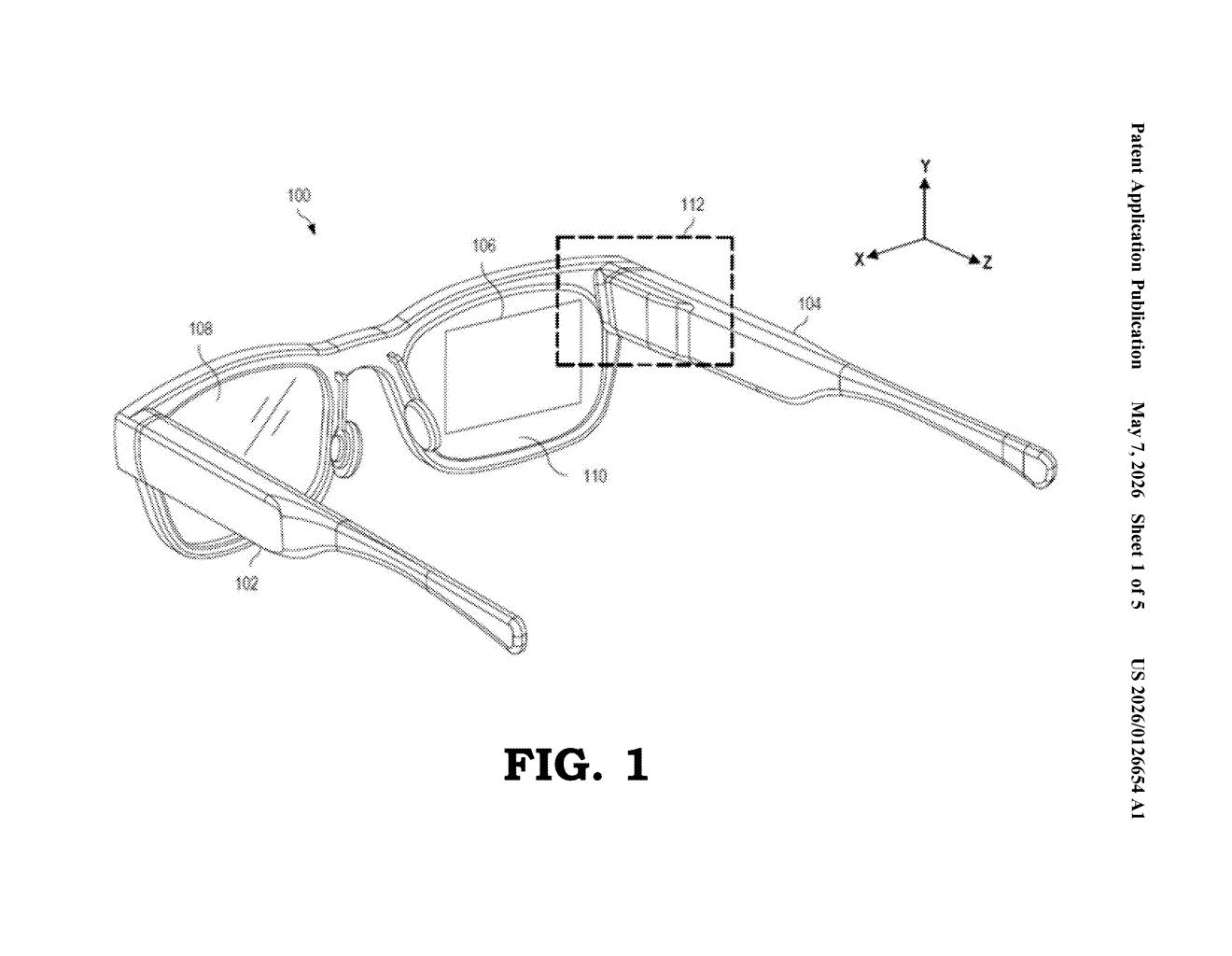
What Google's curved lightguide does for AR glasses
Imagine a pair of glasses that can project a crisp, full-color digital image right into your eye — without the thick, chunky lenses that make today's AR headsets look like ski goggles. That's the goal Google is chasing with this patent.
The trick is a curved lightguide — essentially a specially shaped piece of glass that acts like a fiber-optic cable for visible light. Light from a tiny display (called a microdisplay, tucked away at the temple of the glasses) enters the lightguide, bounces around inside it, and eventually exits near your eye. The problem is that doing this while keeping the glass thin and achieving a wide field of view is brutally hard.
Google's solution is to create a focused "pit stop" for the image inside the glass itself — halfway between where light enters and where it exits. This intermediate focus point lets them use a much smaller, thinner entry component, so the whole assembly can fit inside a normal-looking pair of glasses frames.
How the intermediate image stage shrinks the incoupler
The patent describes an eyewear display device built around a curved lightguide — a shaped optical element that guides light from a microdisplay at the temple of the glasses to a user's eye.
The key innovation is the use of an intermediate image (think of it like a relay station) formed inside the lightguide, positioned between the incoupler (where light enters the guide) and the outcoupler (where light exits toward your eye). Normally, fitting both a wide field of view and compact optics in the same package requires the incoupler to be thick — sometimes thicker than the lightguide itself — which ruins the slim profile you'd want in consumer glasses.
By inserting an intermediate image stage into the optical path, Google's design allows the incoupler to stay within the thickness of the lightguide itself. The system also incorporates:
- Freeform mirror incouplers and/or outcouplers — non-spherical mirrors shaped by computational optimization to control light precisely
- Color-corrected relay optics — lens elements that compensate for the way different colors of light bend differently, preventing chromatic fringing
The claimed performance targets are a roughly 20-degree diagonal field of view with approximately 10% efficiency across red, green, and blue channels, with uniform color and luminance — meaningful numbers for a waveguide-based display.
What this means for the future of wearable AR displays
The hardest constraint in AR glasses design isn't compute power or display resolution — it's optics and form factor. Bulky incouplers are one of the main reasons AR devices end up looking like safety goggles rather than regular eyewear. If Google's intermediate-image approach genuinely keeps the incoupler within the lightguide's own thickness, that's a real path toward socially acceptable AR glasses — ones people might actually wear in public.
The 10% optical efficiency figure is modest but realistic for waveguide displays, and the emphasis on uniform color across the full field suggests Google is targeting a use case where display quality matters — navigation overlays, notifications, or light productivity — rather than immersive video. This feels like infrastructure-level work for a next-generation wearable product.
This is quiet, foundational optics work — not a flashy AI announcement — but it's exactly the kind of patent that separates companies that are serious about AR glasses from those just filing for show. Google has struggled publicly with AR hardware (see: Google Glass), and a patent like this, focused on the unglamorous physics of fitting a wide-angle display into a slim frame, signals genuine engineering investment in the problem. Worth tracking.
There are more where this came from
We read every patent application Big Tech publishes and send you the ones worth knowing. Plain English, free, every week.
Want this weekly breakdown for a company we don't cover? Patentlyze Pro →