
Google Patents a Way to Measure App Traffic Without Seeing Who You Are
Google wants to count how often apps talk to its network without ever learning which specific user or device is behind the request. The trick involves sending only a scrambled fragment of your identity, never the whole thing.
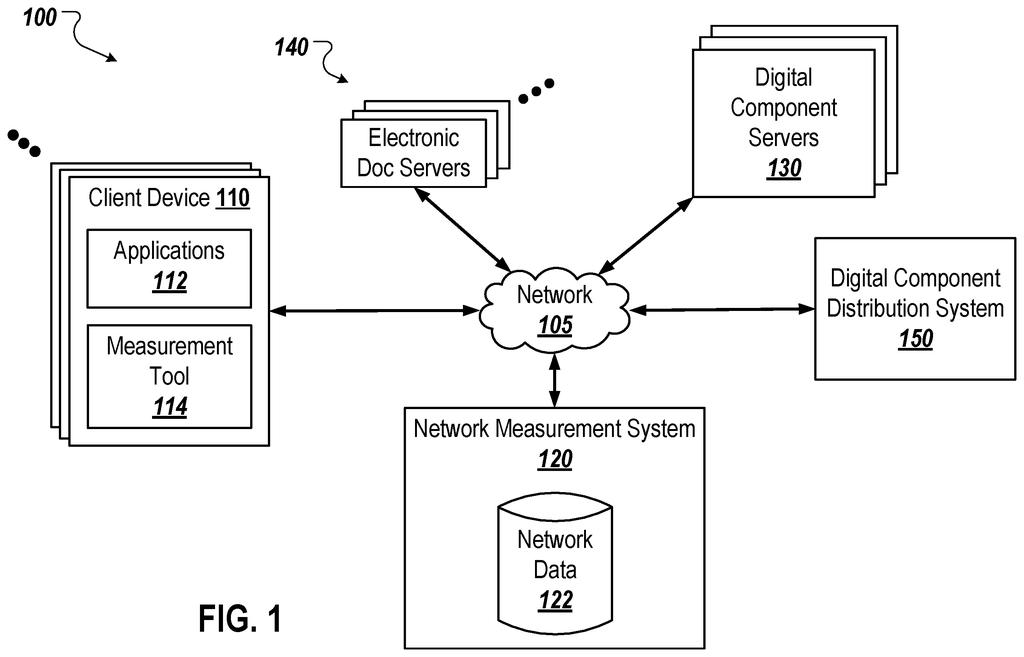
How Google counts network activity without learning your identity
Imagine a bouncer who needs to verify you're on a guest list, but instead of seeing your full name, they only see the first three letters of a scrambled version of it. They can match you to a group without knowing exactly who you are. That's roughly the idea behind this Google patent.
Google's system lets it measure things like how often an app connects to a network or loads certain data, which matters for billing, performance tracking, and ad verification. But it wants to do this without storing or seeing your full identifier at any point. Your device sends only a partial, scrambled version of your ID, and the server matches it to a bucket of similar records.
Both sides encrypt their copies independently, so neither Google's servers nor your device ever hold all the keys at once. The final tally gets assembled through a kind of cryptographic handshake where each party can confirm a match without reading the underlying data.
How partial identifiers and double encryption hide the user
The patent describes a two-party private set intersection protocol, a cryptographic technique where two parties figure out what records they share without either side seeing the other's raw data.
Here's the rough flow:
- Google's measurement server tells your device how many characters of a scrambled ID to send (the "partial identifier size").
- Your device masks its full identifier (think: a one-way hash of your user or device ID), then trims it to the agreed length and sends that partial fragment. It also sends a fully encrypted copy of the complete masked ID.
- The server finds all its stored records whose masked IDs start with that same fragment, a "bucket" of candidates.
- Both sides exchange double-encrypted copies of their identifiers. Each encrypts with its own key, so only the device that holds both keys can confirm which bucket entry is actually its own record.
- Once the device finds the matching record, it returns the associated network data (or decrypts and returns it directly).
The consistent bucket sizing part is important: by standardizing how many bits of the ID are shared, Google prevents statistical attacks where an unusually small or large bucket would reveal extra information about a user's identity.
What this means for ad measurement and user privacy
Ad measurement and app analytics depend on counting real events tied to real devices without creating surveillance logs. Regulators in the EU and elsewhere are increasingly hostile to systems that store full user identifiers on servers, even temporarily. A protocol like this lets Google tell advertisers "yes, this app served X impressions to Y distinct users" without a database of who those users actually are.
For you as a user, the practical benefit is that even if Google's measurement servers were breached, the attacker would find only encrypted fragments that can't be reversed into real identities without keys your device never handed over. It's a meaningful structural improvement over systems that simply promise not to look at data they could technically read.
This is the kind of unglamorous privacy-engineering work that actually matters. Google is under constant pressure from regulators and competitors to prove its measurement infrastructure isn't a surveillance back door. A published patent staking out a cryptographic approach to network measurement is a credible signal that privacy-preserving architecture is getting baked into infrastructure, not bolted on later.
There are more where this came from
We read every patent application Big Tech publishes and send you the ones worth knowing. Plain English, free, every week.
The drawings
3 drawing sheets from US 2026/0220302 A1 · click any drawing to enlarge


Want this weekly breakdown for a company we don't cover? Patentlyze Pro →