
New Patent Sorts Overlapping Voices Into Separate Conversations
Picture a busy conference room where two side conversations are happening at the same time. Google is patenting a way for a transcription device to figure out who is talking to whom, and keep their words in separate labeled groups.
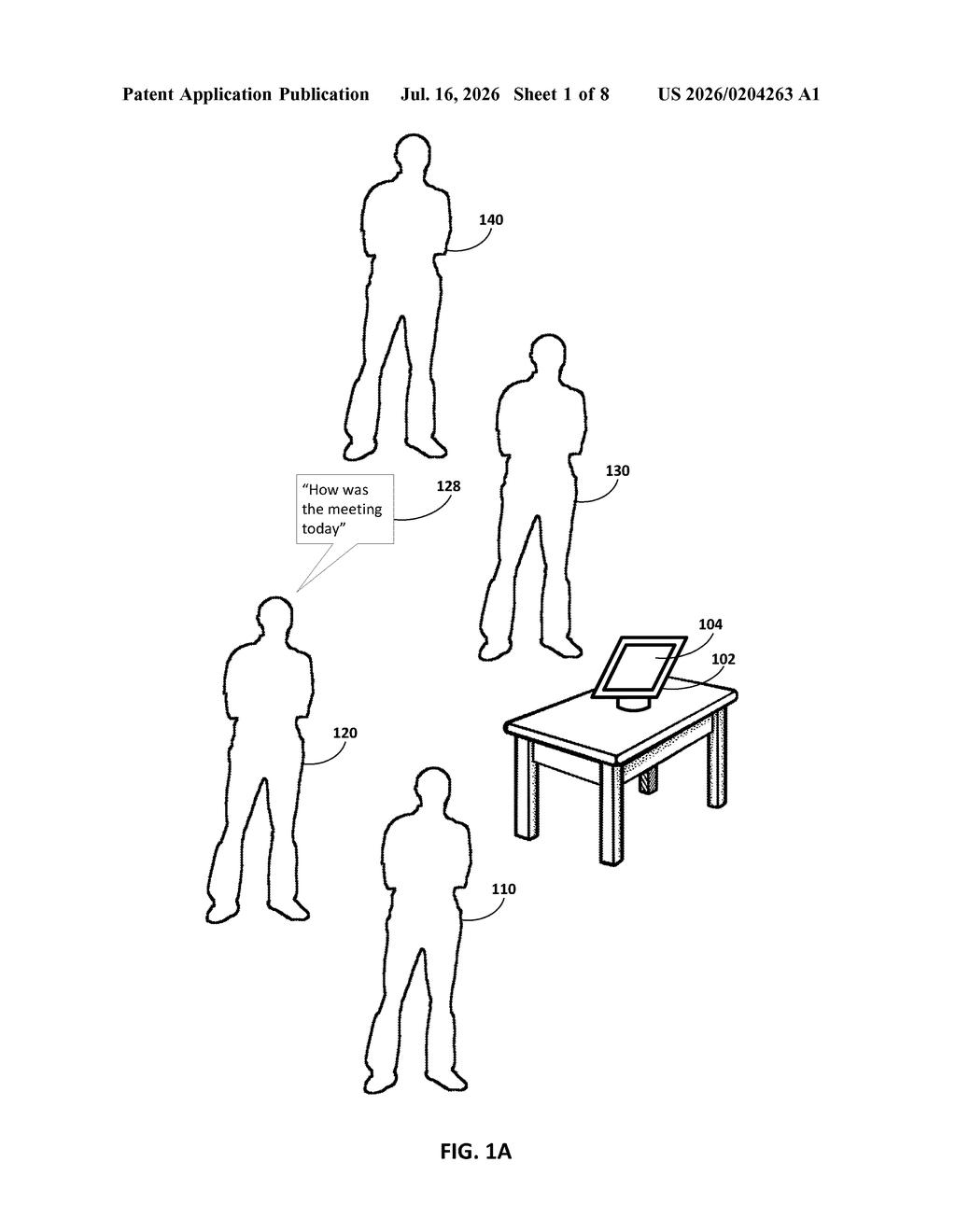
How Google's system untangles multiple simultaneous chats
Imagine you are at a networking event and two pairs of people are all talking near the same microphone at once. Today, most transcription tools would just dump everyone's words into one big wall of text, with no way to tell which conversation was which.
Google's patent describes a system that watches for a key signal: when two people's speech overlaps at the same time, they are probably talking to each other, not to the people in the other conversation. The system uses that timing clue to sort speakers into what it calls "conversational clusters," basically labeled groups that reflect who is chatting with whom.
The final transcript gets annotated so each chunk of text is tied to its cluster. Instead of one scrambled wall of words, you would get two clearly separated conversations, each with its own label.
How overlapping speech timing reveals conversation groups
The system works by continuously analyzing audio coming in from one or more microphones on a single transcription device. It is looking for moments when two speakers' voices overlap, meaning their words literally occur at the same time.
When the overlap lasts at least a minimum threshold of time (long enough to be meaningful, not just accidental crosstalk), the system concludes those two speakers are not in the same conversation. Instead, it groups each speaker with the people they are talking to, forming a conversational cluster: a labeled set of participants who are engaged in one shared discussion.
Once clusters are identified, standard automatic speech recognition (ASR) runs on the audio to convert speech to text. The resulting transcript is then annotated so each line of recognized text carries a tag showing which conversational cluster it belongs to. The key components are:
- Overlap detection as the primary sorting signal
- Cluster assignment per speaker
- ASR to convert audio to text
- Annotation of the transcript with cluster labels before output
Importantly, the patent specifies that a speaker confirmed to be in one cluster is explicitly excluded from the other, keeping the groups clean.
What this means for meeting transcripts and live captions
Meeting transcription tools like Google Meet's live captions or third-party apps already do a decent job when one person speaks at a time. The hard problem has always been crowded rooms, open-plan offices, or hybrid events where several conversations compete for the same microphone. A transcript that labels which conversation each line belongs to is far more useful than one that simply identifies individual speakers in isolation.
For you as an end user, this could mean getting a post-meeting summary that cleanly separates the breakout discussion you were in from the chatter happening next to you, without needing a separate microphone for every group. It also has clear implications for accessibility tools and captioning in noisy public spaces.
This is a genuinely practical patent addressing a real limitation in transcription tools: most of them fall apart when multiple conversations overlap in one room. The overlap-timing heuristic is a clever and low-cost signal. Whether it holds up in real acoustic environments with background noise is the real question, but the core idea is worth watching.
Get our take in your Top Stories
Liked this breakdown? Add Patentlyze as a preferred source on Google, and our plain-English take shows up more often in your Top Stories the next time Google patent news breaks.
There are more where this came from
We read every patent application Big Tech publishes and send you the ones worth knowing. Plain English, free, every week.
Want this weekly breakdown for a company we don't cover? Patentlyze Pro →