
Nvidia Patent Covers AI Voice Engine Directed by Audio or Text Descriptions
Nvidia has filed a patent for a speech synthesis system that can generate a voice matching a target speaker whether you hand it an audio clip of that person or just a written description of how they sound. That flexibility is the interesting part.
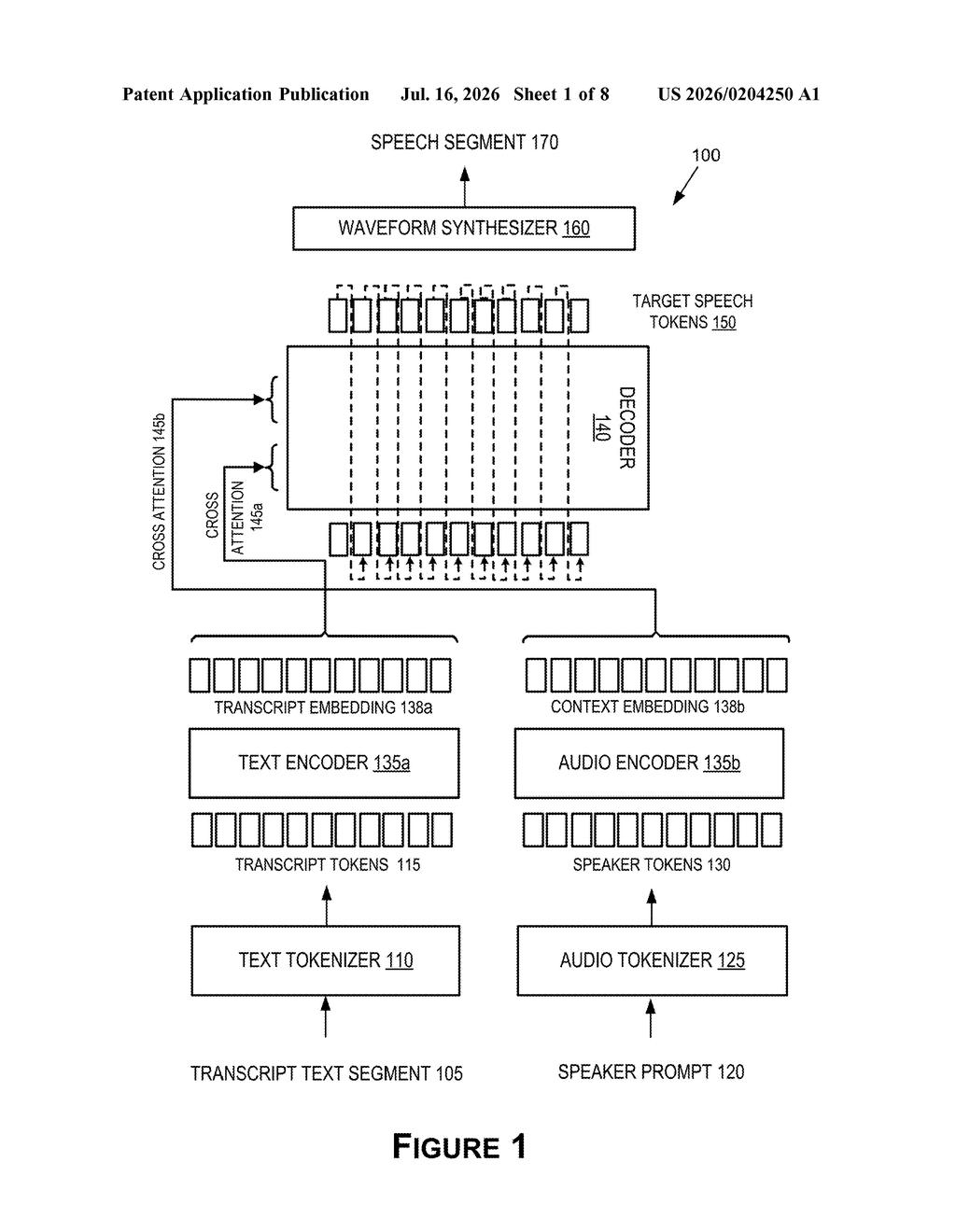
What Nvidia's flexible voice cloning system actually does
Imagine you're building an AI assistant and you want it to speak in a calm, authoritative tone, like a specific news anchor. Today, most voice systems need an actual audio recording of that person to copy their style. Nvidia's patent describes a system that can work from either a recording or a written description like "a confident male voice with a slight Southern accent."
The system keeps two jobs separate: one part of the AI focuses purely on the words being spoken, and another part focuses on how they should sound, based on whichever style input you provide. Those two streams get combined at the end to produce the final audio.
The practical upside is that you don't have to retrain the whole system every time you switch context types. The same model can handle an audio sample one moment and a text prompt the next, which makes it a lot more flexible to deploy in real products.
How the dual-encoder architecture separates words from voice style
The system uses a language model built from multiple transformer encoders (think of encoders as specialized readers that convert raw input into a compact mathematical summary the model can reason about).
Two encoders run in parallel:
- Text encoder: reads the script you want spoken and produces an embedding (a numerical fingerprint of the words and their order).
- Context encoder: reads the style input, whether that's an audio clip of a reference speaker, a text description of a voice, or even a conversation history clip, and produces a separate embedding capturing the desired sound.
Those two embeddings are then fed into separate decoder layers. The decoder layers handling the text are constrained to process words in order (called monotonic cross-attention), which keeps the speech from garbling the script. The decoder layers handling the context are left unconstrained, letting the model freely pull style details from wherever it finds them in the reference input.
The patent also describes support for multiple swappable context encoders, one per input type, so at deployment time you activate whichever encoder matches the input you have. The output is a synthesized speech waveform that speaks the input text in the target style.
What this means for AI assistants and voice synthesis tools
For developers building voice products, this kind of architecture removes a common bottleneck: right now, switching between voice-style input types usually means retraining or replacing the model. A system that handles audio clips, text descriptions, and conversation history through a single shared backbone is cheaper to maintain and easier to scale across different use cases, from customer-service bots to audiobook narration.
For you as an end user, the downstream effect could be AI assistants that let you describe your preferred voice in plain language rather than hunting down a reference recording. It also raises the obvious concern: a system this flexible at copying voice style, even from a brief description, will need strong guardrails to prevent misuse in voice fraud or deepfake audio.
This is solid, consequential work in the text-to-speech space. The dual-encoder design is a real architectural choice with practical benefits, not a paper exercise. The most interesting claim is the multi-modal context switching, which is the kind of infrastructure-level flexibility that shows up in shipping products, not just research demos. Worth watching as Nvidia pushes further into AI inference and media generation.
Get our take in your Top Stories
Liked this breakdown? Add Patentlyze as a preferred source on Google, and our plain-English take shows up more often in your Top Stories the next time Nvidia patent news breaks.
There are more where this came from
We read every patent application Big Tech publishes and send you the ones worth knowing. Plain English, free, every week.
Want this weekly breakdown for a company we don't cover? Patentlyze Pro →