
Samsung Patents a Photo-Sharpening Method That Prevents Bright Rings Around Edges
Sharpening a photo sounds simple, but the standard technique leaves glowing rings around edges called halos. Samsung's new patent tries to fix that without sacrificing the crispness you want.
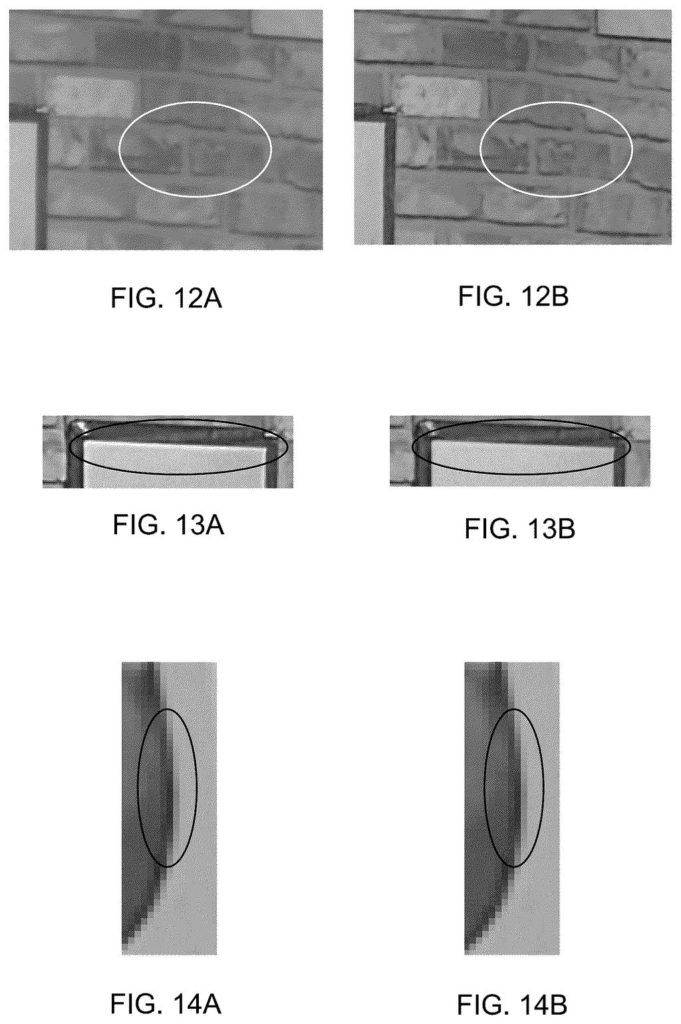
What Samsung's halo-free sharpening actually does
Imagine you take a photo of a tree against a bright sky and sharpen it. The tree looks crisper, but a weird glowing halo appears along its outline. That artifact is one of the oldest annoyances in digital photography, and it gets worse the harder you push the sharpening slider.
Samsung's patent describes a way to sharpen images that specifically targets those halos. Instead of applying sharpening uniformly across an image, the method uses a curve that dials back the effect right at the edges where halos form, leaving the rest of the sharpening intact.
The system splits the image into separate data channels, handles the brightness channel differently from the color channels, and then recombines everything into a final photo. The goal is a picture that looks crisp without the artificial glow around hard edges.
How the nonlinear mask trims edge halos
The technique is a variation on unsharp masking, the decades-old sharpening standard baked into almost every camera and photo app. Classic unsharp masking works by subtracting a blurred version of an image from the original, then adding the difference back in to boost edges. The problem is that it treats all edge contrast the same way, which causes bright halos.
Samsung's twist is to run that difference layer (the "unsharp mask") through a nonlinear function (a custom mathematical curve, rather than a straight-line scaling) before adding it back. That curve is tuned so that the largest edge-contrast values, which are the ones responsible for halos, get reduced while smaller, detail-level contrasts are preserved or even boosted.
The method also processes the image in a channel-aware way:
- The first channel (typically luminance, meaning the brightness information) gets the full nonlinear treatment.
- The remaining channels (typically color data) are sharpened using the original, unmodified mask, keeping colors vivid without introducing color fringing.
- All channels are recombined at the end into the final output image.
This two-track approach lets Samsung sharpen brightness and color independently, which is a cleaner way to avoid both halos and color artifacts at the same time.
What this means for Samsung camera processing
Almost every Galaxy phone runs some form of in-camera sharpening before a photo is saved. If this technique makes it into Samsung's image signal processor pipeline, it could mean sharper-looking photos with fewer of the artificial-looking edges that critics often flag in heavily processed smartphone shots.
The approach is also computationally light. It doesn't require a neural network, which means it could run on lower-end devices or in real-time video without a heavy power cost. For Samsung, which ships cameras across a wide price range from budget Galaxy A phones to flagship S-series devices, that efficiency matters.
This is a focused, practical fix for a real and well-known problem in smartphone photography. It's not a flashy AI feature, but the kind of careful image-processing work that separates cameras that look good in a spec sheet from ones that produce photos people actually like. Worth watching to see if it shows up in a future Galaxy camera update.
There are more where this came from
We read every patent application Big Tech publishes and send you the ones worth knowing. Plain English, free, every week.
The drawings
12 drawing sheets from US 2026/0212465 A1 · click any drawing to enlarge


Want this weekly breakdown for a company we don't cover? Patentlyze Pro →