
New Patent Helps People With Speech Differences in Video Meetings
Microsoft has patented a system designed to listen for speech that's hard to understand during a video meeting, then offer clearer alternative words so the conversation keeps moving.
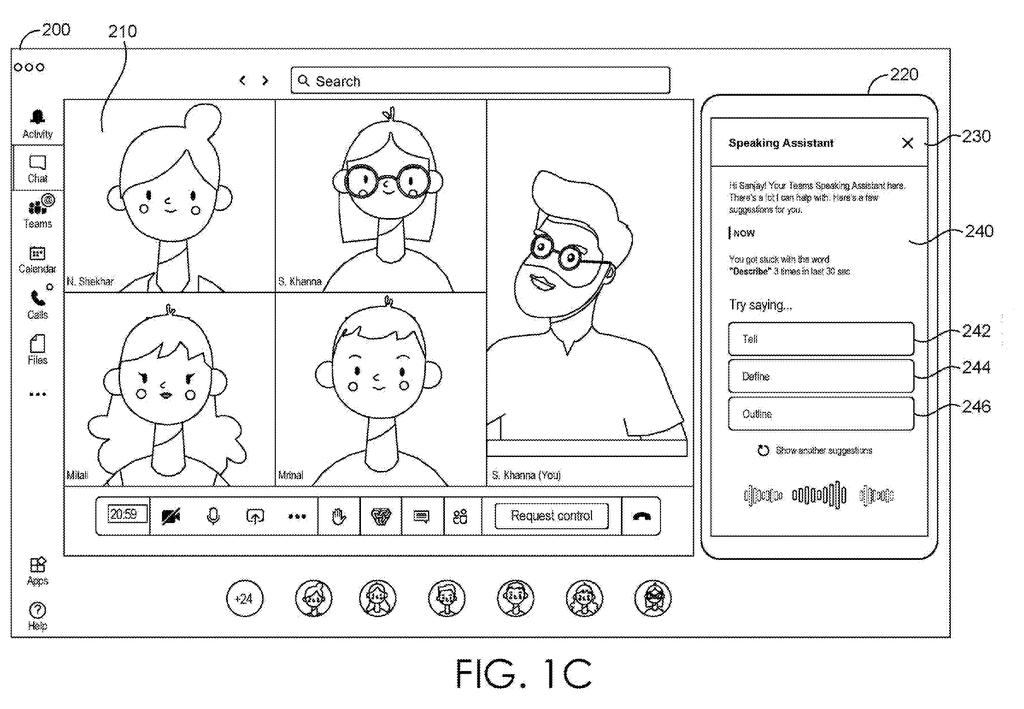
What Microsoft's disrupted-speech tool actually does in meetings
Imagine you're in a video call and a colleague who stutters, or who has a condition affecting their speech, says something that's difficult for others to follow. Right now, there's no built-in help for that moment. Microsoft's new patent describes a system that could change that.
The system listens to audio during a meeting, detects when someone's speech is disrupted beyond a certain threshold, and automatically identifies which words are causing the difficulty. It then suggests alternative words and shows them in an on-screen interface, so everyone in the call has a clear sense of what was said.
The patent frames this as an accessibility feature, meaning it's aimed at helping people with stutter, dysarthria, or other speech differences participate fully in meetings without needing a separate translator or human assistant.
… determining that the audio data comprises disrupted-speech at a threshold level of disrupted-speech; based on the audio data comprising disrupted-speech at the threshold level of disrupted-speech, execute one or more disrupted-speech assistance operations for the meeting …
Translation: The system detects when someone's speech difficulty passes a certain point so it can step in to help.
How the system spots disrupted speech and picks replacements
The system, called a disrupted-speech management engine, operates inside a meeting platform (think Microsoft Teams). Here's the basic flow:
- Audio capture: The system accesses the live audio data from a meeting session.
- Disruption detection: It analyzes that audio to determine whether speech disruption is present at or above a set threshold (a configurable sensitivity level, so it doesn't trigger on every pause or filler word).
- Word identification: Once disruption is confirmed, it pinpoints the specific word or words that are hard to interpret.
- Alternative generation: It determines an alternative word for each disrupted word, likely using a language model to pick a contextually appropriate substitute.
The output is a disrupted-speech assistance interface shown within the meeting UI, displaying those alternative words so other participants (or the speaker themselves) can follow along. The patent does not specify whether the interface is visible to all participants or just some, leaving room for different privacy configurations.
The disrupted-speech assistance service is an accessibility service that supports accessibility operations of a disrupted-speech management engine to provide disrupted-speech assistance features in a meeting management system.
Translation: This tool acts as an accessibility feature built into video meeting software to support users.
What this means for accessibility in Teams and beyond
Video conferencing has become the default mode of professional communication, but its accessibility tools have mostly focused on hearing (captions) rather than speaking. A system that actively assists people whose speech is disrupted fills a real gap. For someone with a stutter or a neurological condition affecting speech clarity, the ability to have their intended words displayed alongside their spoken words could reduce the social friction that currently makes meetings exhausting.
For Microsoft, this fits squarely into the accessibility investments the company has made across Windows and Microsoft 365. If this ships inside Teams, it would be a meaningful differentiator over competitors like Zoom and Google Meet, neither of which currently offers this kind of real-time speaker-side speech accessibility.
This is a genuinely useful accessibility patent, not a speculative moonshot. The problem is real and well-documented, the technical approach is plausible with today's AI tools, and Microsoft already has the deployment channel in Teams to put it in front of millions of people. Whether it ships as described is another question, but the intent here is commendable and the scope is practical.
There are more where this came from
We read every patent application Big Tech publishes and send you the ones worth knowing. Plain English, free, every week.
The drawings
13 drawing sheets from US 2026/0230560 A1 · click any drawing to enlarge


Want this weekly breakdown for a company we don't cover? Patentlyze Pro →
Be the first to weigh in