
Qualcomm Patents Technology That Teaches Phones to Predict Their Own Signal Needs
The same technology that powers ChatGPT could soon be making split-second decisions about how your phone connects to a cell tower. Qualcomm's new patent puts a generative AI model directly inside your device's wireless chip — not in the cloud, not on a server, but on the phone itself.
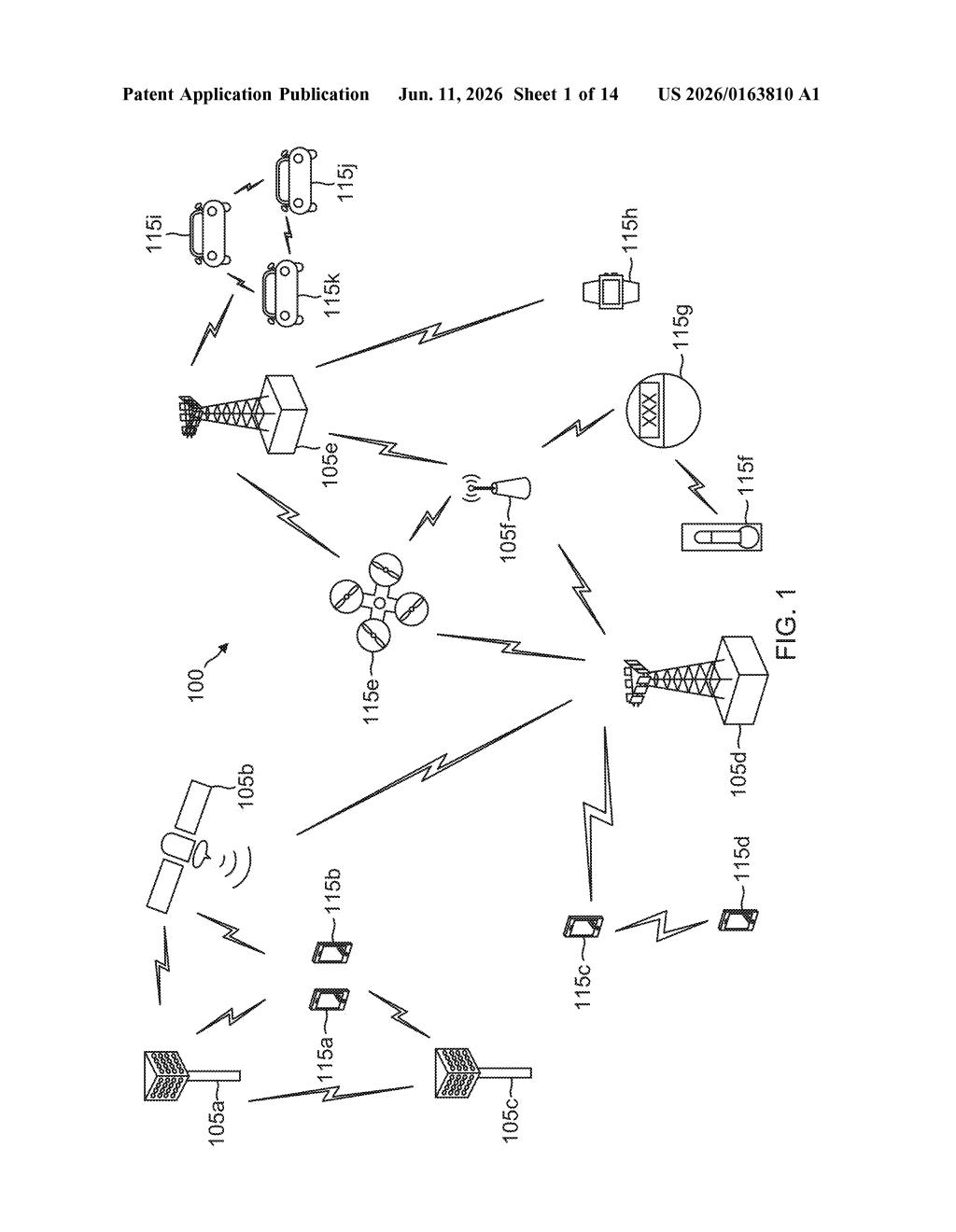
What Qualcomm's AI-driven radio tuning actually does
Imagine your phone is trying to stay connected while you move between buildings. Right now, it relies on fixed rules baked into its radio software to decide things like how much power to use or which frequency to latch onto. It works, but it's not especially clever about predicting what's coming next.
Qualcomm's patent describes training a generative AI model — the same kind of model that predicts the next word in a sentence — on years of wireless network behavior data. Instead of predicting words, it predicts what your phone's radio connection is likely to do next. Your device then uses those predictions to tune its settings before problems happen, rather than reacting after the fact.
The whole system runs on the phone itself, not on a remote server. That means faster decisions with no round-trip to the cloud. Think of it as giving your phone's radio a gut instinct — built from millions of examples of how real cellular networks behave.
How the language model predicts the next network move
The patent describes a user equipment (UE) — industry shorthand for your phone or tablet — that runs one or more generative AI language models trained specifically on wireless protocol data (the rules and signals that govern how devices talk to cell towers).
Here's the basic flow:
- The phone packages recent network data — signal strength, configuration settings, messages exchanged with the tower — into a sequence of tokens (discrete chunks, similar to how a language model breaks text into word fragments).
- The on-device AI model takes that token sequence and predicts what comes next, just like autocomplete predicts the next word.
- Those predicted tokens represent expected future network conditions, which the phone then uses to set communication parameters — things like transmission power, timing adjustments, or frequency selection — ahead of time.
The models are pretrained (trained in advance on a large dataset of wireless protocol behavior, then loaded onto the device) rather than trained live on your personal data. Qualcomm's framing positions the approach as a drop-in upgrade to the decision-making layer already present in cellular modems, using generative AI as the prediction engine instead of hand-coded heuristics.
What this means for 5G and future phone connections
Cellular modems are already extraordinarily complex, but most of their decision-making is rule-based — like a very long instruction manual rather than genuine prediction. Swapping in a generative AI model means the phone could handle unusual or rapidly changing conditions more gracefully, since it's reasoning from patterns rather than following fixed scripts.
For Qualcomm specifically, this matters a lot: the company supplies the modem chips inside most flagship Android phones and many iPhones. If this approach makes it into production silicon, it could become a standard feature of 5G and 6G devices globally — affecting your call quality, battery life, and data speeds without you ever knowing it's running.
This is a genuinely interesting direction — applying the transformer-based prediction framework that made large language models famous to a domain (wireless protocol behavior) that is dense, structured, and historically hard to optimize. The on-device framing is the detail that matters most: latency-sensitive radio decisions can't afford a cloud round-trip, so making this work locally is the real engineering challenge Qualcomm is staking a claim on.
There are more where this came from
We read every patent application Big Tech publishes and send you the ones worth knowing. Plain English, free, every week.
Want this weekly breakdown for a company we don't cover? Patentlyze Pro →