
Sony's New Patent Puts Screens on Car Hoods to Warn Pedestrians Where the Car Is Headed
Imagine a car that can literally show you where it's about to go — not with a blinking turn signal, but with a screen on its hood or bumper. That's the idea behind Sony's latest patent.
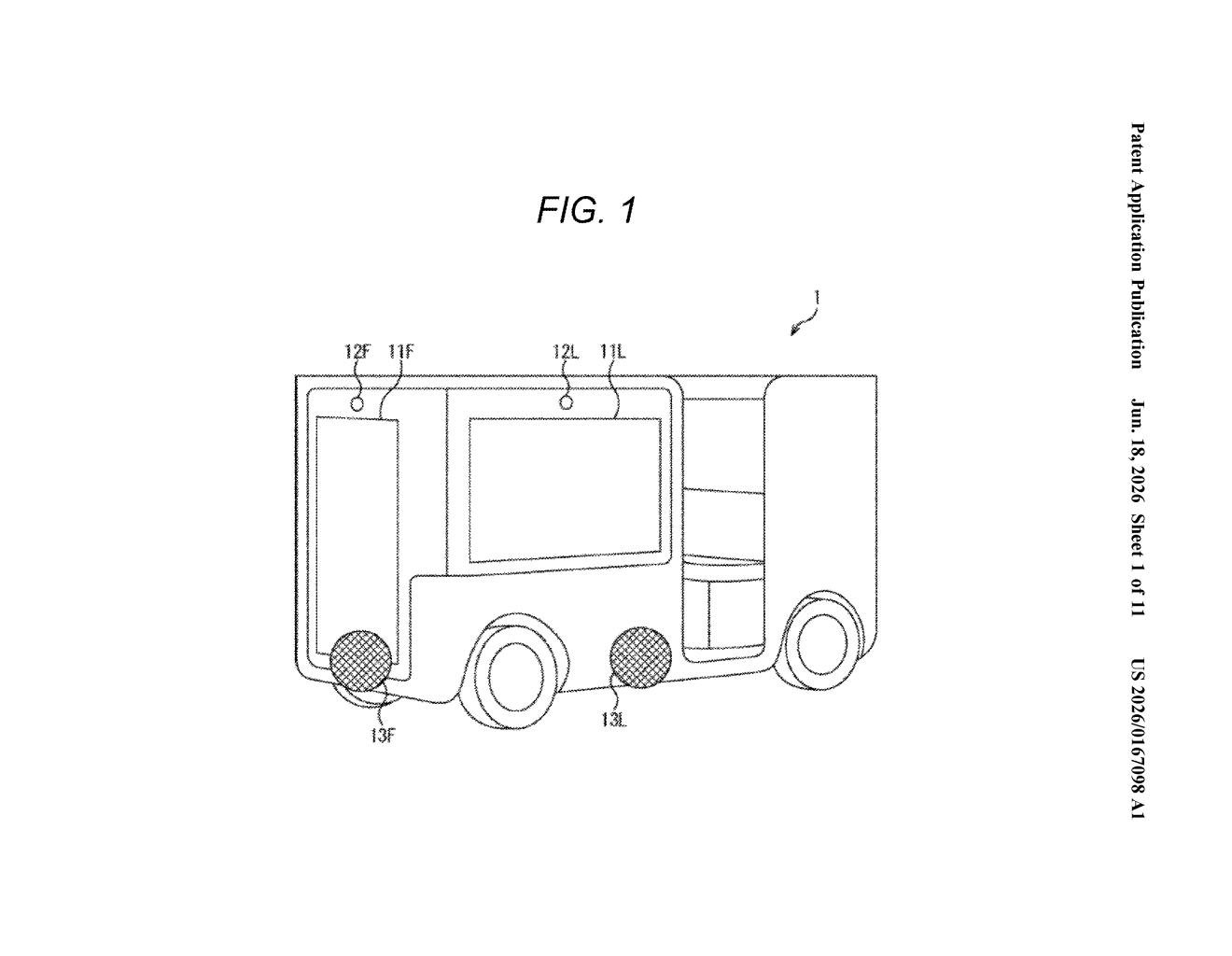
What Sony's front-and-rear car display system actually does
Picture you're crossing a busy street and a car is idling at the intersection. You're not sure if it's going straight or turning toward you. Today, you rely on turn signals and driver eye contact — neither of which works well with autonomous vehicles that have no human inside.
Sony's patent describes fitting screens directly onto the front and rear surfaces of a car. These screens would display visual cues — like arrows or animated graphics — showing which direction the vehicle is about to move. Crucially, the front screen shows one kind of image while the rear screen shows a different one, so that people approaching from either side get the information most relevant to them.
The system adjusts what it shows based on the car's current state — whether it's stopped, turning, or moving — or based on its GPS position, so the messages stay accurate and context-aware at all times.
How the front and rear screens show different signals
The patent describes an in-vehicle display device made up of three main parts: a screen on the front of the car, a screen on the rear, and a control unit that decides what each screen shows.
The control unit pulls from two sources of information:
- Vehicle state — whether the car is parked, accelerating, braking, or turning
- Position information — GPS or location data that tells the system where the car is and where it's headed
Based on that input, the front display shows a first image representing the car's intended direction of travel, while the rear display shows a second image — distinct from the first — conveying the same directional intent but formatted differently. The patent doesn't lock down what the images look like, leaving room for arrows, text, animation, or color coding.
The key design decision here is that the two displays are not identical. Someone walking in front of the car and someone walking behind it have different spatial relationships to the vehicle's path, so they need different visual information to understand what the car is about to do.
What this means for pedestrian safety around self-driving cars
As autonomous and semi-autonomous vehicles become more common, the old social contract between drivers and pedestrians — a wave, a nod, a glance — breaks down. There's no human to make eye contact with. Industry researchers and regulators have flagged this as a real safety gap, and several carmakers have experimented with external lighting systems to fill it.
Sony's angle is to use full display screens rather than simple indicator lights, which allows for richer, more flexible communication. If this kind of system became standard, it could make crossing the street near a self-driving car feel significantly less like a guessing game — especially for cyclists and visually guided pedestrians who may rely on more than just a blinking amber light.
This is a genuinely practical idea addressing a problem that's only going to grow as autonomous vehicles multiply. The front-versus-rear differentiation is the detail worth paying attention to — it shows Sony is thinking about the geometry of pedestrian safety, not just slapping a screen on a bumper for marketing reasons. Whether Sony builds this into its own vehicle products or licenses it to automakers is the real question.
There are more where this came from
We read every patent application Big Tech publishes and send you the ones worth knowing. Plain English, free, every week.
Want this weekly breakdown for a company we don't cover? Patentlyze Pro →