
Google Patents a Polarization-Recycling Optical System for LCoS Displays
Most of the light in an LED-based display gets thrown away before it ever reaches your eye — Google's new patent is specifically designed to stop that from happening, squeezing more usable brightness out of the same power budget.
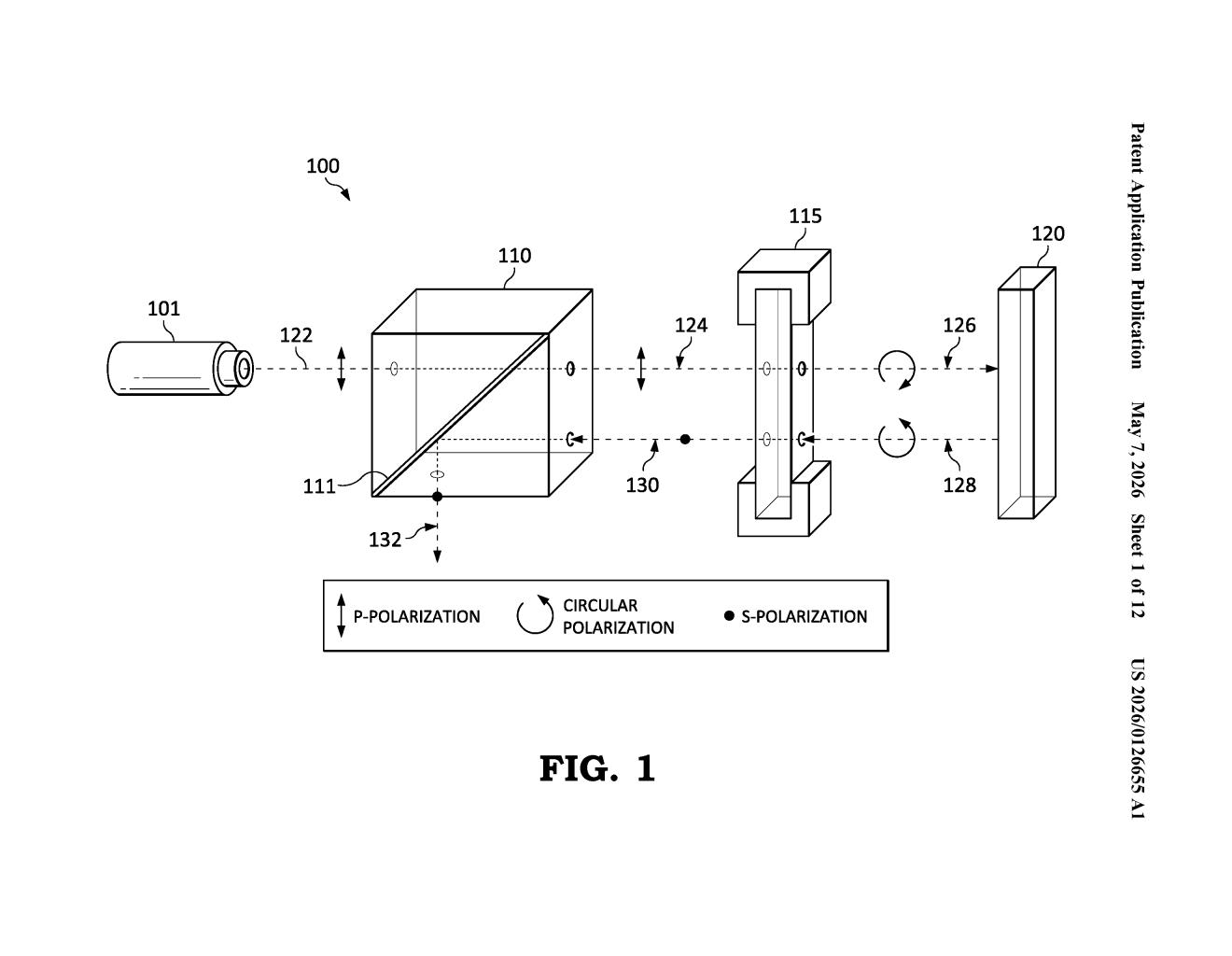
What Google's polarization-recycling prism actually does
Imagine holding a flashlight with a polarizing filter in front of it. Half the light gets blocked and wasted — it's the wrong 'orientation' to pass through. That's basically what happens inside tiny display systems like the ones used in AR glasses or VR headsets, where only one polarization of light is actually usable.
Google's patent describes a compact optical system that recycles that normally-wasted light. Instead of discarding the 'wrong' polarization, a special prism assembly flips it to the correct orientation and sends it back into the mix — effectively recovering light that would otherwise generate heat and drain your battery for nothing.
The system also manages color channels separately, routing red, green, and blue light through different paths inside the prism using special coatings. The result is a brighter, more efficient display in a package small enough to fit inside a wearable device.
How the prism recycles wasted light and routes colors
The core of the patent is a polarization-recycling prism — a specially engineered block of optical material that handles both color separation and polarization management in one compact unit.
Here's how the pieces fit together:
- LED array segmented by color: Individual red, green, and blue LEDs are grouped into distinct channels. A condenser lens array (a grid of tiny lenses) collimates — meaning it straightens and makes parallel — the light from each channel and evens out any bright spots.
- Internal polarization interface: Inside the prism, a surface reflects light of one polarization state (think of it as light waves oriented vertically) while letting the other (horizontally oriented) pass through. The reflected light is normally wasted.
- Polarization assembly: A retarder plate (a material that rotates the polarization angle of light) and a mirror work together to rotate that rejected light by 90 degrees and reflect it back — now in the correct polarization state to pass through the prism and reach the LCoS panel (Liquid Crystal on Silicon, the microdisplay chip that forms the actual image).
- Dichroic coatings: Thin-film coatings inside the prism selectively reflect or transmit specific wavelength bands, routing colors to the right paths without needing bulky separate optical elements.
The net effect is that significantly more of the LED's output is converted into useful, correctly polarized, correctly colored illumination — improving brightness or reducing the power needed to hit a target brightness level.
What this means for Google's AR display ambitions
For AR glasses and compact VR headsets, every lumen counts. These devices have tiny batteries, tight thermal budgets, and optics that need to fit inside a frame you'd actually wear. A more efficient illumination engine means either a brighter display at the same power draw, or the same brightness with a smaller battery — both of which are critical engineering constraints Google is clearly wrestling with.
LCoS displays are particularly polarization-hungry: they fundamentally require linearly polarized light to work at all, which is why recycling the wasted polarization state has such a direct payoff here. This isn't a flashy AI patent — it's the kind of careful optical engineering that makes or breaks a wearable display product.
This is genuinely useful foundational optics work, not a paper patent. Polarization recycling is a well-known challenge in LCoS-based display systems, and the specific combination of a segmented LED array, condenser lens array, and integrated polarization assembly in a single prism block is a real engineering approach to a real bottleneck. If Google ships AR glasses with LCoS microdisplays, something like this almost certainly ends up inside them.
There are more where this came from
We read every patent application Big Tech publishes and send you the ones worth knowing. Plain English, free, every week.
Want this weekly breakdown for a company we don't cover? Patentlyze Pro →