
Apple Patent Details System for Controlling User Access to Device Features
Imagine watching a 2D preview of whatever your kid sees in their VR headset and tapping something on your phone screen to make it glow for them. That's the core idea Apple just filed a patent for.
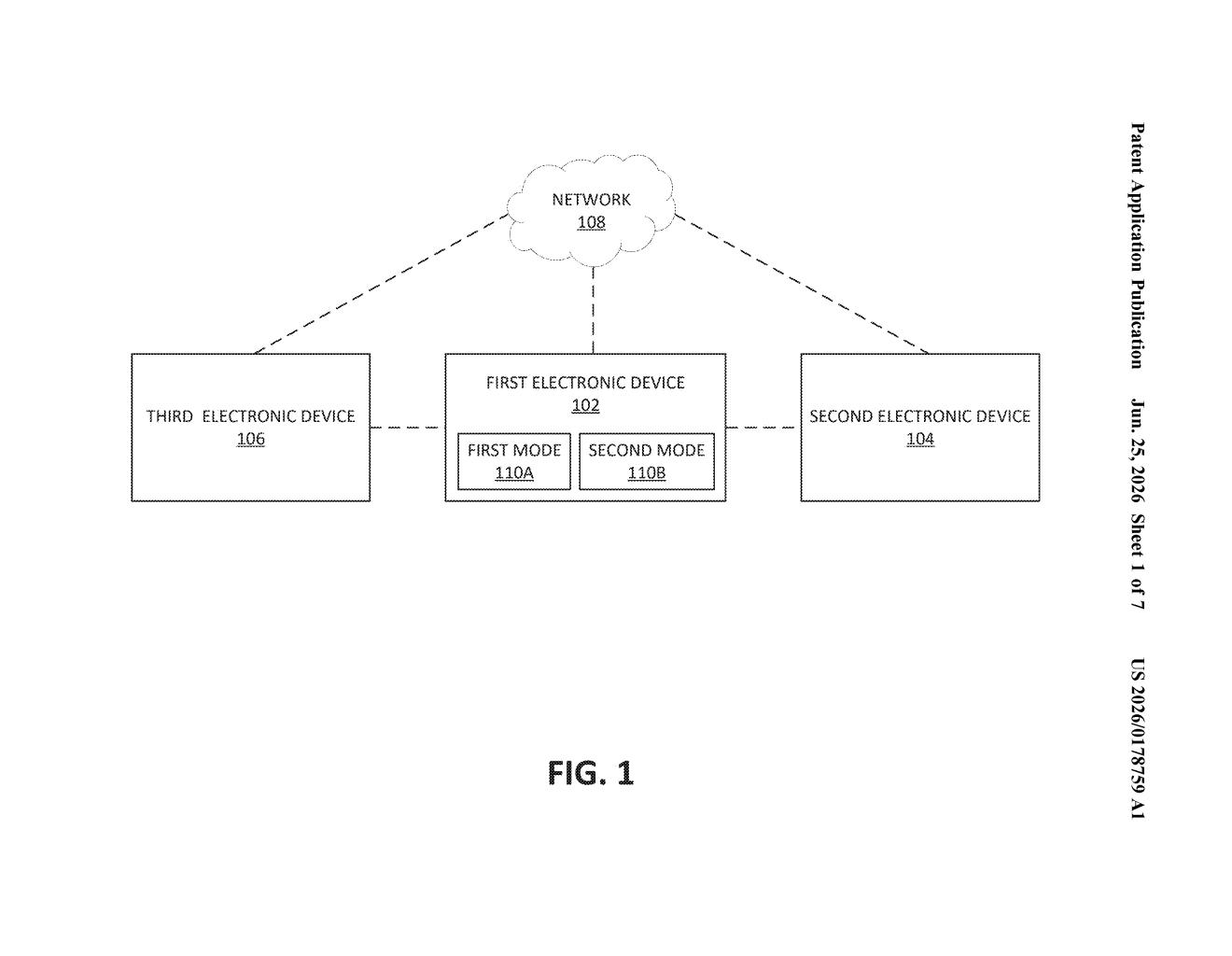
How Apple's remote device supervision actually works
Picture this: your child is wearing a spatial computing headset, exploring a 3D world. You're in the other room with just your iPhone. Apple's patent describes a setup where your phone shows a flat, 2D version of whatever the headset is displaying in full 3D.
From that preview, you can tap on any object you see. The headset immediately highlights that same object in the child's 3D view, almost like pointing at something across the room. The supervising user (you) never needs to put the headset on.
The same system also covers the broader idea of granting or revoking access to features on someone else's device remotely, even while that person is actively using it. Think of it as parental controls that can be updated in real time, not just preset at setup.
How the gesture-to-headset relay system is built
The patent describes two linked devices operating in tandem. A second electronic device (described as displaying a three-dimensional environment, consistent with a spatial headset) is being used by a second user with restricted access to certain features. A first electronic device, held by the supervising user, shows a two-dimensional projection of that same 3D scene.
When the supervising user makes a gesture toward a 2D representation of a virtual object on their screen (a tap or swipe, for example), the system transmits that gesture as a signal to the headset. The headset then visually emphasizes the corresponding object in its full 3D space, drawing the second user's attention to it.
The permission layer is separate but connected. The first user can:
- Pre-configure which features the second user can access before a session starts
- Update those permissions in real time while the second user is actively using the device
- Do all of this from a different physical device entirely
The claim language ties the feature-restriction system to the gesture-relay system, suggesting Apple sees remote supervision and real-time interaction as two parts of one parental-control framework for spatial computing.
What this means for families sharing Apple's spatial devices
Apple's Vision Pro headset is designed for one person at a time, which creates an obvious problem for families: a parent can't easily supervise or guide a child who is fully immersed in a 3D environment. This patent is a direct answer to that. By letting a parent on an iPhone see a flat version of the headset's view and literally point at things, Apple is trying to make spatial computing feel less isolating and more manageable for households.
The real-time permission updates are also worth noting. Today's parental controls (Screen Time, for instance) mostly work on schedules or app-level blocks set in advance. A system that lets you adjust what's accessible while your child is already in a session is a meaningfully different kind of oversight, and one that could apply to any future Apple headset or mixed-reality product.
This is a practical, well-scoped patent that solves a real problem: spatial headsets are inherently opaque to anyone not wearing them. Apple connecting the supervising parent's flat screen to the child's immersive view via gestures is a genuinely useful design idea, not just a feature checkbox. Whether it ships as a Vision Pro feature or something built for a lower-cost headset down the line, the underlying concept is worth watching.
There are more where this came from
We read every patent application Big Tech publishes and send you the ones worth knowing. Plain English, free, every week.
Want this weekly breakdown for a company we don't cover? Patentlyze Pro →