
Adobe Patents a Way to Match Ad Audiences Across Companies Without Sharing Personal Data
Adobe wants to let companies find overlapping audiences without ever handing over a single name, email address, or customer record. The trick is replacing real data with mathematical fingerprints before any sharing happens.
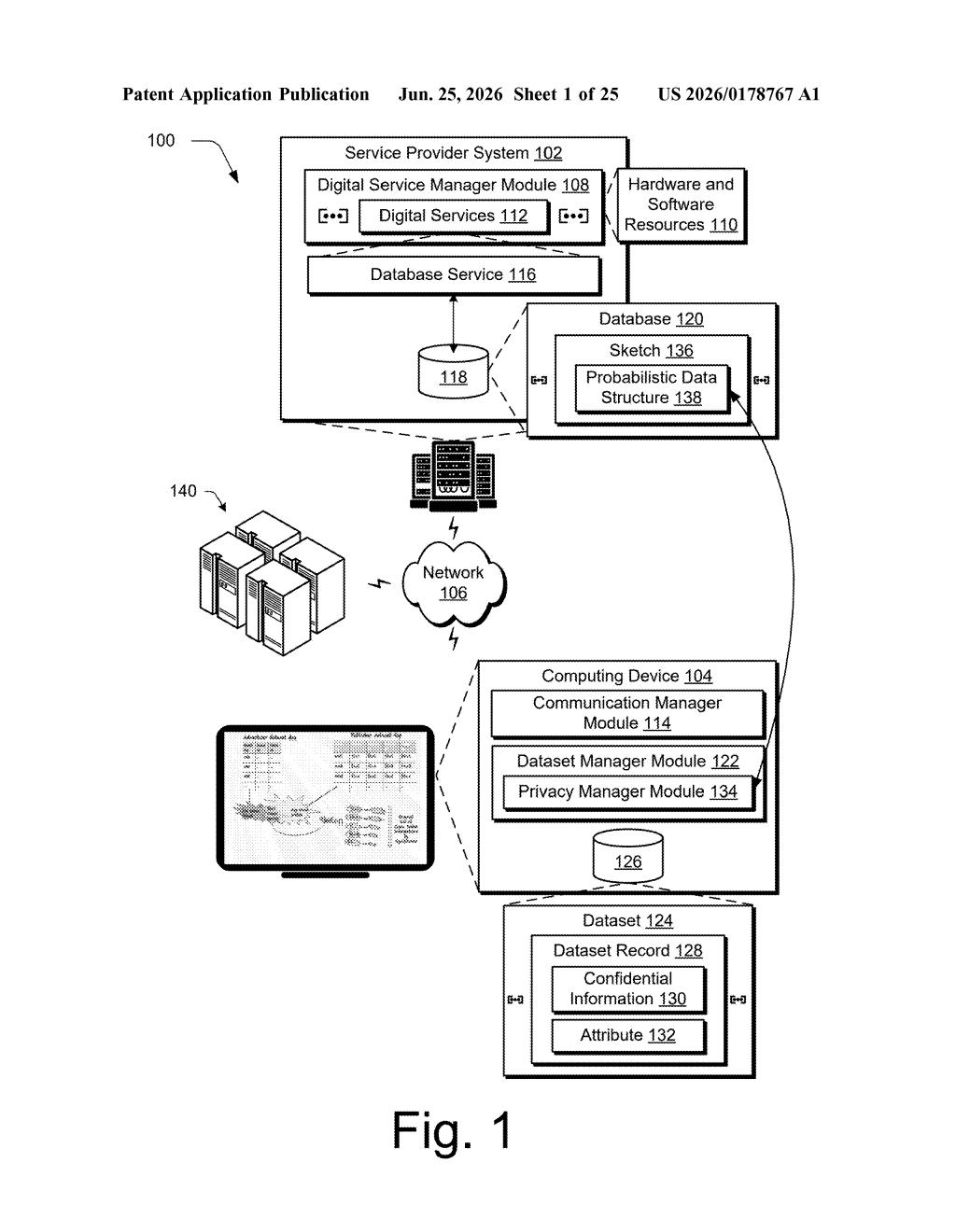
What Adobe's audience-matching patent actually does
Imagine two companies, say a retailer and a streaming service, both want to know how many of their customers overlap so they can run a joint ad campaign. Normally, that means one side has to hand over a list of customer emails or IDs, which raises obvious privacy concerns. Adobe's patent describes a way to do that comparison without either side ever seeing the other's actual customer data.
Instead of sharing real records, each company's dataset gets compressed into a compact mathematical summary called a sketch. These sketches can answer questions like "how big is the overlap?" or "which partner audience is the best match?" without revealing who the individual people are.
A user interface then surfaces the best-matching data partner based on those sketch comparisons. You get actionable answers about audience size and fit without exposing the underlying personal information.
How probabilistic sketches replace raw identity data
The patent describes a system built around probabilistic data structures, a category of algorithms that trade perfect precision for dramatically smaller storage and no raw data exposure. The specific type Adobe is using here is a sketch, a compressed numerical representation of a dataset that preserves statistical properties (like cardinality, or how many unique people are in a group) without storing any individual records.
Here is the basic pipeline the patent outlines:
- Multiple companies (called "entities") each submit their own audience datasets to the system.
- The system converts each dataset into one or more sketches, discarding the raw records.
- When a query comes in (for example, "find me the partner whose audience overlaps most with mine"), the system runs the query against the sketches only.
- The result is displayed in a UI, showing which partner entity is the best match.
The identity translation part of the title refers to the fact that different companies often track customers using different identifiers (email, phone number, a proprietary ID). The sketching process can normalize across those identifier types, letting the system compare audiences that were originally described in completely different ways.
This is squarely aimed at data clean room use cases, the category of privacy-preserving data collaboration tools that has grown rapidly since third-party cookies started disappearing.
What this means for advertisers and data privacy
For advertisers and publishers, the ability to match audiences without sharing raw data has become one of the central problems in the post-cookie world. Adobe's Real-Time CDP and Audience Manager products already sit in this space, and a sketch-based matching layer would let those tools work with partner data without requiring a full clean room setup.
For everyday users, the implication is that your data can be used to find you in an advertising context across multiple companies while, at least in theory, no single party in the chain ever gets a file with your name on it. Whether that is a meaningful privacy improvement depends heavily on how the sketches are implemented and audited, but the architecture is at least pointed in a more privacy-conscious direction than traditional data sharing.
This is a solid, practical filing in a genuinely contested space. Data clean rooms are already a crowded market with players like Snowflake, LiveRamp, and Habu all competing hard, and a sketch-based approach built into Adobe's existing data products could be a real differentiator. The patent is not flashy, but it addresses a real problem that Adobe's enterprise customers deal with every day.
There are more where this came from
We read every patent application Big Tech publishes and send you the ones worth knowing. Plain English, free, every week.
Want this weekly breakdown for a company we don't cover? Patentlyze Pro →