
Amazon Patents a Multi-Modal App Builder That Keeps Every UI in Sync
Imagine switching from a drag-and-drop visual editor to a chat-style prompt interface mid-build — and having every change follow you seamlessly. That's the core idea behind Amazon's latest development-environment patent.
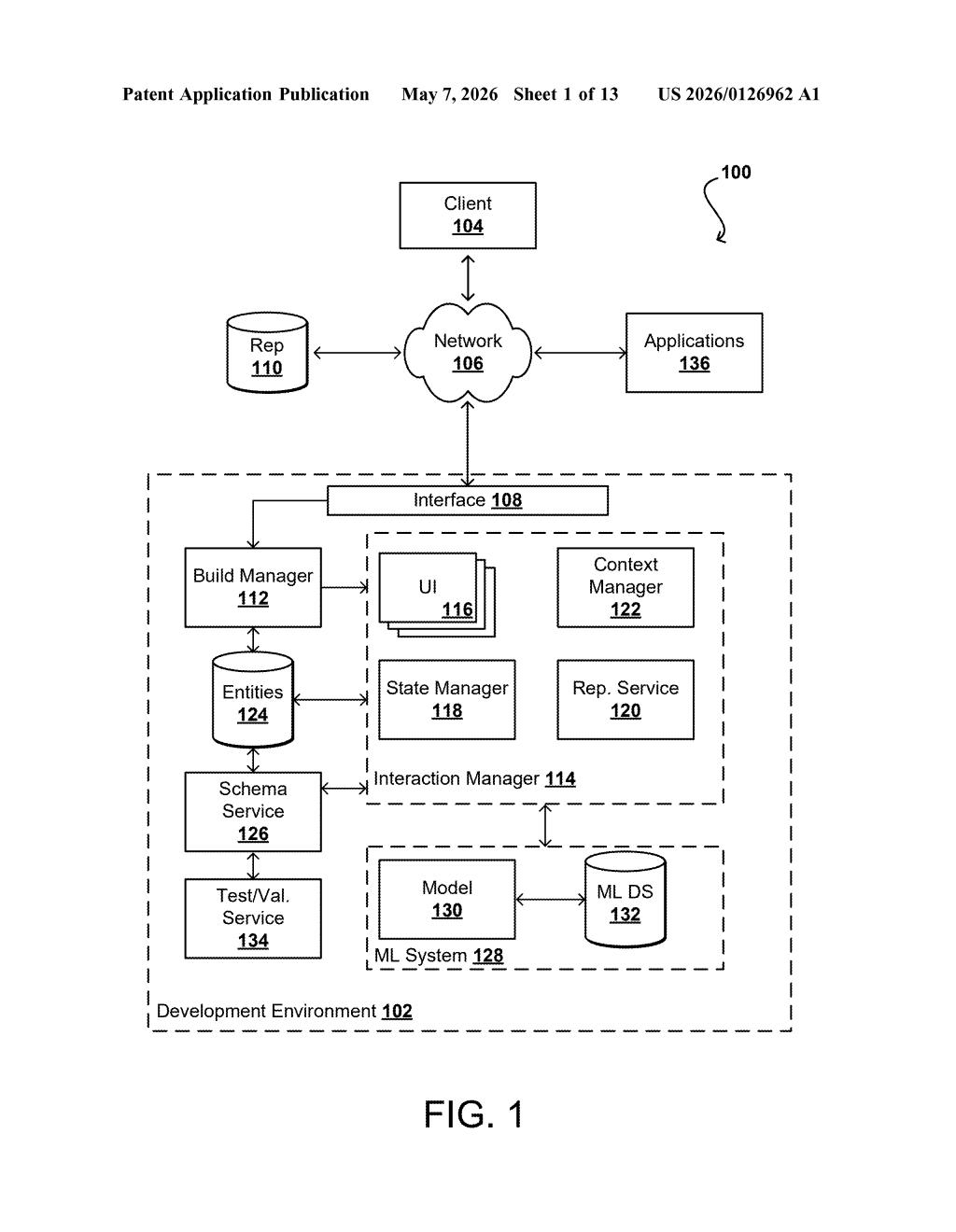
What Amazon's synchronized multi-UI app builder actually does
Picture this: you're building a simple app using a visual drag-and-drop tool, then you switch over to a chat window and describe a change in plain English. Right now, most tools treat those as completely separate worlds — your visual editor has no idea what you typed in the chat box. Amazon's patent describes a system that fixes that.
The idea is a multi-modal builder environment where different interfaces — say, a visual canvas, a text editor, and a conversational AI prompt — all stay in sync with each other. When you make a change in one, the others update automatically to reflect the same modification in whatever format fits that interface.
This is essentially the infrastructure for a development tool where you can use whichever interface feels right for the task at hand — drag a component visually, then describe a logic tweak in plain English — without ever losing your place or having the interfaces fall out of step with each other.
How Amazon's builder syncs state across input modalities
The patent describes a multi-modal development environment that tracks a shared application state across multiple user interfaces simultaneously. Each UI can accept a different input modality — think visual/graphical editing, natural language text commands, or structured form inputs — and the system translates changes made in any one of them into equivalent representations for all the others.
At the core is a state-synchronization mechanism. When a user makes a change in the first UI, the system:
- Determines the input type (e.g., a drag-and-drop gesture vs. a typed command)
- Identifies the domain — the functional area of the app being modified
- Selects appropriate actions from a predefined set that match that domain
- Generates a representation of those actions suited to each UI's modality
The system then checks whether the UI states (essentially, what each interface currently shows) have diverged, and reconciles them. This contextual linking ensures a user can switch between interfaces mid-task without losing their working context — the second UI picks up exactly where the first left off, just rendered in its own native format.
The filing also references a graphical output that renders both UIs simultaneously, suggesting a side-by-side or split-panel layout where changes propagate visibly in real time.
What this means for low-code and conversational dev tools
For Amazon, this sits squarely in the orbit of tools like AWS App Studio and the broader push toward low-code and AI-assisted development. The ability to let a developer (or a non-developer) switch fluidly between a visual builder and a conversational AI interface — without losing state — is a real usability problem that no current tool solves cleanly.
For you as a builder or product person, this kind of infrastructure would mean you could prototype an app visually, hand it off to a developer who prefers working in code or prompts, and have both representations stay honest to each other. It's less about any single interface and more about making the transitions between interfaces frictionless.
This is solid, unsexy infrastructure work that solves a real problem in low-code and AI-assisted development tooling. The state-sync mechanism across modalities is the kind of thing that sounds obvious but is genuinely hard to implement correctly at scale. If Amazon ships this inside a future version of App Studio or Bedrock-integrated tooling, it could meaningfully improve the experience for the non-engineer-building-an-app use case — which is exactly the market AWS wants to own.
There are more where this came from
We read every patent application Big Tech publishes and send you the ones worth knowing. Plain English, free, every week.
Want this weekly breakdown for a company we don't cover? Patentlyze Pro →