
Apple Patents a Single-Command System for Scheduling Multiple 5G Cells
Managing data across multiple cellular frequencies usually requires a separate control message for each one — Apple's patent describes a way to do it all with a single command, without breaking backward compatibility with existing 5G infrastructure.
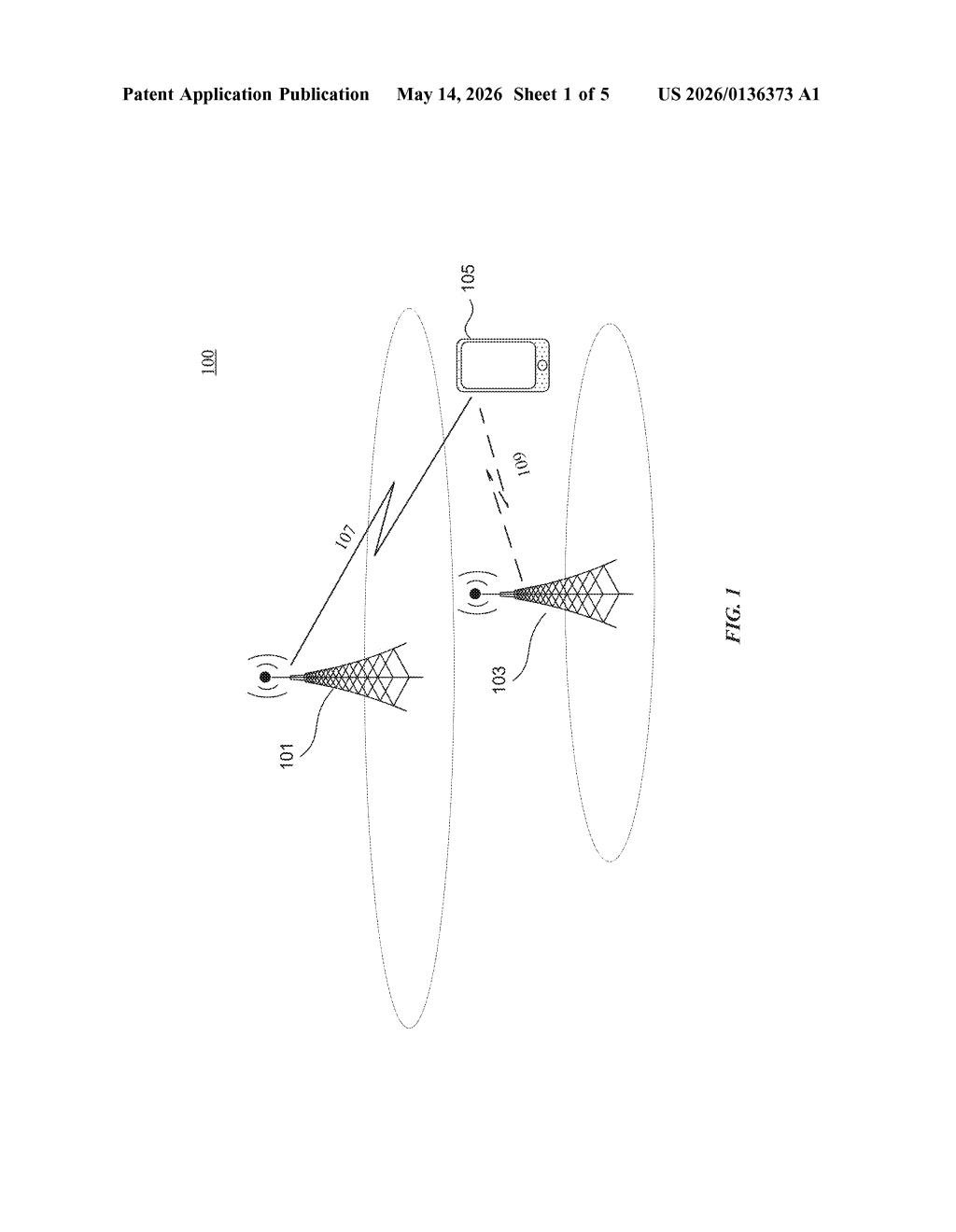
What Apple's multi-cell DCI scheduling actually does
Imagine a traffic controller who has to phone each intersection separately before clearing a route. Now imagine they can send one message that coordinates all the intersections at once. That's roughly the problem Apple is solving here.
When your phone connects to a modern 5G network, it often uses multiple frequency bands simultaneously — a technique called carrier aggregation. Today, the base station (the tower) has to send a separate scheduling instruction to each band. Apple's patent describes a smarter approach: one single control message (called a DCI) that can schedule data across multiple cells at the same time.
Critically, the patent outlines five different ways to roll this out, ranging from very conservative (only one band uses the new system) to fully committed (all bands use it). This kind of flexibility is typical of how wireless standards get introduced — you need to work alongside older equipment before you can go all-in.
How one DCI message coordinates across multiple carriers
The core invention is a multi-cell scheduling DCI — a single downlink control information message that carries scheduling instructions for more than one cell (or component carrier) at the same time.
In standard 5G, a base station sends a separate DCI per component carrier. A DCI is essentially a short broadcast that tells your phone: here's when to transmit, on which frequencies, at what power level. Multiplying those messages across many carriers adds overhead and complexity. Apple's approach bundles that into one.
The patent describes five configuration options for how base stations and devices negotiate this:
- Option 1: Only one carrier uses multi-cell DCI; others use none.
- Option 2: All carriers use multi-cell DCI.
- Option 3: One carrier uses multi-cell DCI only; others use legacy single-cell DCI.
- Option 4: One carrier uses both multi-cell and legacy DCI; others use legacy only.
- Option 5: All carriers can use both multi-cell and legacy DCI.
A key technical detail: the patent explicitly preserves the existing blind decoding (BD) candidate limit — the number of control message slots a phone has to check on each slot. Keeping that limit the same means devices don't have to work harder to find and decode these new messages, which protects battery life and processing load.
What this means for 5G network efficiency and phones
For network operators, fewer control messages per scheduling cycle means lower signaling overhead and potentially faster, more efficient scheduling of user data — especially relevant as 5G networks pack in more carriers per site. It also opens a path toward more coordinated multi-cell transmission, which is a building block for advanced features like network slicing and dynamic spectrum sharing.
For you as a user, the most tangible benefit would be modestly better battery life and throughput in carrier-aggregated 5G connections — the kind you get in dense urban areas or newer mmWave deployments. This is the kind of under-the-hood efficiency work that rarely makes a spec sheet but quietly makes your phone better over time.
This is squarely a 5G standards-layer patent — the kind Apple files to influence 3GPP specifications and protect its modem IP portfolio, especially as it develops its own in-house cellular modem. It's not flashy, but the five-option flexibility structure suggests Apple's engineers thought carefully about real-world deployment constraints. Worth watching as a signal of Apple's growing cellular standards ambitions.
There are more where this came from
We read every patent application Big Tech publishes and send you the ones worth knowing. Plain English, free, every week.
Want this weekly breakdown for a company we don't cover? Patentlyze Pro →