
Apple Patents Scheduled 5G Upload Gaps to Sense How Close Your iPhone Is to Your Body
Your iPhone doesn't always know whether it's sitting in your hand, pressed against your ear, or stuffed in your jacket pocket — and that gap in awareness has real consequences for how much radio energy it pumps out near your body. Apple's latest patent proposes a clever fix: schedule tiny, coordinated pauses in 5G uploads so the phone can quietly take a body-proximity reading.
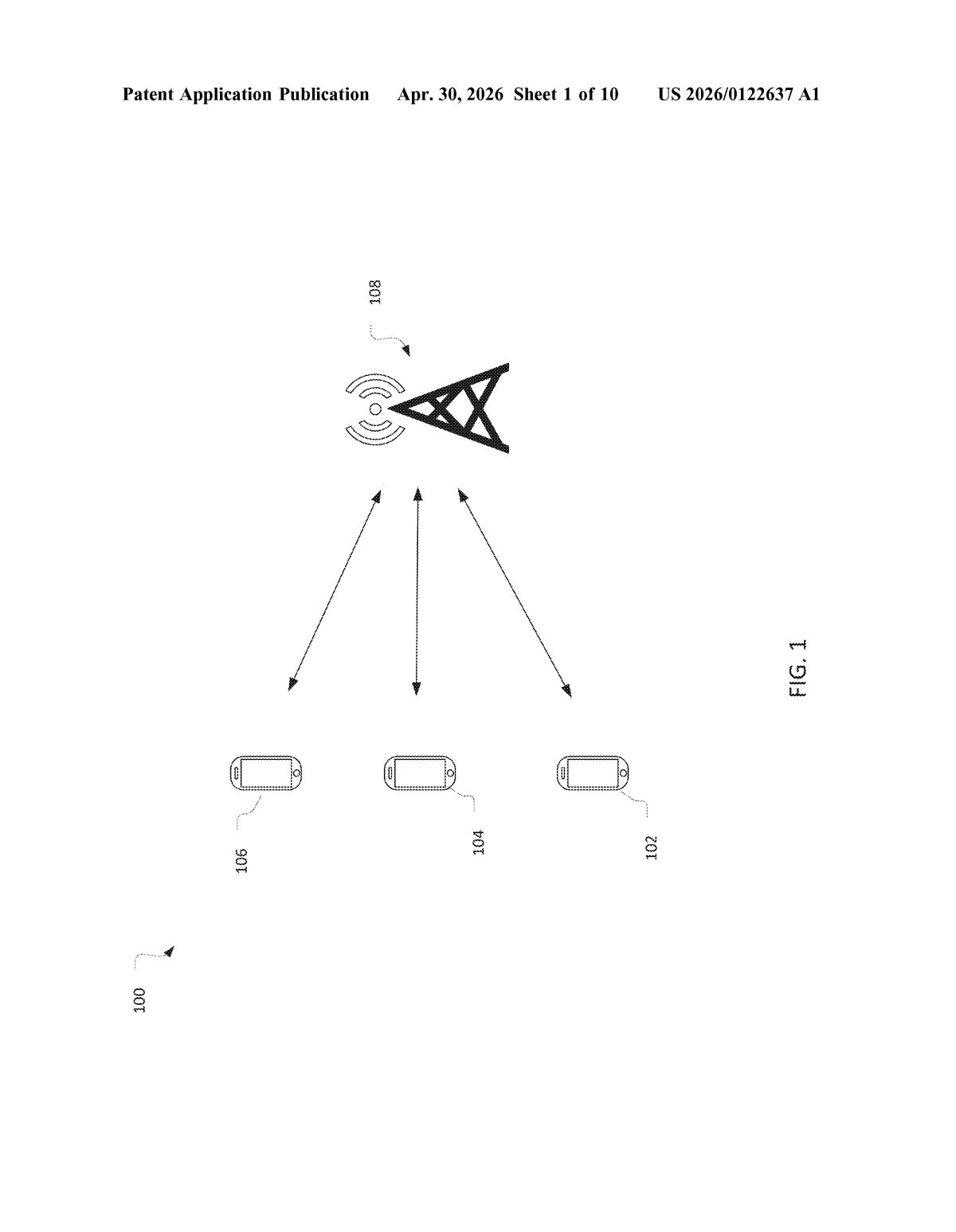
What Apple's body-proximity 5G upload pausing actually does
Imagine your iPhone is constantly streaming data up to a cell tower — video call packets, background app syncs, the usual. While it's doing that, it's also pumping out radio energy, and the amount that's safe or appropriate depends heavily on whether the phone is pressed against your head, sitting on a desk, or tucked in a pocket against your body.
The problem is your phone can't easily measure how close it is to you while it's busy transmitting. The radio hardware is occupied. Apple's patent proposes telling the 5G network in advance: "Hey, I'd like a short, recurring gap in my upload schedule." The network agrees on the timing, and during those gaps — measured in individual time slots, which are just a few milliseconds each — the iPhone runs its body proximity sensor without interference from its own radio.
The result is that your phone can continuously update its sense of where it is relative to your body and adjust its transmit power accordingly. Less power when you're close; more when you're far away and need the range. It's a small scheduling trick with a meaningful payoff for both safety compliance and battery life.
How the iPhone negotiates uplink gaps with the 5G network
The patent describes a three-step coordination process between the iPhone (called a UE, or User Equipment, in cellular standards language) and the 5G base station.
First, the iPhone sends preference information to the network — essentially a request saying it wants a particular uplink gap configuration. This is the phone negotiating its own schedule rather than just accepting whatever the network assigns.
Second, the network responds with configuration information specifying two key parameters:
- Uplink gap length — how many consecutive uplink slots to leave empty (a "slot" in 5G NR is typically 0.5–1 ms, so we're talking about very short windows)
- Uplink gap repetition period — how often those gaps recur, so the sensing happens on a regular cadence rather than randomly
Third, during each scheduled gap, the phone performs body proximity sensing — using sensors that detect whether a human body is nearby — and feeds that data into its transmit-power management system. Transmit-power management is the process by which a phone decides how strong its radio signal should be; proximity to a human body is a key input because regulatory limits (like FCC SAR rules) require lower power output when the antenna is close to tissue.
The elegance here is that the gap is pre-agreed with the network, so the base station isn't surprised by a sudden silence from the phone. It's a scheduled quiet moment, not a dropout.
Why body-proximity detection changes how iPhones manage RF power
Radio frequency exposure compliance is a legally required feature of every phone sold in the US and Europe, but current implementations tend to be fairly blunt — the phone uses fixed worst-case assumptions or relies on coarse sensors that can't always tell a shirt pocket from a hand. A system that actively and continuously re-measures body proximity during normal 5G operation could let Apple's RF power management be much more responsive and precise, potentially reducing average RF exposure without sacrificing connectivity.
There's also a battery angle: transmitting at lower power when the phone is body-adjacent saves energy. If this system ships, you might not notice it at all — which is kind of the point. It would be a quiet background optimization that makes your iPhone's 5G behavior a little smarter about your actual physical situation.
This is genuinely interesting systems engineering, not a flashy AI feature. The clever part is that Apple is having the phone negotiate its own measurement windows with the network rather than trying to bolt body-sensing onto an already-busy radio chain. It's the kind of careful, standards-aware work that tends to actually ship — and the fact that it's tied to regulatory compliance (SAR limits) gives Apple a strong reason to pursue it.
There are more where this came from
We read every patent application Big Tech publishes and send you the ones worth knowing. Plain English, free, every week.
Want this weekly breakdown for a company we don't cover? Patentlyze Pro →