
Apple Patents a System for Wi-Fi Access Points to Coordinate Transmissions in Real Time
If you've ever had two Wi-Fi routers step on each other's transmissions, Apple may have a fix. A newly published patent describes a way for multiple access points to negotiate and coordinate exactly when and how they send data — before any of it goes out the door.
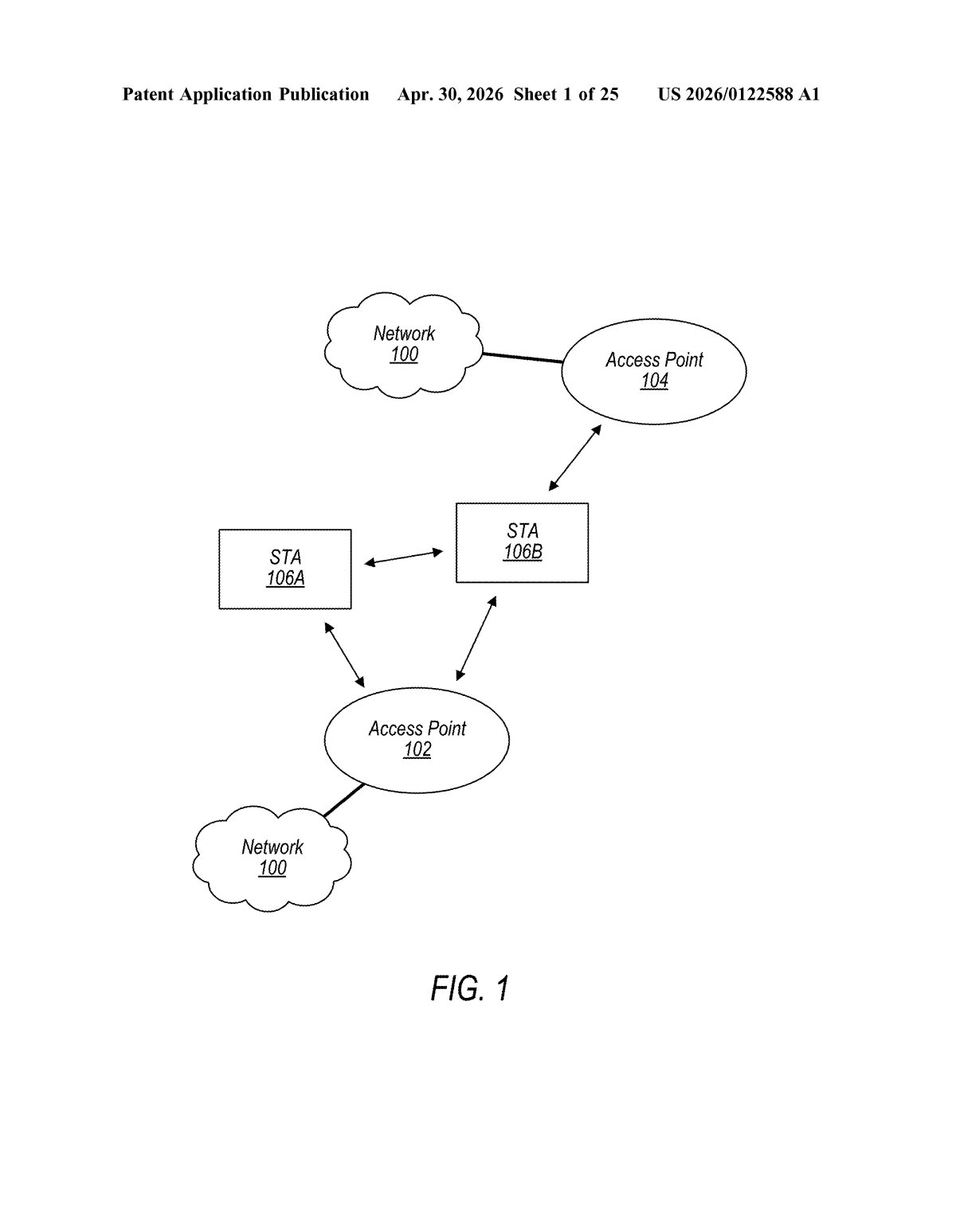
What Apple's coordinated Wi-Fi access point system actually does
Imagine you're in a busy office where two Wi-Fi routers are both trying to talk to different laptops at exactly the same time. Without any coordination, they end up interfering with each other, slowing everything down. Apple's patent tackles this by giving the routers a way to talk to each other first before they talk to your devices.
Here's how it plays out: one access point sends an "announce" message to a neighboring access point, essentially saying "I'm about to send data — are you ready to coordinate?" They exchange a quick back-and-forth, then both routers signal their respective connected devices to get ready. Only after all that preparation do they send the actual data simultaneously, cleanly and without stepping on each other.
The result is a more efficient use of the airwaves. Instead of routers randomly competing for the same channel, they take turns in an organized, pre-agreed way — which should mean faster speeds and fewer dropped packets for everyone on the network.
How the announce-response handshake sequences work
The patent describes a coordinated frame exchange protocol for wireless local area networks (WLANs) — essentially a multi-step handshake that synchronizes how multiple access points (APs) transmit data at the same time.
The sequence works like this:
- AP1 sends an announce frame to AP2, declaring it wants to start a coordinated exchange.
- AP2 replies with a response frame, confirming participation.
- Both APs then send Initial Control Frames (ICFs) — think of these as "get ready" signals — to their respective client devices (called non-AP wireless devices).
- The client devices reply with Initial Control Responses (ICRs), confirming they're ready to receive.
- Both APs transmit their coordinated data frames simultaneously or in a tightly managed sequence.
- Each AP then collects Block Acknowledgement (BA) frames from clients — a bundled confirmation that the data arrived correctly.
The Block Acknowledgement mechanism (a standard Wi-Fi feature where a single ACK covers multiple received packets) is used here to keep the overhead low after the coordinated burst. The whole point of the ICF/ICR pre-negotiation is to ensure that client devices on both APs are aligned and ready before any data flows, minimizing collisions and wasted airtime.
What this means for multi-router Wi-Fi networks
Multi-access-point Wi-Fi setups — mesh networks, enterprise deployments, even modern home systems with a router and a few satellites — are increasingly common. Today, most of those APs operate somewhat independently, using contention-based protocols (meaning they essentially take turns randomly). This patent points toward a future where APs actively negotiate transmissions like a well-run air traffic control system, which could meaningfully improve throughput in dense environments.
For you as a user, this could translate to a faster, more consistent connection in places where multiple routers are in range — think large homes, apartment buildings, or open-plan offices. It also fits neatly into the direction the Wi-Fi 7 (802.11be) standard is heading with its own multi-link and coordinated transmission features, suggesting Apple is positioning its networking hardware and software for that next wave.
This is solid, unglamorous infrastructure work — the kind of patent that doesn't make headlines but quietly makes your network better. Coordinated multi-AP transmission is a real problem worth solving, and Apple filing here signals they're taking Wi-Fi 7's coordination features seriously, likely for future AirPort-style hardware or embedded networking in devices like Apple TV. It's worth paying attention to if you care about where home networking is headed.
There are more where this came from
We read every patent application Big Tech publishes and send you the ones worth knowing. Plain English, free, every week.
Want this weekly breakdown for a company we don't cover? Patentlyze Pro →