
Apple Patents a System for Silencing Flagged Devices at the eSIM Level
Apple is building a way for mobile networks to essentially freeze out a flagged device at the hardware identity layer — not just the SIM level, but deep inside the eSIM chip itself. It's a more surgical approach to cutting off stolen or misbehaving devices than what carriers can do today.
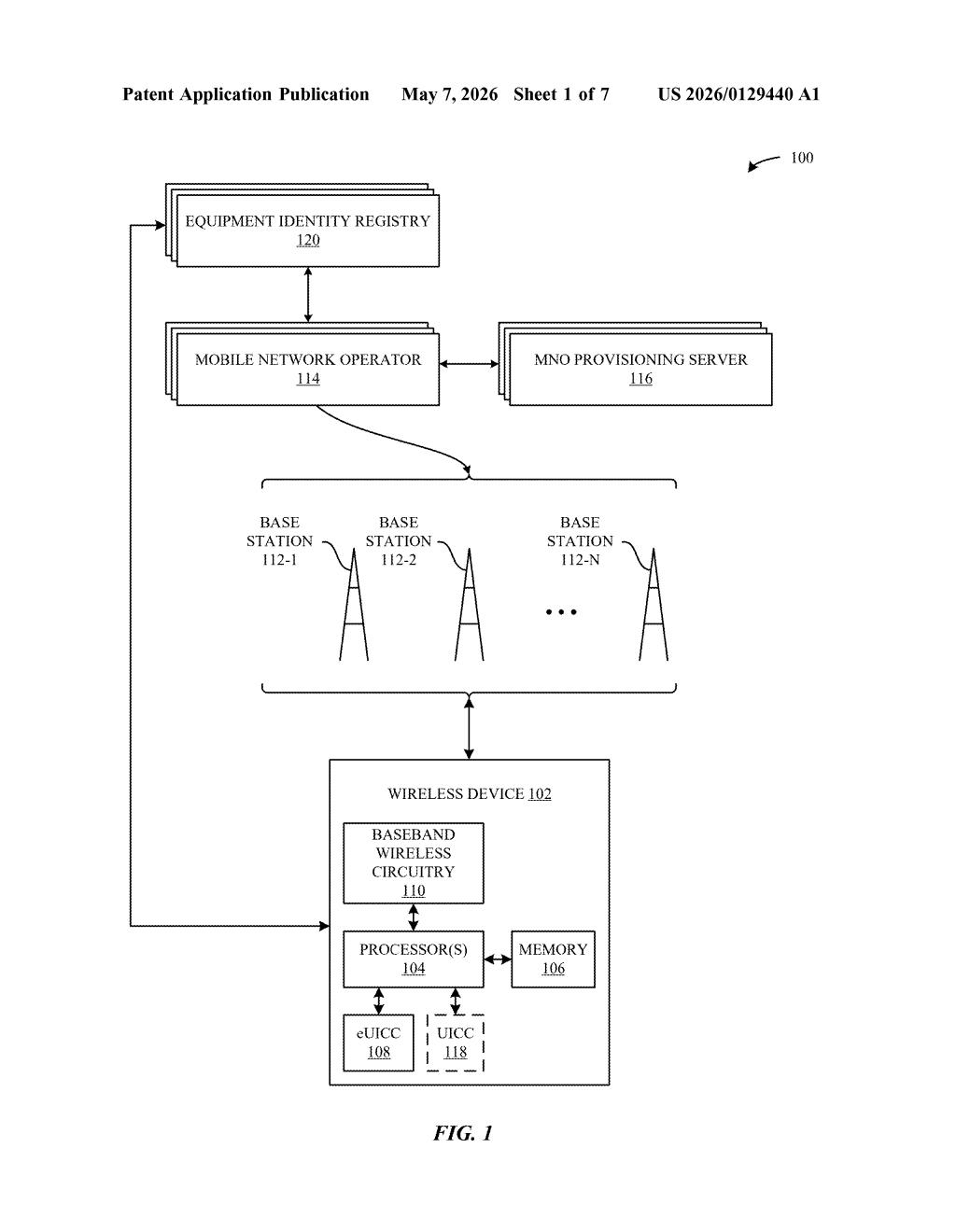
What Apple's flagged-device eSIM lockout actually does
Imagine your phone gets stolen, or it starts behaving suspiciously on a carrier's network. Right now, carriers can block a SIM card, but a determined thief can just swap in a new one — or, on modern phones, try to download a fresh eSIM profile. Apple's patent describes a system that closes that gap.
The core idea is that when a device gets flagged — by a carrier, an equipment identity registry, or another network authority — the phone itself can be instructed to stop playing along. Specifically, the embedded chip that manages digital SIM profiles (the eUICC) gets told to freeze all profile-related activity. No new profiles can be downloaded, no switching, no workarounds.
This happens through coordination between several components already inside your phone: the baseband radio chip, the eSIM's security domain, and a local profile manager. Each one has a role in detecting the failure, passing the signal, and enforcing the lockdown — without requiring the user to do anything.
How the eUICC, ISD-R, and baseband coordinate a lockout
The patent describes a three-layer lockout sequence that kicks in when a flagged device tries to attach to a mobile network and fails.
- Network attach failure notification: The baseband component (the radio chip that handles cellular communication) detects the failed connection attempt and sends a notification up to the eUICC — the embedded chip that manages eSIM profiles.
- ISD-R suspension request: The eUICC passes a request to the Issuer Security Domain Root (ISD-R) — essentially the master security gatekeeper inside the eSIM — asking it to pause all profile-related activities. Think of the ISD-R as the vault door: nothing gets in or out without its approval.
- Configuration update: The device's configuration is rewritten so that profile actions (downloading a new eSIM, switching profiles, etc.) are outright prohibited going forward.
The system is designed to work across multiple actors: Equipment Identity Registries (EIRs) that maintain blocklists of flagged device identifiers, carrier provisioning servers (SM-DP+ servers, which are the infrastructure used to push eSIM profiles over the air), and the device itself. Each can trigger or respond to the lockout depending on the scenario — stolen device, fraud detection, or policy violation.
What this means for stolen iPhones and carrier fraud
For consumers, this is mostly good news. If your phone is stolen, a more robust lockout at the eSIM level makes it significantly harder for a thief to re-activate the device on any carrier by downloading a fresh profile. Combined with existing Activation Lock mechanisms, it adds another layer that's harder to bypass because it lives in hardware-adjacent firmware.
For carriers and regulators, the patent signals that Apple is thinking seriously about eSIM fraud — an emerging attack vector as physical SIM trays disappear from flagship phones. By giving the network and the device a coordinated way to shut down profile activity cleanly, Apple could reduce the back-and-forth of unnecessary connection attempts from known-bad devices, which wastes network resources and complicates fraud investigations.
This is unglamorous but genuinely useful security infrastructure. eSIM fraud and device re-activation after theft are real problems that will only grow as eSIM becomes universal — and Apple is clearly thinking about this at the right layer. The coordination between baseband, ISD-R, and carrier servers is the kind of systems-level thinking that actually closes loopholes rather than just adding friction.
There are more where this came from
We read every patent application Big Tech publishes and send you the ones worth knowing. Plain English, free, every week.
Want this weekly breakdown for a company we don't cover? Patentlyze Pro →