
Meta Patents a Dual-Hinge System for AR Glasses That Bends Without Breaking
Glasses hinges are one of the most-stressed parts of any frame — and AR glasses carry batteries and electronics in the arms, making a snapped hinge much worse than a broken pair of sunglasses. Meta's latest patent describes a clever two-pivot solution to handle the inevitable moment when someone opens their glasses just a little too far.
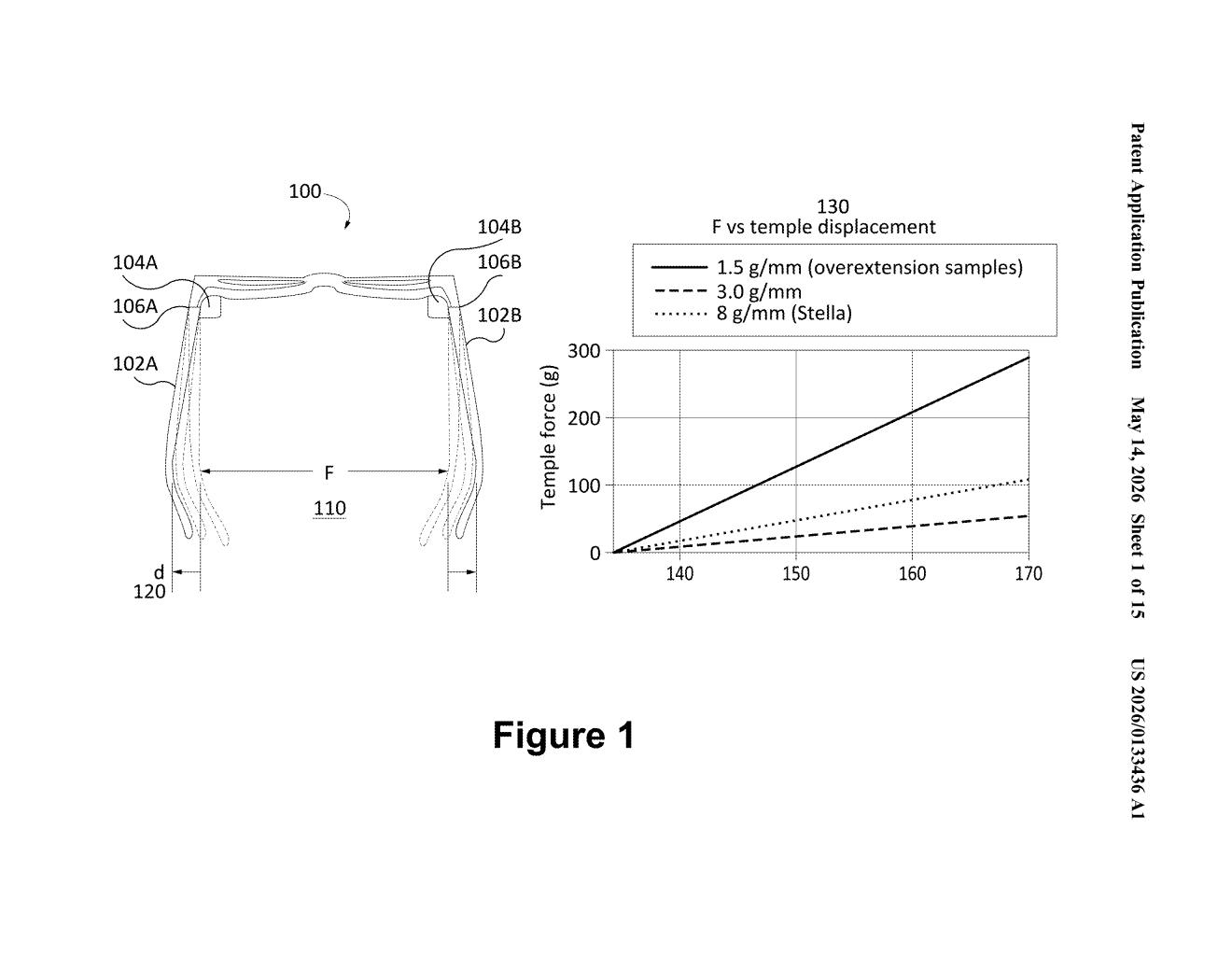
What Meta's over-extension AR glasses hinge actually does
Imagine you're rushing out the door and you grab your AR glasses and snap them open a bit too forcefully. On normal glasses, that over-rotation can stress or crack the hinge. On AR glasses — where the temple arm also houses a battery and projection electronics — that kind of damage is a much bigger deal.
Meta's patent describes a hinge with two separate pivot points. The first one handles normal everyday opening and closing. The second one only kicks in when the arm is pushed beyond its normal range — acting like a safety valve that absorbs the extra force instead of letting it snap something important.
A small spring holds everything in its default position, so the hinge feels solid and snappy during regular use. But if you over-extend, the second pivot quietly takes over, flexes, and then springs back. It's the kind of mechanical detail you'd never notice — until it saves your glasses from breaking.
How Meta's dual-pivot hinge absorbs over-extension stress
The patent describes an over-extension hinge module built for AR smart glasses, where the temple arms hold both a battery and components connected to an AR projection system in the frame.
The system uses two distinct axes of rotation:
- Primary pivot axis — the standard hinge point used during normal opening and closing of the temple arm, moving it between a closed (folded) and open (extended) position.
- Secondary pivot axis — positioned along the outer edge of the temple arm, parallel to the primary pivot. This axis only engages during over-extension, meaning when the arm is pushed past its normal open position.
Mechanically, the hinge includes a hinge base, a paddle connected to it via a travel pin (which limits how far things can move), and a preloaded spring that maintains the resting position and provides the return force after over-extension. The spring stiffness appears to be tunable — the patent's figures compare different spring rates (measured in grams per millimeter) across displacement ranges.
The net effect is a hinge that behaves like a normal, firm glasses hinge during everyday use, but has a built-in mechanical relief valve when accidentally over-rotated — protecting the electronics housed in the arm.
What this means for durability in next-gen AR glasses
AR glasses live or die on how wearable they actually feel. Consumers don't baby their glasses the way they might baby a $500 gadget, and temple arms that house batteries and projection hardware are more fragile than traditional metal-only hinges. A hinge that can absorb abuse without cracking a circuit board or snapping a wire is genuinely useful engineering — not just a nice-to-have.
Meta has been pushing its Ray-Ban Meta line toward more capable AR features, and a durable, electronics-safe hinge is the kind of infrastructure work that has to happen before premium AR glasses become mass-market products. If your glasses break the first time a friend grabs them too enthusiastically, no amount of clever software fixes that.
This is unglamorous mechanical engineering, but it's exactly the kind of problem that kills consumer AR products before they get a chance. The dual-pivot approach is elegant and the spring-rate tuning shown in the patent figures suggests Meta has actually tested this in hardware. It won't make headlines at a product launch, but it's the stuff that makes reviewers say 'these feel surprisingly robust.'
There are more where this came from
We read every patent application Big Tech publishes and send you the ones worth knowing. Plain English, free, every week.
Want this weekly breakdown for a company we don't cover? Patentlyze Pro →