
Apple Patents a System That Merges Sensor Data Across Devices to Identify Nearby Objects
What if your iPhone, your Apple Watch, and a Vision Pro headset could all pool their sensor readings together to figure out exactly what's around you? That's the core idea behind this Apple patent.
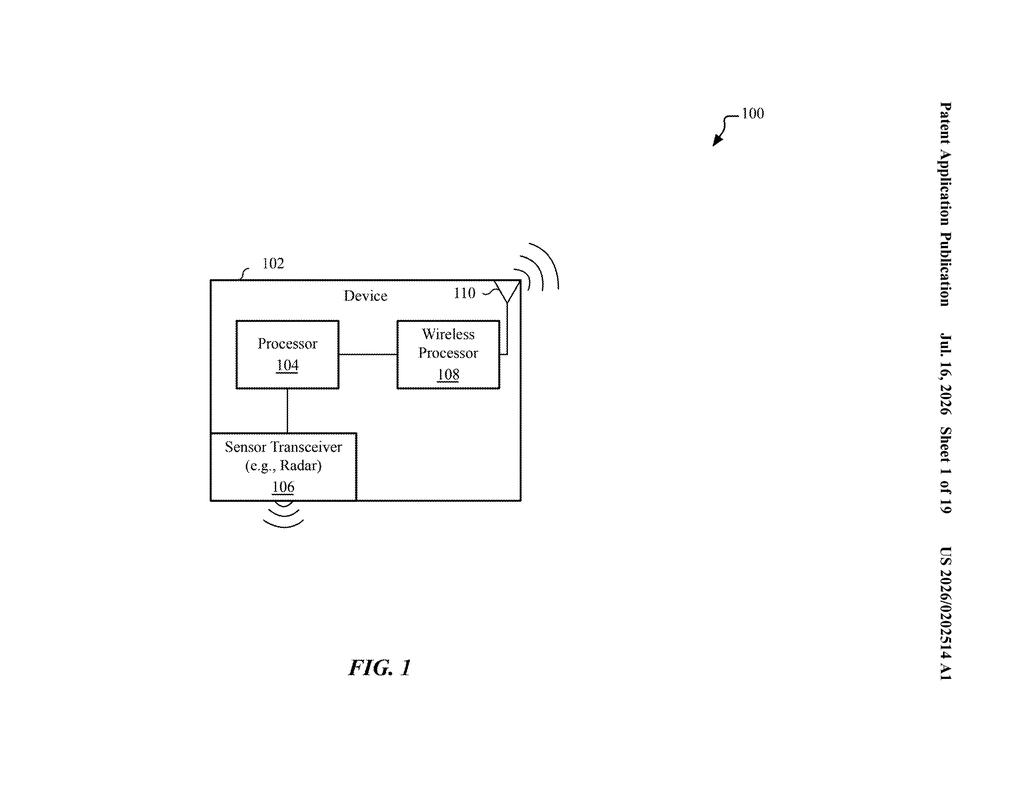
How Apple's multi-device object detection actually works
Imagine you're in a room and three different cameras are each filming the same chair from slightly different angles. Individually, each shot gives you partial information. But if you combine all three views into one, you get a much clearer picture of where that chair is and what it looks like.
Apple's patent describes something similar, but with spatial sensors instead of cameras, and across multiple devices instead of multiple lenses. The system takes raw sensor data from several devices, merges it into a shared coordinate map, and then uses machine learning to identify the objects it finds there.
The practical payoff is that no single device has to do all the work. By pooling data from, say, a phone and a headset, the combined system can detect and label objects in your surroundings more accurately than either device could alone.
How point clouds get classified across fused sensor feeds
The patent describes a pipeline with several distinct stages:
- Data fusion: Sensor readings from multiple devices (each with its own position and orientation) are translated into a single shared coordinate space, so they can be compared and combined meaningfully.
- Point cloud construction: The merged data is converted into a point cloud (think of it as a 3D scatter plot made of thousands of tiny dots, each representing a detected surface or object boundary in space).
- Feature extraction: The system pulls out descriptive features from the point cloud across multiple feature spaces (different mathematical representations of the same data), giving the classifier more angles from which to work.
- Object classification: A machine learning model labels the detected objects based on those extracted features.
There's also a feedback loop: once objects are classified, those classifications help the system figure out how the different devices' coordinate frames relate to each other. In other words, identifying objects helps calibrate the multi-device setup itself, not just describe the scene.
The first independent claim in this filing is listed as canceled, which is a normal part of patent prosecution and doesn't invalidate the patent as a whole.
What this means for Apple's spatial computing ambitions
Apple has been steadily building out its spatial computing ecosystem, with the Vision Pro headset and the U-wideband chips found in iPhones and AirTags already doing rudimentary spatial awareness work. A system that fuses sensor data across devices into a single 3D picture of a room could make that ecosystem considerably more capable, letting devices collectively understand a shared environment rather than each one working in isolation.
For everyday users, the end result could look like better object-aware AR overlays, more accurate indoor positioning, or smarter home automation that actually knows where things are in your space. None of that is promised in this filing, but the underlying capability is a clear building block for those kinds of applications.
This is a important patent because it treats multiple Apple devices as a network of sensors rather than independent gadgets. The architecture described here is foundational: if Apple wants its devices to collectively understand physical space, you need exactly this kind of data-fusion and calibration layer underneath. Worth watching as Vision Pro matures.
There are more where this came from
We read every patent application Big Tech publishes and send you the ones worth knowing. Plain English, free, every week.
Want this weekly breakdown for a company we don't cover? Patentlyze Pro →
Be the first to weigh in