
New Filing Could End Gaming Load Screens by Reading Players' Next Move
Sony has patented a system that watches what a game is doing in memory, recognizes where you are in the experience, and starts loading the next batch of content before you even get there. Think of it as a GPS for game data, predicting the next turn before you make it.
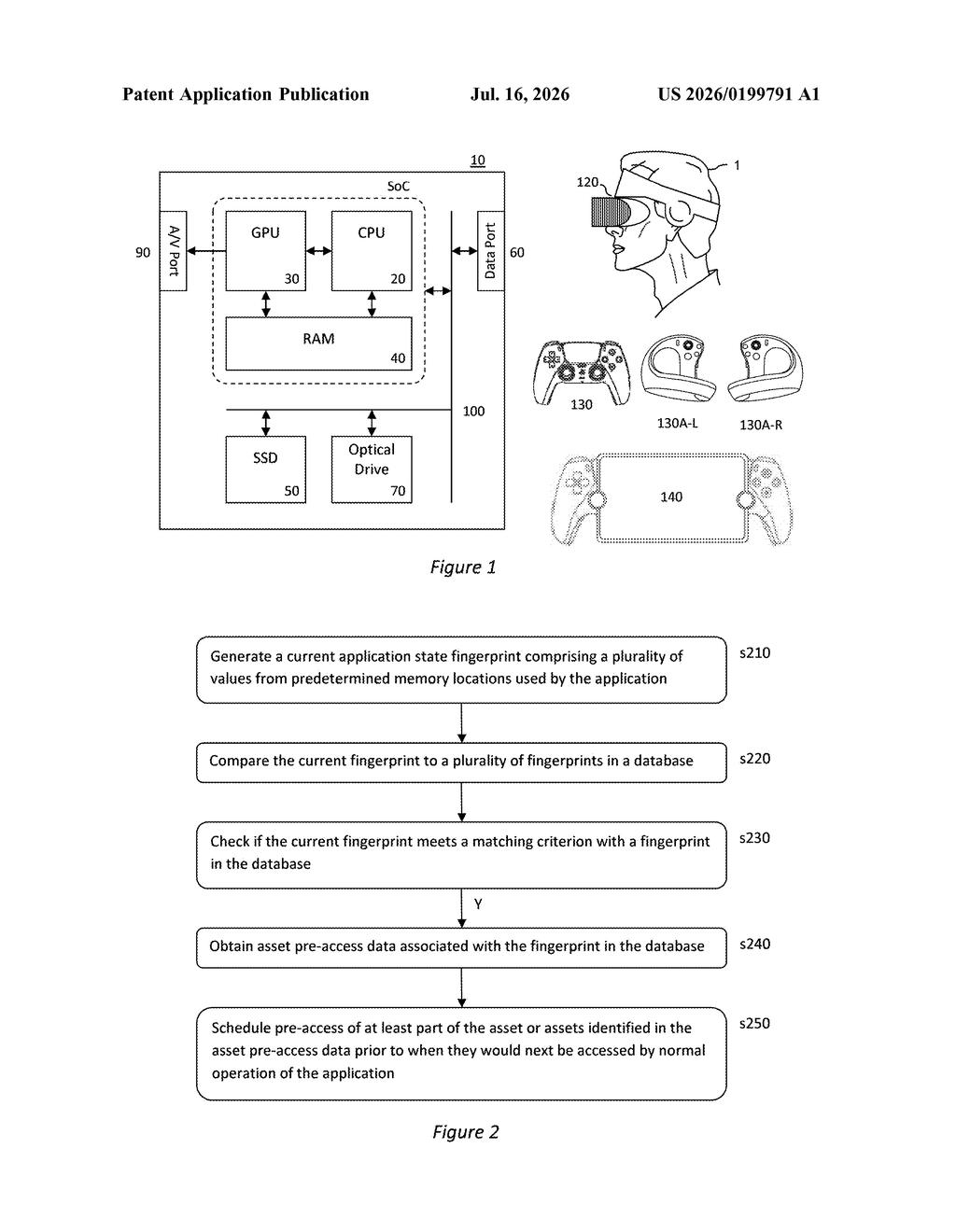
How Sony's loading prediction actually works for players
Imagine you're playing a game and about to walk through a door into a new area. Your console hasn't loaded that area yet, so you hit a loading screen. Sony's patent describes a way to see that coming and load the content before you reach the door.
The system works by taking a kind of snapshot of the game's current situation, reading specific values from memory to figure out exactly where you are in the game. It then compares that snapshot to a database of known snapshots, each one linked to a list of assets the game will likely need next. When there's a match, the console starts pulling that content in early.
The database of snapshots and predicted assets would presumably be built up over time, either from Sony's own testing or from aggregated player data. The goal is fewer loading screens and less waiting, by making the hardware smarter about what's coming.
How the fingerprint system identifies your game state
Application state fingerprinting is the core idea here. While a game runs, the system reads values from a set of specific memory addresses that together paint a picture of what the game is currently doing. Those values, taken together, form a "fingerprint" that uniquely identifies a moment or situation in the game.
That fingerprint is then checked against a database of known fingerprints, each of which has associated "pre-access data" pointing to specific game assets (textures, audio, geometry, scripts) that tend to be needed shortly after that moment occurs. If the current fingerprint closely matches one in the database, the system schedules early loading of those linked assets before the game engine formally requests them.
- Fingerprint generation: Reads a predefined set of memory locations to capture the game's state as a compact array of values.
- Matching: Compares that array against stored fingerprints using a matching criterion (an exact or approximate similarity threshold).
- Pre-access scheduling: Queues the associated assets for loading ahead of time, before the game's normal asset pipeline would ask for them.
The patent doesn't specify how the database is built, but the most natural reading is that it gets populated through profiling sessions, where developers or automated tools record which assets follow which game states.
What this means for load times on PlayStation
Load times are one of the most complained-about parts of console gaming, and Sony has already made fast storage a selling point of the PlayStation 5. This patent suggests the company is pursuing a software-level layer on top of that hardware speed: instead of just loading assets faster, the system tries to load them earlier, hiding the latency entirely.
For players, this could mean fewer interruptions during open-world exploration, faster transitions between areas, and smoother streaming of large environments. For developers, a standardized fingerprinting framework could reduce the manual work of optimizing asset streaming for each game, since the system learns the patterns automatically.
This is genuinely practical patent work. Sony isn't chasing a flashy new feature here; it's trying to solve one of the most persistent annoyances in gaming through pattern recognition. The fingerprint approach is clever because it's game-agnostic: it doesn't need to understand what a game is doing logically, it just needs to recognize recurring memory signatures. Whether this ships as a platform feature or stays buried in first-party studios is the real question.
There are more where this came from
We read every patent application Big Tech publishes and send you the ones worth knowing. Plain English, free, every week.
Want this weekly breakdown for a company we don't cover? Patentlyze Pro →
Be the first to weigh in